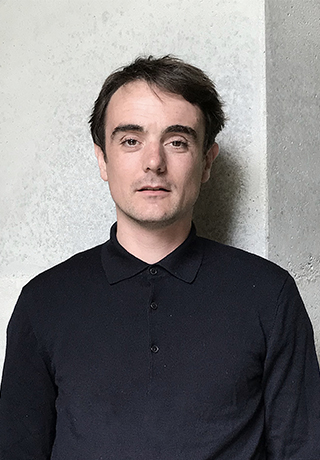
Marilyne SALINI REMER

Interior Designer

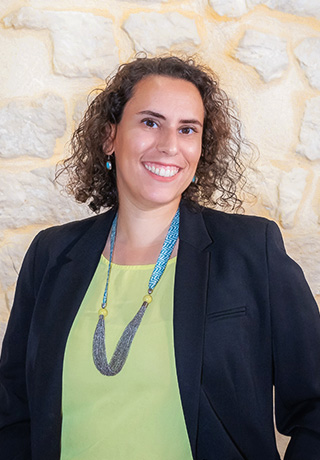
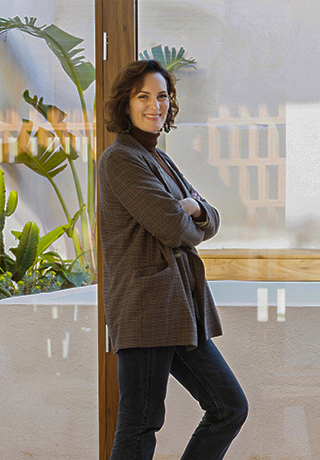
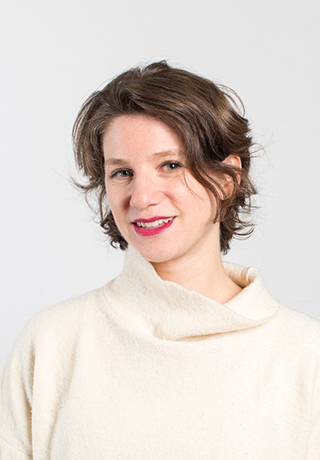
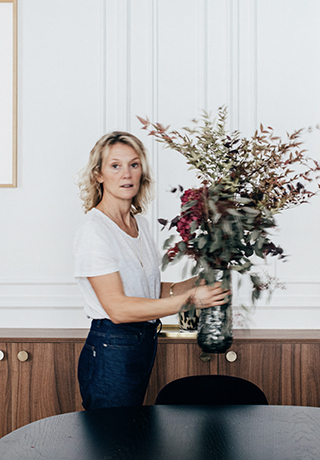
Marilyne Salini Remer grew up in her father’s art print shop, which left a real artistic mark on her. She has worked for over 20 years in press relations, notably for emblematic decoration magazines such as Marie Claire Maison. The decoration events she organizes allow her to meet talented personalities: designers, stylists, brand creators, photographers, florists, and to travel to emblematic architectural places around the world.

Her passion for furniture and interior design led her to return to school to learn the technical skills that these disciplines require. Marilyne Salini Remer graduated from the Ecole Boulle in XX and offers customized interior design services. Her work becomes an opportunity to co-create with her clients and talented craftsmen singular universes. Marilyne is a narrator of places where harmony and personality are in balance.
Warm and caring, just like her creations, Marilyne accompanies you in the construction of your dreams, notably through the sharing of ideas and common inspirations.

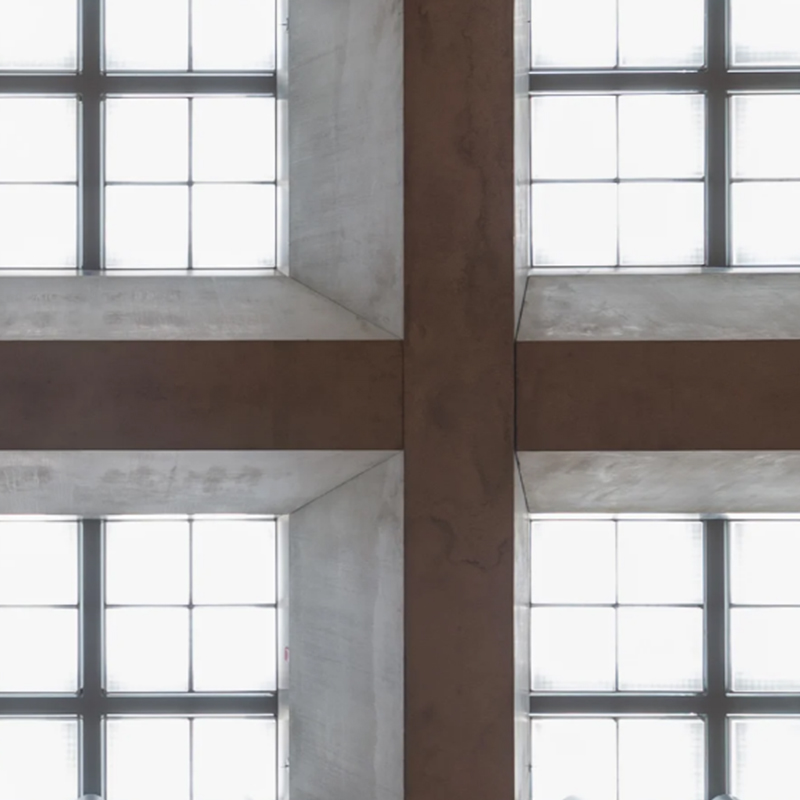
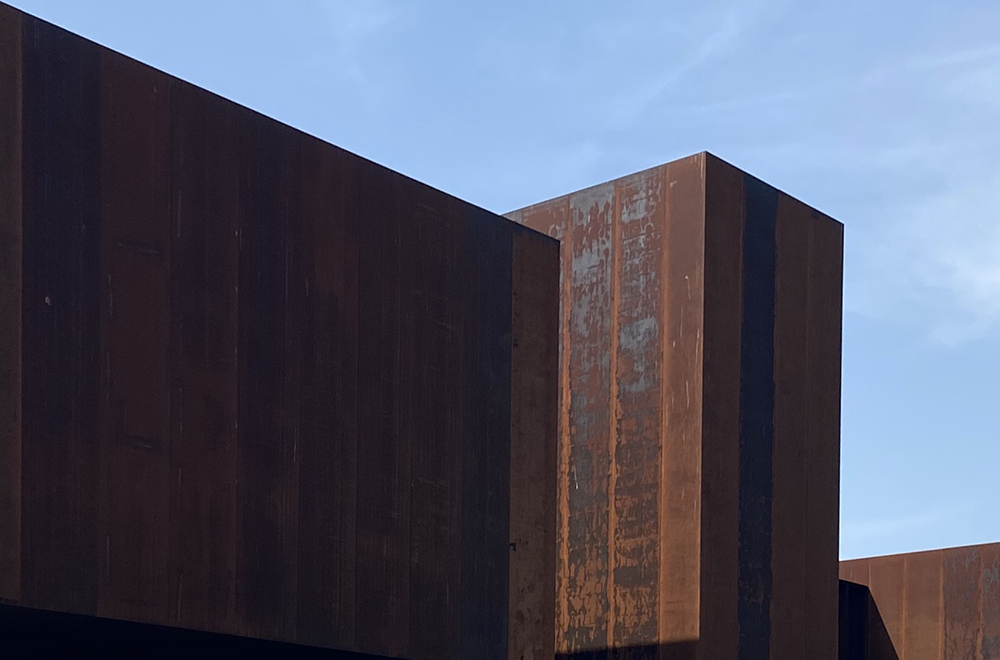
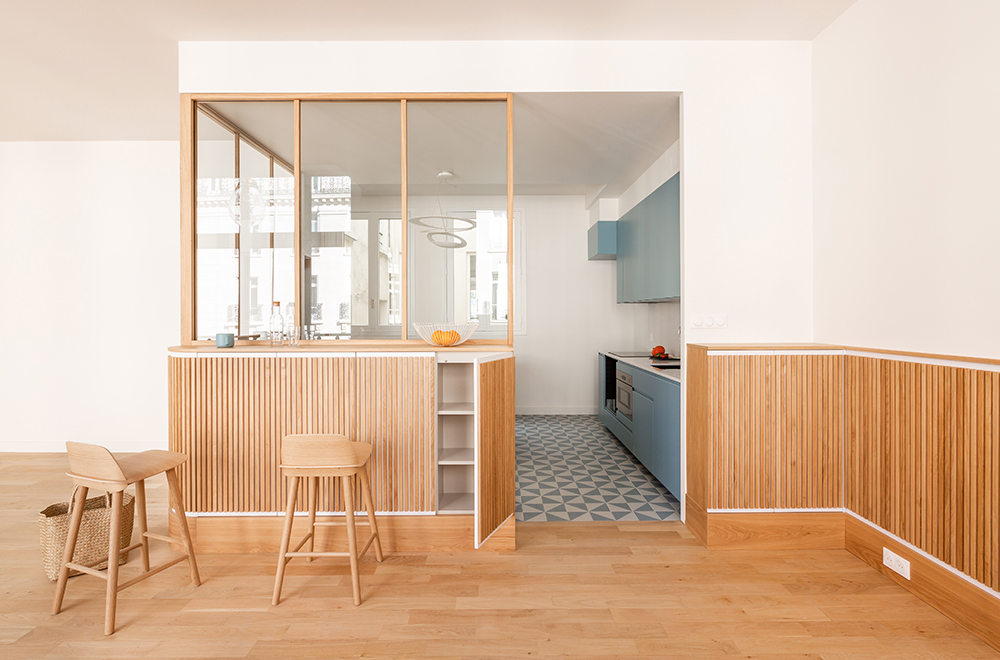
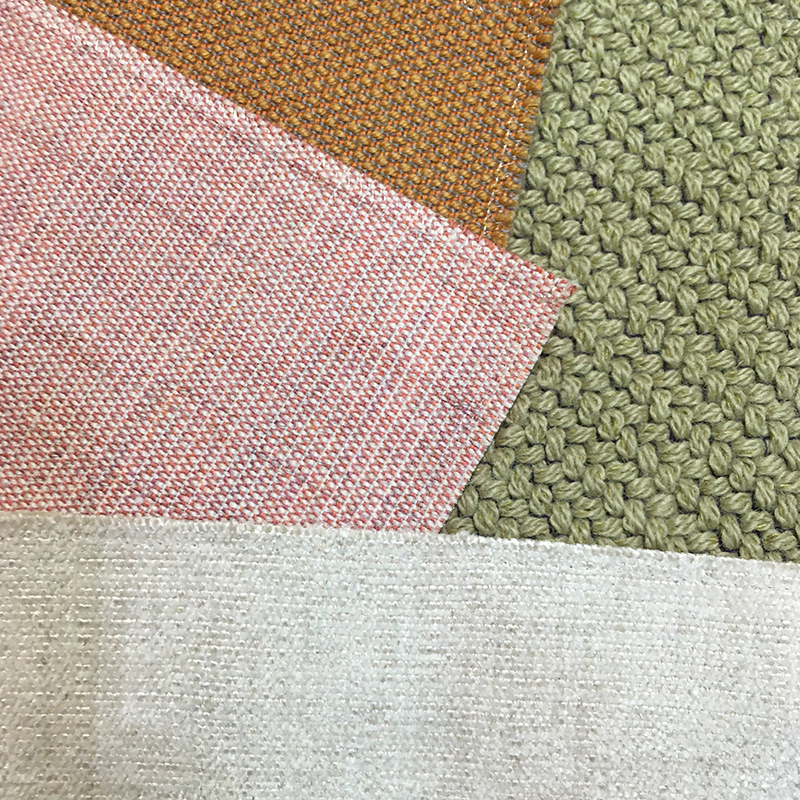
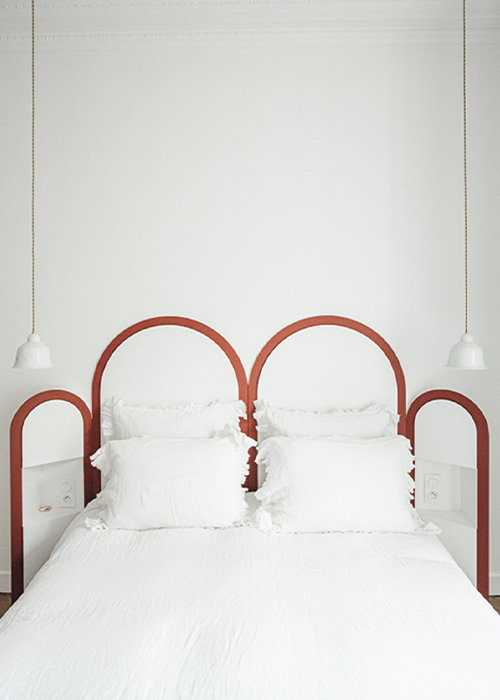
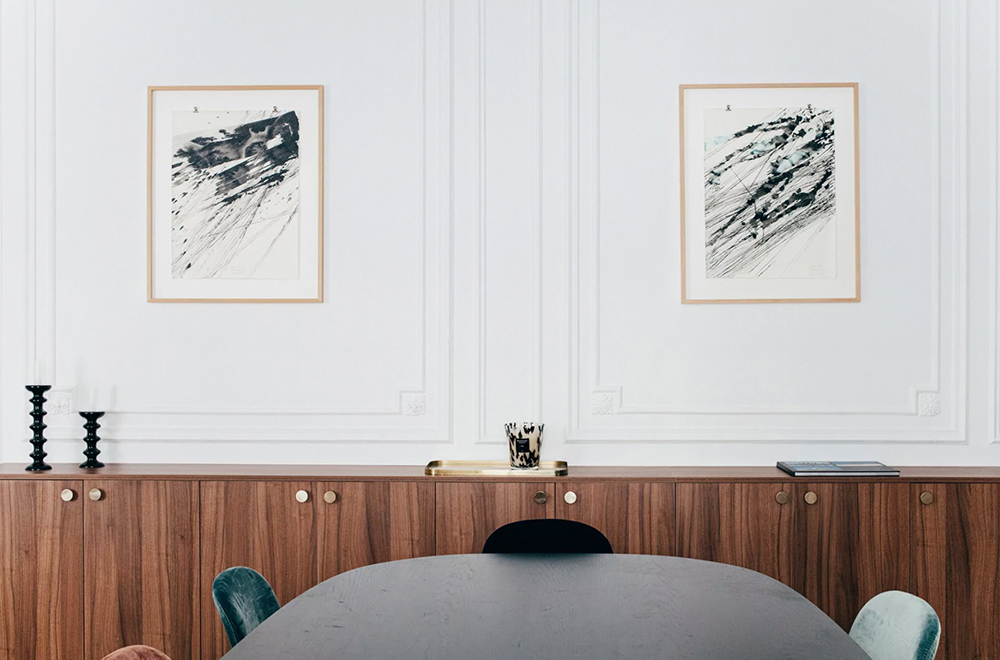
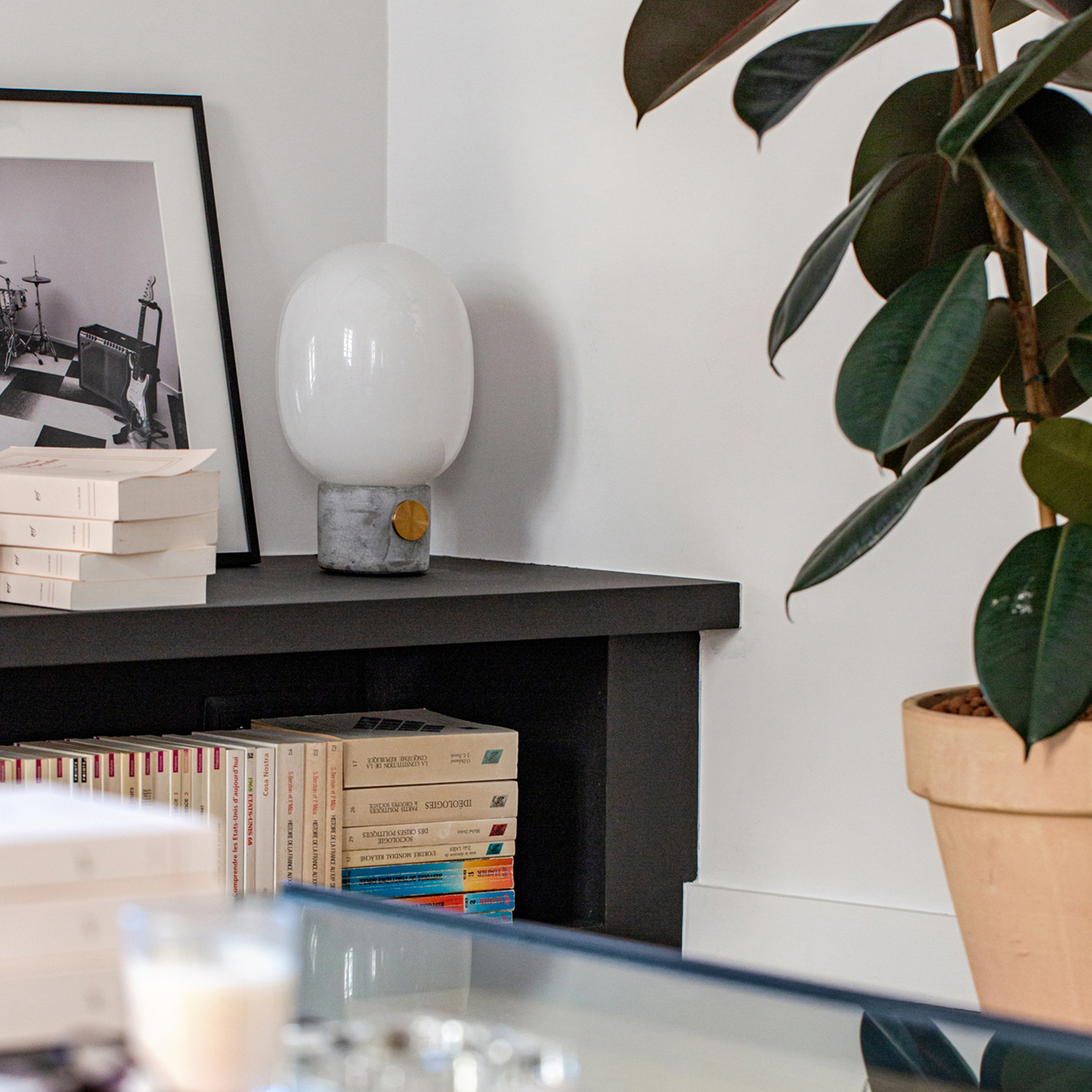
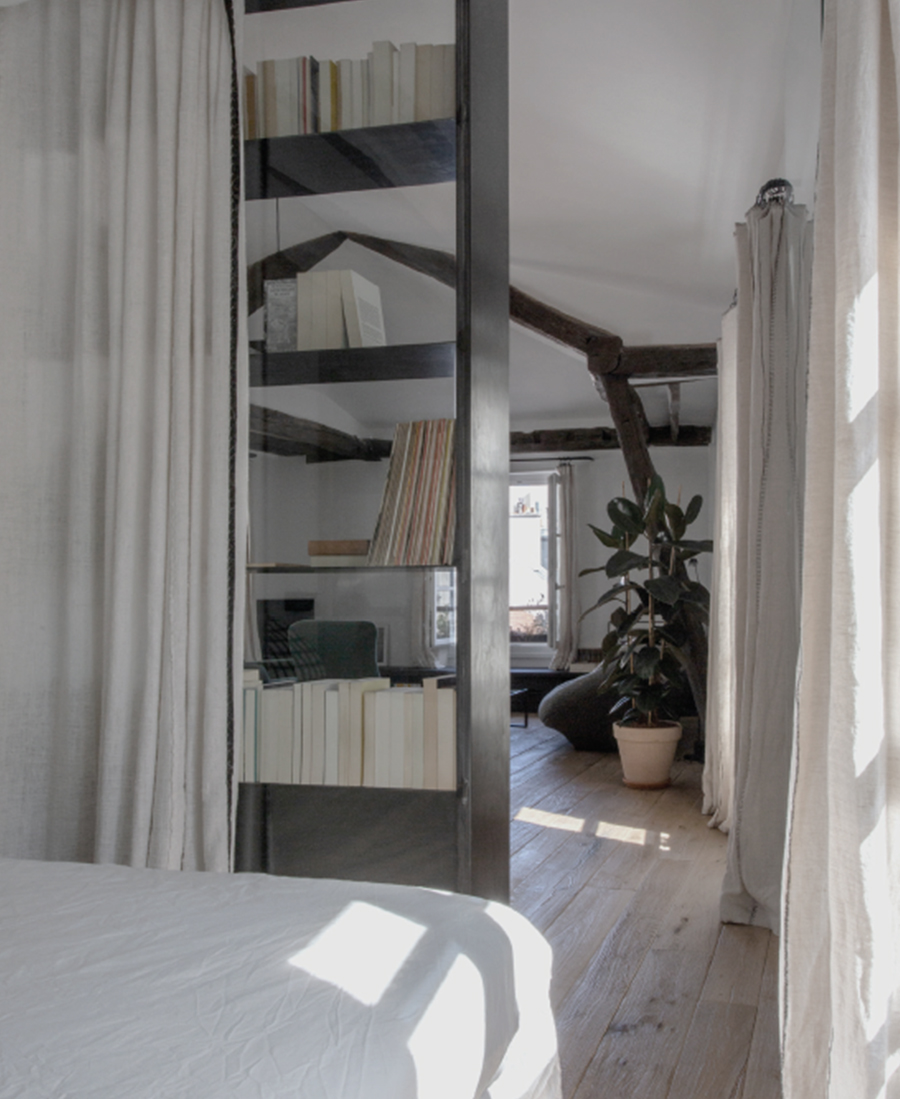
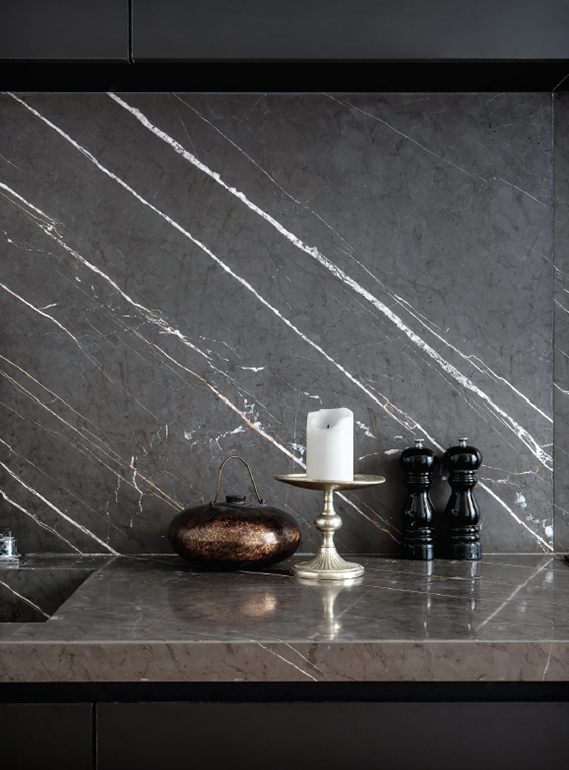
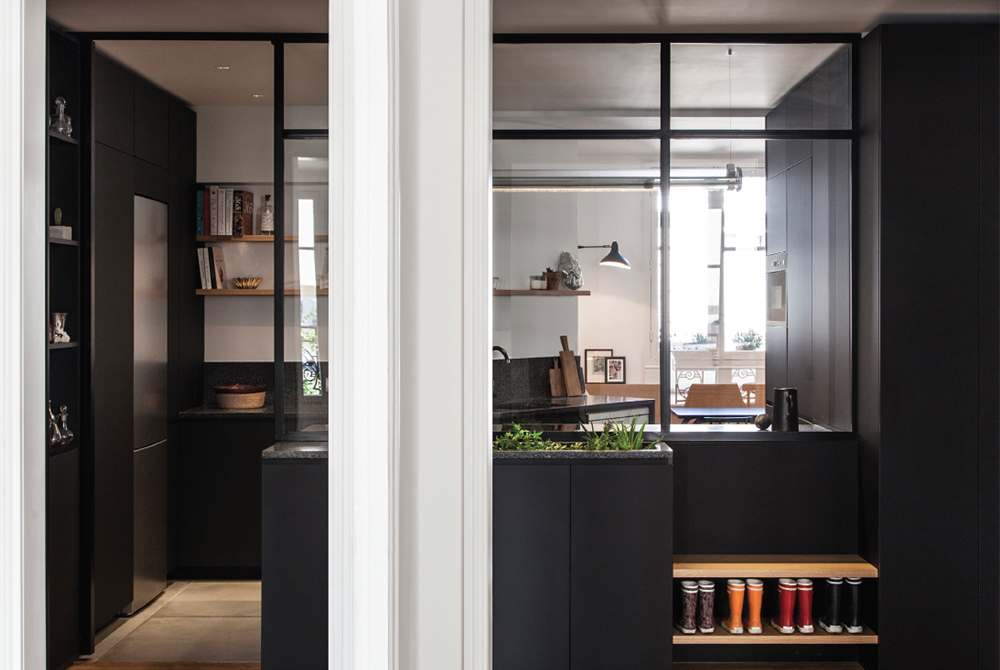
Beyond her particular attention to light and volume, it is the clean lines that inspire Marilyne, whose Buren columns are the reference. Noble materials such as wood, marble, natural stone, wool and ceramics are major tools in her creations because of the sensory and lasting character they bring to interiors. The natural and soft colors, punctuated with vivid touches, elegantly sign his projects.

More than a story of meeting, Marilyne opens with you the field of possibilities. She recognizes herself in the ARCHIK accompaniment which integrates the vision of beauty and preserves the soul of the place. Marilyne joins us to accompany you in the renovation of your refuge and guarantees the realization of a dreamy custom-made setting.

ARCHIK-TEAM-PARIS-ARCHITECTE-MARILYNE SALINI-5

Heju

Interior Designers

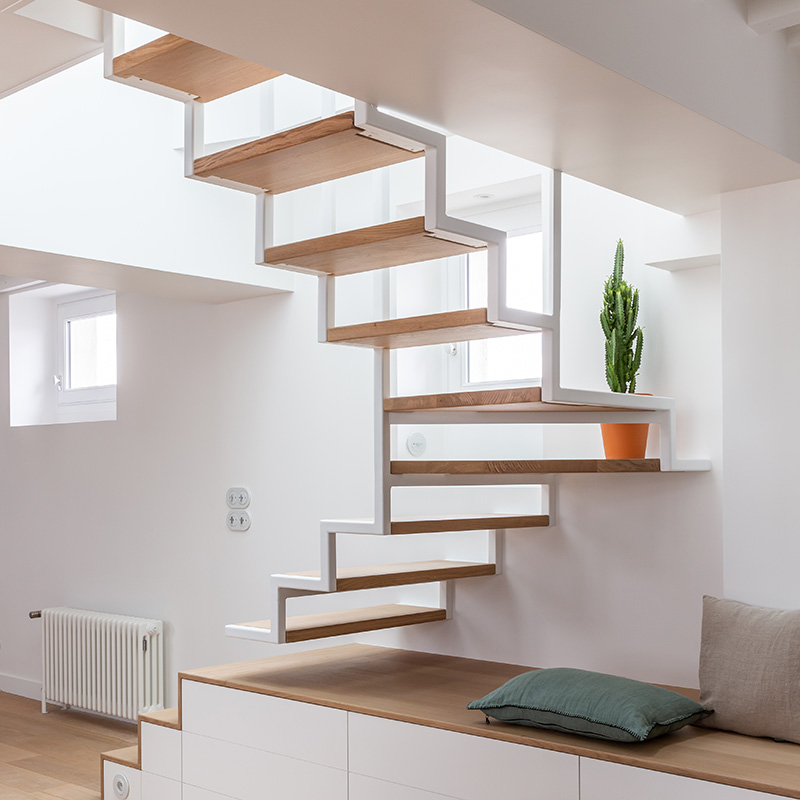
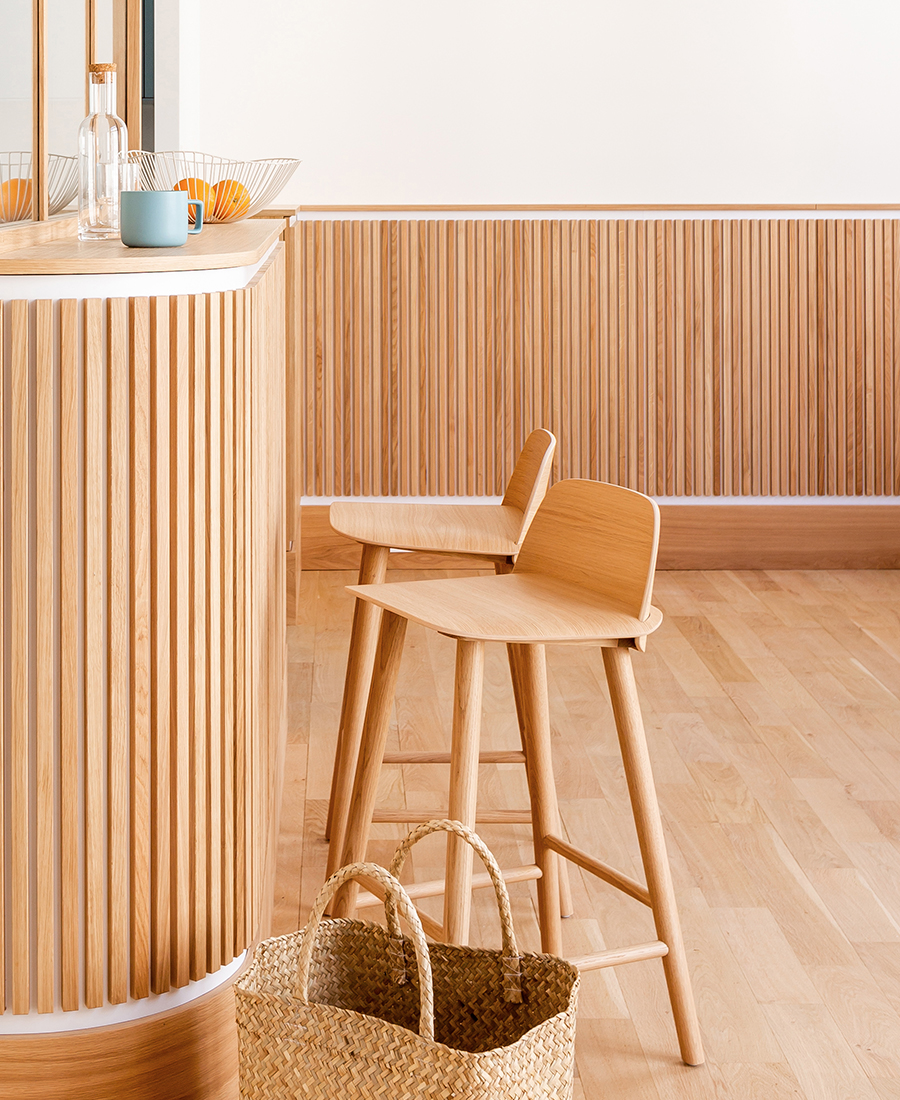
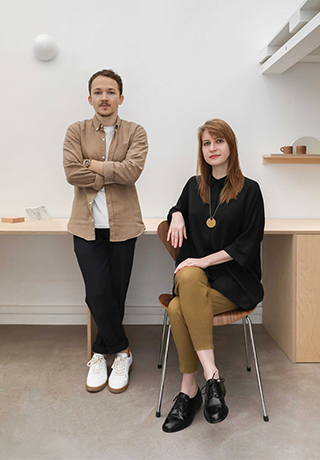
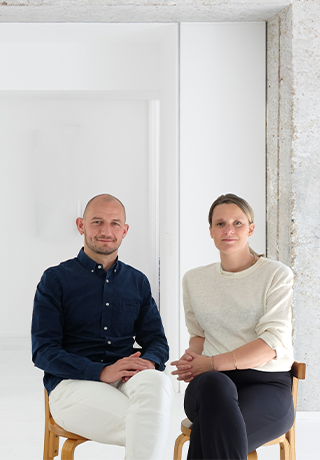
Hélène Pinaud and Julien Schwartzmann met on the benches of the École Nationale Supérieure d’Architecture de Strasbourg in 2015. After graduating, they founded their own studio HEJU in 2015 and created a universe mixing Japanese and Scandinavian influences.

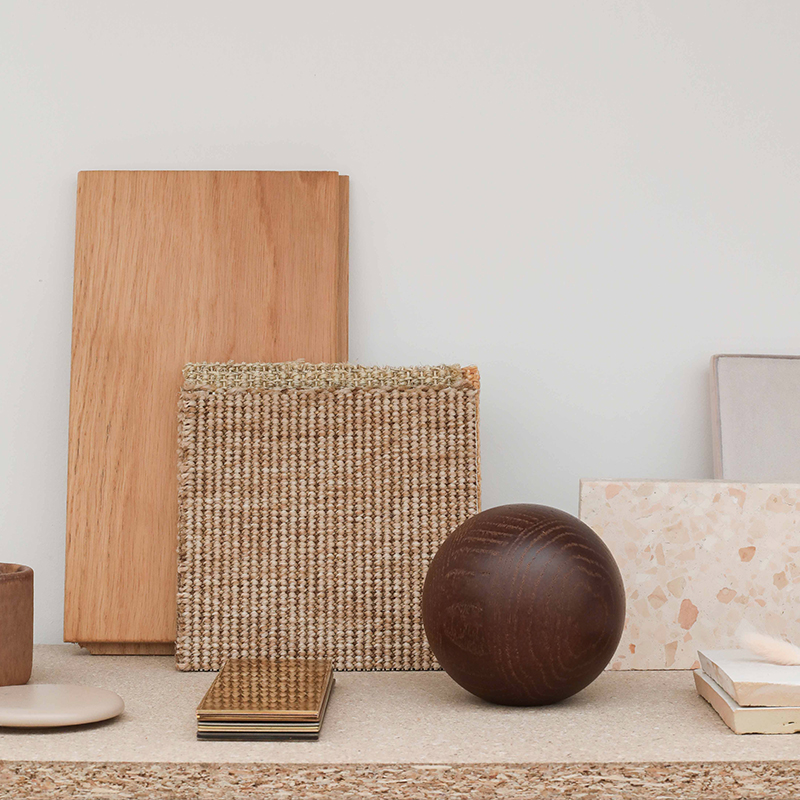
Using minimalist lines and volumes, they create timeless places with the aim of optimising spaces, challenging codes and customs while advocating a return to emotion. They infuse poetry into their clients’ daily lives while favouring natural, living materials that develop a patina over time. The choice of materials, colours and textures is at the heart of their thinking in order to create atmospheres that appeal to all the senses.

At HEJU, beauty comes in the simplest details, as evidenced by their architectural compositions, furniture lines and material combinations.

Their projects are the result of deep spatial and functional reflection, in line with the essence of the place and the lifestyle of their clients. Several values unite us: the continuity between art, design and architecture, in order to create unique places. The fluidity of volumes and the love of the modernist trend.

TEAM-ARCHI-PARIS-HEJU-5

Baptiste LEGUÉ

Interior Designer

Baptiste Legué trained at ESAG Penninghen in Paris and at St Luc in Brussels. As soon as he left the school, he joined the Franklin Azzi agency. For seven years, he sharpened his curiosity, affirmed his knowledge and confronted the demands of the architect-designer profession.

In 2015, he founded the Atelier Baptiste Legué. He then worked on projects for boutiques, flats, second homes or offices and more recently on a hotel project as well as a museum.

In the projects entrusted to him, the Atelier accompanies its clients from conception to delivery, from the layout of the space to the choice of materials, including furniture recommendations and the recommendation of works of art in galleries, which he particularly likes.

Whatever the use of the space to be designed, the Atelier pays particular attention to the quality of the plan, the fluidity of the circulation, the functionality of the spaces, as well as the context in which it is integrated. The Atelier’s projects all have in common that they are uncluttered, designed with raw materials that are intended to accompany their users over time and facilitate their use.

He shares with ARCHIK common values, a sensitivity to beauty and materials with a concern for detail and respect for the history of the spaces he renovates.

BAPTISTE LEGUE-ARCHITECTE-5

SAINT-BLAISE

The Saint-Blaise district, located in the 20th arrondissement in the northeast of Paris, between rue des Pyrénées and boulevard de Charonne, is a dynamic and picturesque district.

A district in flux since 2002, included in the Great Urban Renewal Project, the district has nevertheless managed to retain a warm atmosphere, far from the tourist bustle of the city center. There are many local shops, lively markets and pleasant green spaces, such as Square Antoine Blondin.

Saint-Blaise is known for its heterogeneous architecture, combining influences from the past and contemporary touches. Integrating the village of Charonne, the district has kept the charm of the old Parisian suburbs. The narrow, winding streets are lined with buildings with colorful facades, offering a bucolic charm. The remarkable Saint-Germain-de-Charonne church, listed as a historical monument, sits as the mother of the district.

A charming mix of tradition and modernity where life is good.

MASQUE SAINT-BLAISE 4
MASQUE SAINT-BLAISE 5

For over twenty years, Julia performed on stages across France and around the world as an opera singer. Singing in major opera houses, theaters, churches, abbeys, and exceptional concert halls gave her far more than just an artistic career: it fostered a deep sensitivity to these settings—to their architecture and the emotions they evoke. Through her travels and performances, she developed a keen eye for spatial volumes, light, materials, and that unique emotional resonance that only certain spaces can inspire.

This sensibility took root long before she ever stepped onto a stage. Growing up in Aix-en-Provence, Julia’s life was divided between the conservatory and the family business—two worlds that left a lasting mark on her path: artistic rigor on the one hand, and a love for meeting people, exchanging ideas, and human connection on the other. From an early age, she discovered the joy of music alongside the pleasure of forging connections, listening, persuading, and supporting others.

This curiosity about places is also reflected in her personal journey. Over the years, her numerous moves between Aix-en-Provence, Lyon, and Paris offered opportunities to explore neighborhoods, understand how spaces are used, envision their potential, and imagine a new life. She also chose to invest in Pantin long before the city revealed its full potential. For over twenty years, she has naturally advised friends and family on their real estate projects, reimagining spaces and designing interiors.
Curieuse de toutes les formes d’expression artistique, elle nourrit également son regard au contact d’artisans et d’artistes de son entourage, convaincue que chaque détail participe à raconter une histoire.

Joining ARCHIK felt like the natural choice. After all, the stage and the world of real estate rely on surprisingly similar qualities: knowing how to listen before interpreting, perceiving what makes a place unique, revealing its character, and fostering connections. Ultimately, it is simply another way of telling beautiful stories.

archik-immobilier-architecture-equipe-margaux-valade-5

TELEGRAPHE

It is in the eastern part of the 20th arrondissement of Paris that the charming Télégraphe district sits on a hill, offering a panoramic view of the city.

The district – one of the highest peaks in Paris – is outlined in the middle of its many shops, restaurants and cafes with a popular atmosphere, as well as its green squares conducive to strolling. It takes its name from the Chappe telegraph station which was once located there.

The architecture here is eclectic. There are small workers’ houses, artists’ studios transformed into lofts and old refurbished factories, alongside 1970s buildings. Quiet and urban, it attracts many families in search of a pleasant neighborhood life.

Authentic and popular

MASQUE TELEGRAPHE 4
MASQUE TELEGRAPHE 5

MUETTE-NORD

A district of the 16th arrondissement of Paris, the Muette Nord district stretches from west to east on the edge of the Bois de Boulogne by the lower lake until it opens onto the Seine at the Pont d'Iéna.

Privileged and family-friendly, Muette Nord is one of the most popular areas of the capital. Life is pleasant there with the best schools, opulent buildings and mansions, green spaces like the vast Ranelagh garden, but also local shops.

On the cultural side, we are delighted with the permanent collection and the temporary exhibitions of the imposing Musée de l’Homme in the neo-classical style, those of the National Maritime Museum, but also with the most intimate collections of the Musée Marmottan Monet in the he former château de la Muette and the Clémenceau museum in the latter’s apartment, dedicated to his life and work. A veritable institution of the district, the famous family brasserie La Rotonde sits at the corner of Chaussée de la Muette. Revamped in 2022 by the New York firm Roman and Williams, and winner of the National Design Award, the decor pays homage to the timeless elegance of Parisian brasseries. The district also hosts the town hall of the 16th arrondissement.

A peaceful neighborhood rich in discoveries

MASQUE MUETTE-NORD 4
MASQUE MUETTE-NORD 5

PASTEUR

Bordered by the 7th and 14th arrondissements, the Pasteur district is located to the east of the 15th and notably hosts the arrondissement town hall.

Lively and urban, Pasteur is a district in perpetual motion, animated by its many brasseries, restaurants and shops.

Along its vegetated boulevards, the district is constantly reinventing itself to win over new residents, such as with the complete transformation of the Pasteur museum, or the height gain from the Montparnasse tower culminating at 209 meters and offering the most beautiful panorama. all over Paris.
A must-see cultural venue in the district, the Bourdelle Museum, formerly the sculptor’s studio, offers the public exhibition spaces opening onto gardens adorned with the artist’s grandiose sculptures. We are intrigued by Villa M, a huge glass house with a hybrid concept around well-being and nature, the work of the Franco-Brazilian agency Triptyque Architecture, under the artistic direction of Philippe Starck.

A district in full swing, appreciated by these inhabitants for its places of proximity and centers of interest.

MASQUE PASTEUR 4
MASQUE PASTEUR 5

CAMBRONNE

It is in the 15th arrondissement of Paris that the peaceful district of Cambronne takes place.

Cambronne escapes the tourist tumult of the city and offers a green local setting with on one side the square Cambronne and on the other, the square Garibaldi.

Rich in leisure opportunities and hosting several schools, family life is particularly pleasant. 810 meters long and offering a wide range of local shops, rue Cambronne stretches from rue de Vaugirard to place Cambronne where bistros and cafés invite you to relax.

Cambronne is a privileged residential urban sector, which harmoniously combines luxury Haussmann buildings and cubic buildings from the 1970s.

MASQUE CAMBRONNE 4
MASQUE CAMBRONNE 5

GRENELLE

To the northwest of the 15th arrondissement, bordering the very chic 7th arrondissement and its Champs de Mars, is the Grenelle district, directly linked to the 16th by the famous Pont Bir Hakeim.

Until the end of the 19th century Grenelle was a vast sandy plain where rabbits reigned. Today, the district is better known for its large residential towers and for its brand new shopping center than for its historical past of which few vestiges remain. Built in 1905, the essential Passy viaduct, renamed by General De Gaulle “Pont de Bir Hakeim” has since served as the setting for many films.

To the north of the district and adjoining the 7th arrondissement, don’t miss the Swiss Village, today an essential micro-district for art collectors and antique hunters. Built for the Universal Exhibition of 1900, it was at the time a reconstruction of a real Swiss village to become in the 1960s, the village that we know, with modernist architecture, with its glass tiles and its patios.

The Grenelle district offers a living environment where history and architecture mingle.

MASQUE GRENELLE 4
MASQUE GRENELLE 5

PLAISANCE

Located between Gare Montparnasse and Parc Montsouris, the Plaisance district retains its formerly suburban air.

A former agricultural hamlet, the Plaisance district became the favorite place of sculptors, engravers and all kinds of artists in the early 1900s. Populated with individual houses with interior courtyards that have become small workshops, the streets of the district are real places to stroll.

Not far from Place Victor and Hélène Basch, Impasse du Moulin Vert presents itself as the typical passage of the district with authentic charm. Place de Seoul, Notre-Dame-du-Travail church, rue des Thermopyles or the villa of Alésia are just as many curiosities that are worth the detour. The backbone of the district, rue Raymond is the shopping street of Plaisance. Food shops and tasty stalls punctuate the district to the delight of its residents.

The district of Plaisance has retained an incomparable charm and offers to the curious walker beautiful discoveries.


MASQUE PLAISANCE 4
MASQUE PLAISANCE 5