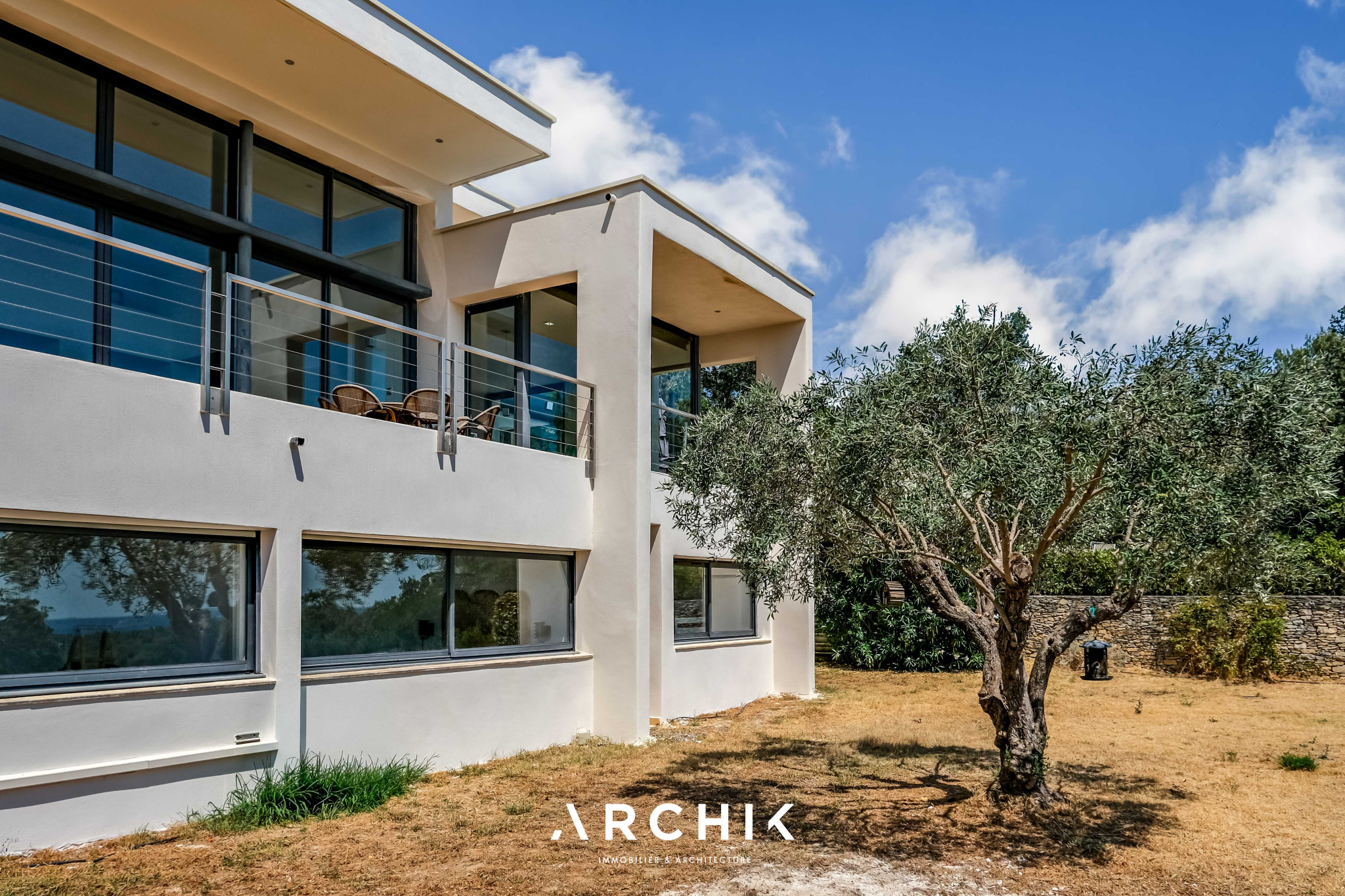
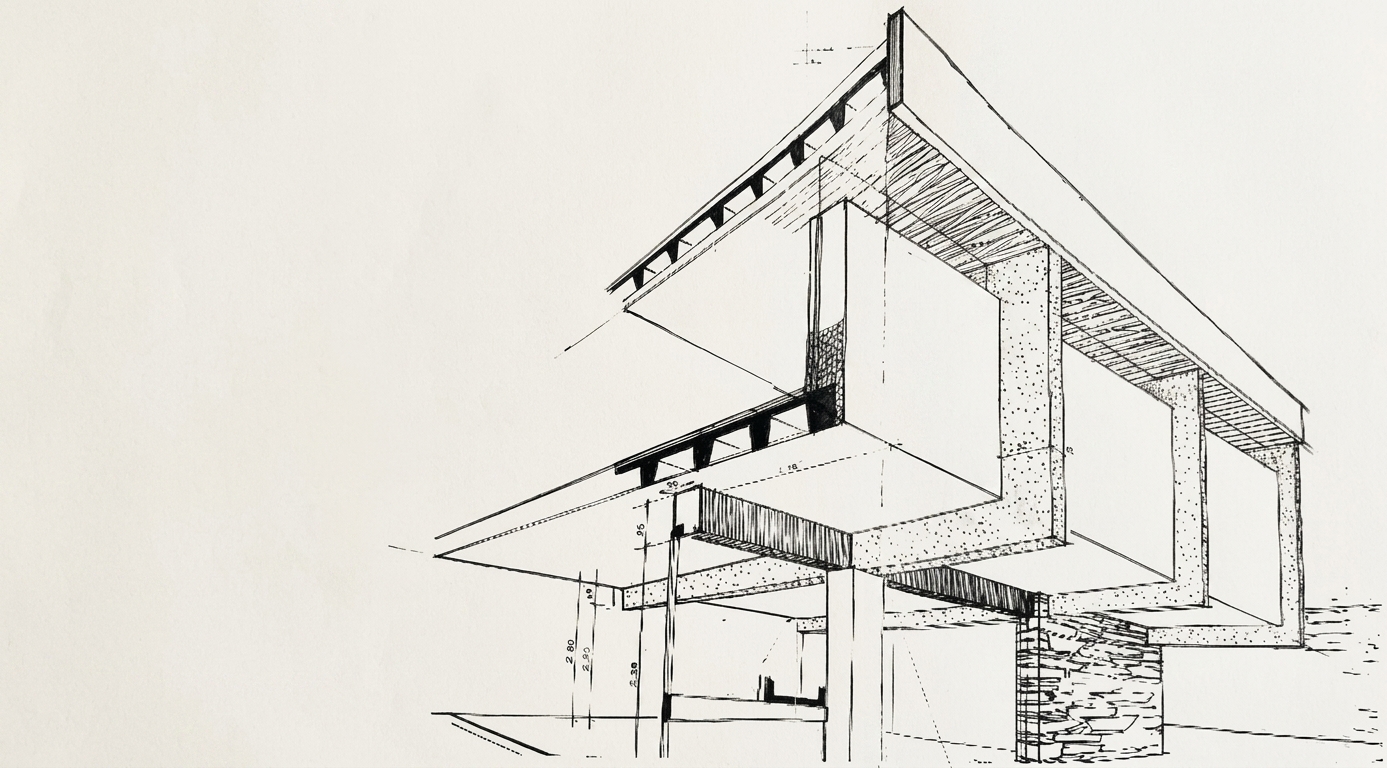
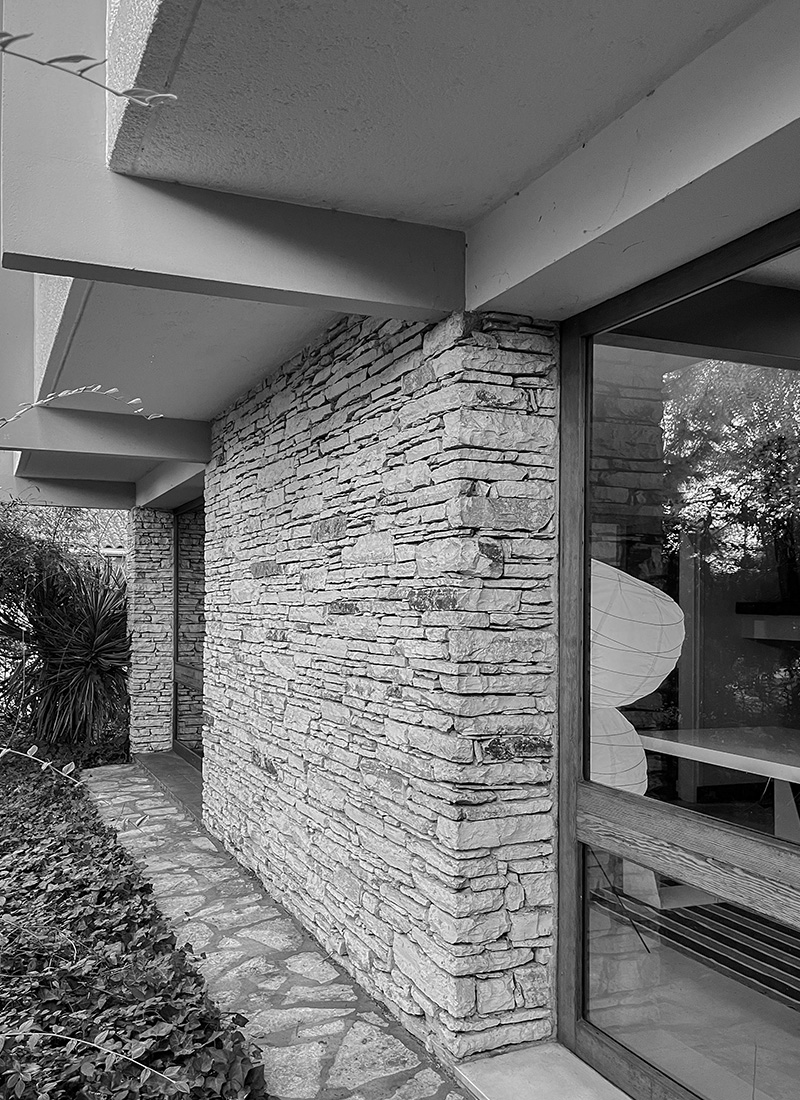
Cette maison résume à elle seule l’équilibre que l’architecte cherchera toute sa carrière : des volumes francs et une implantation pensée pour le site, qu’il s’agisse d’une résidence privée, d’un équipement public comme la piscine de Casteljaloux, ou d’un projet à plus grande échelle.

Edgard Broutet continue ainsi de travailler sur des programmes variés, des lotissements aux écoles, jusqu’aux bâtiments industriels tels que les chais de Hennessy.

Côté patrimoine, il restaure et met en valeur l’architecture historique, comme pour le prieuré Saint-Léger de Cognac.

Edgar Broutet

Né en 1925, Edgard Broutet est un architecte cognaçais qui a exercé durant la seconde moitié du XXe siècle. Diplômé de l’École d’Architecture de Bordeaux en 1951, il se met très vite à la pratique. Avec plusieurs camarades, il est réquisitionné par son professeur Claude Ferret, alors directeur de l’École d’Architecture, pour participer à la reconstruction post-guerre de Royan, notamment sur l’îlot 19.

Comme pour la ville de Royan, le début de sa carrière est marqué par les enseignements du Bauhaus et les fantaisies de l’architecture brésilienne. Si ses débuts sont résolument modernes, de retour dans le Cognaçais il se tourne vers une architecture plus régionaliste et vernaculaire, revendiquée contemporaine sans être moderne.

Passionné par l’Italie, influencé par ses voyages à Venise et à Florence, il tourne aussi son attention vers le patrimoine, avec une véritable sensibilité envers le travail de ses prédécesseurs.

À la retraite depuis 15 ans, Edgard Broutet aura su s’adapter tout au long de sa carrière pour suivre ses intuitions et apporter une offre architecturale aussi diverse qu’humble.

Edgard Broutet est mort en mai 2026, à l’âge de 100 ans.
L’étage est entièrement consacré à une suite parentale de très belles dimensions. Véritable appartement privé, elle accueille une salle de bains  ouverte avec baignoire intégrée face au paysage, un dressing indépendant  le tout offrant un point de vue contemplatif sur la vallée.

Le niveau inférieur réunit quatre chambres, toutes dotées de leur propre salle d’eau, un bureau, de nombreux espaces de rangement

Le jardin accompagne naturellement la topographie du terrain. En pente douce, ponctué d’oliviers centenaires et d’essences méditerranéennes, il compose un paysage vivant où chaque terrasse offre un nouveau point de vue sur cet environnement exceptionnel.

Garage, nombreux stationnements et prestations de qualité complètent cette propriété contemporaine, pensée comme un véritable refuge ouvert sur la nature.

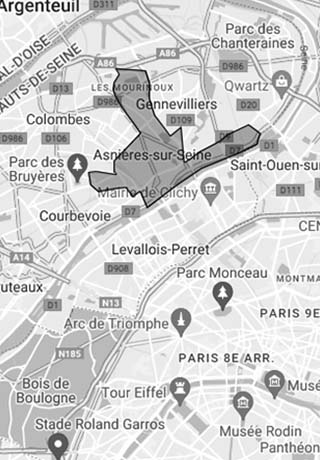
ASNIÈRES-SUR-SEINE

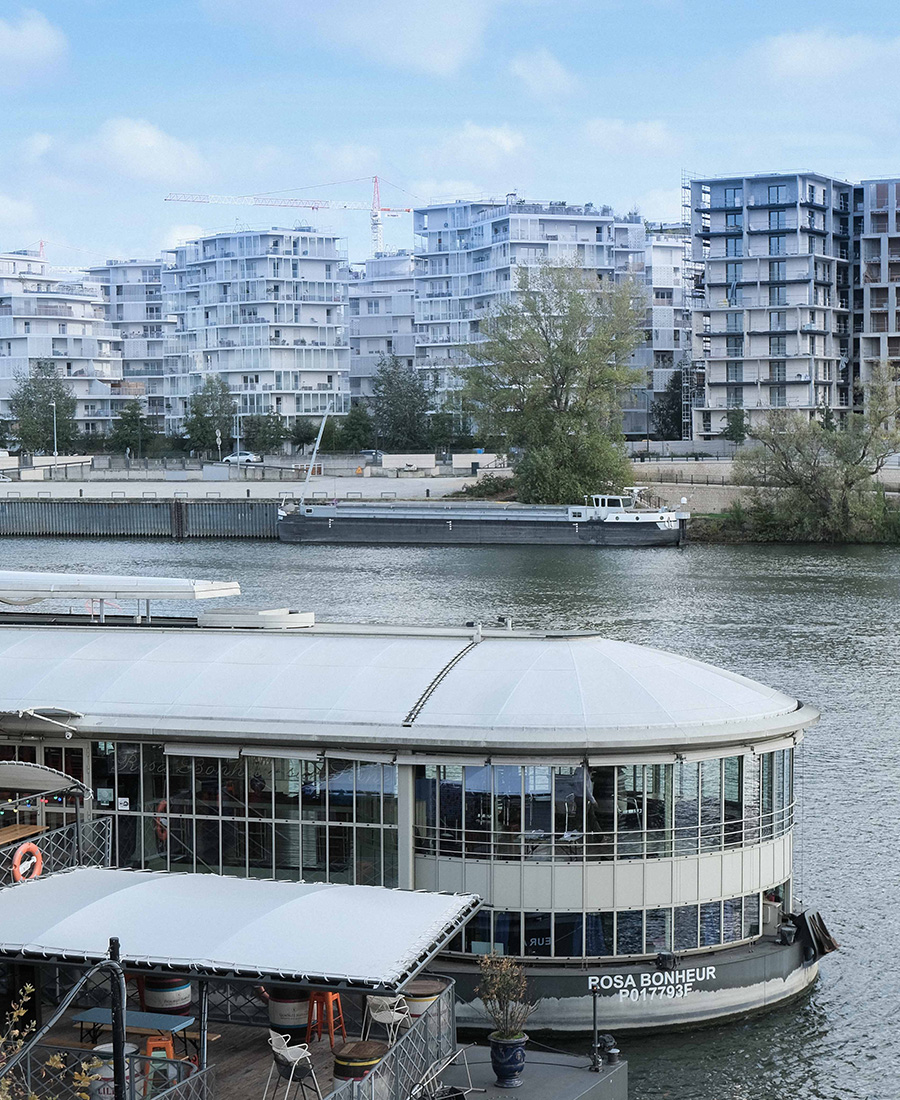
Bordering the left bank side of the river, the town of Asnières-sur-Seine is located in the northwest suburbs of the capital, thus benefiting from a strategic location.

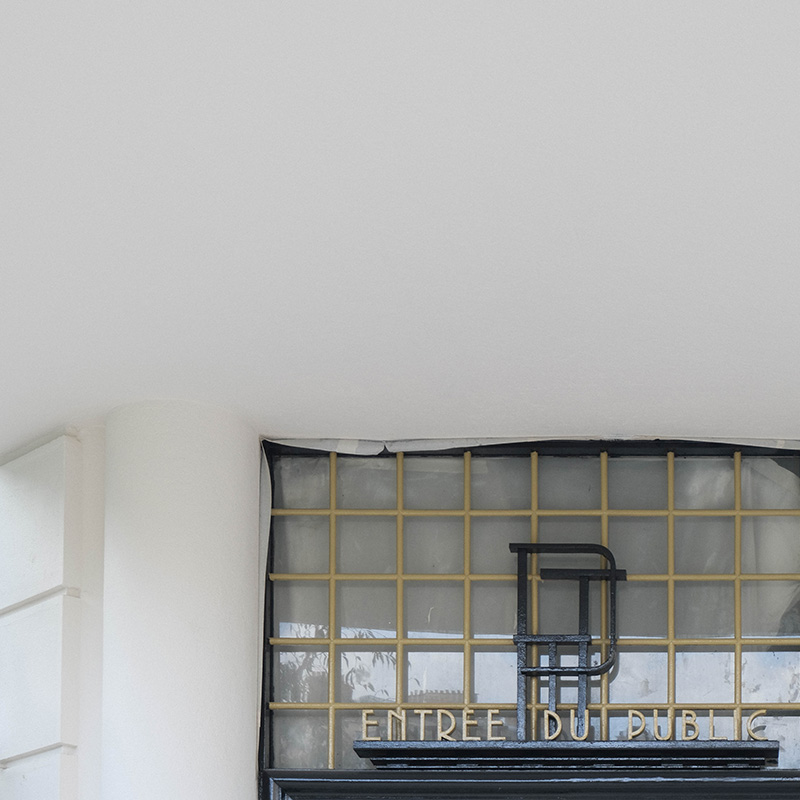
Rich of an architectural heritage spanning the ages, Asnières-sur-Seine is full of monuments and places that bear witness to the city’s prosperous past: from the Neolithic era, with its menhir located in the Square du Maréchal Leclerc, to the 18th century with its castle, emblem of the city, and also masterpieces from the Art Nouveau era with the house of Monsieur Vuitton or from the Art Deco era with the facade of the Main Post Office.

Its inner city around the train station remains the most sought-after district for its accessibility, its shops and its charm, while the west of the city hosts beautiful bourgeois residences from the beginning of the 20th century which are the most popular.

In terms of transport, the city is one of the most accessible of the inner suburbs, with a metro line (and soon an additional line as part of the Grand Paris Express) as well as two train lines connecting Saint-Lazare station in 7 minutes from downtown.

A small particularity has made it famous: the first cemetery of the modern era intended for pets, inaugurated in 1900, located in Robinson Park which runs along the banks of the Seine. Another green space of interest is the Square Leclerc located behind the Town Hall.

archik-immobilier-architecture-city-guide-asnieres 4

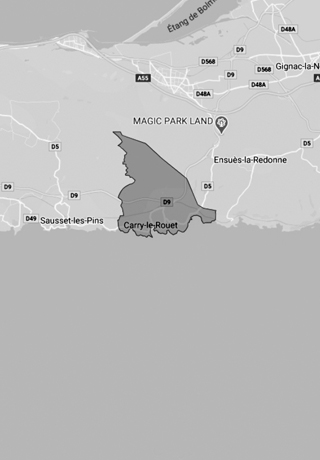
Carry-le-Rouet

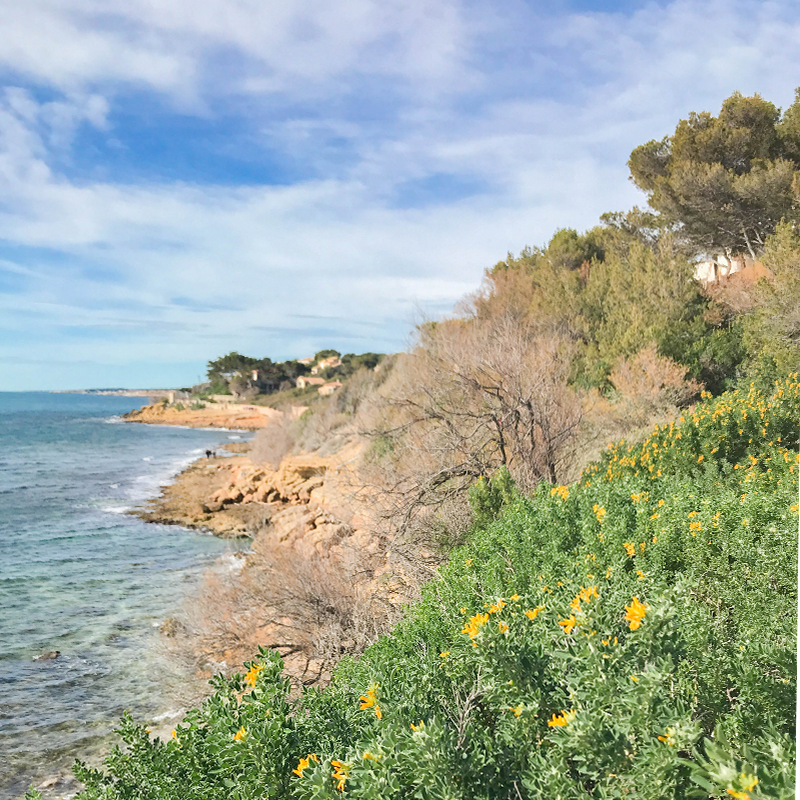
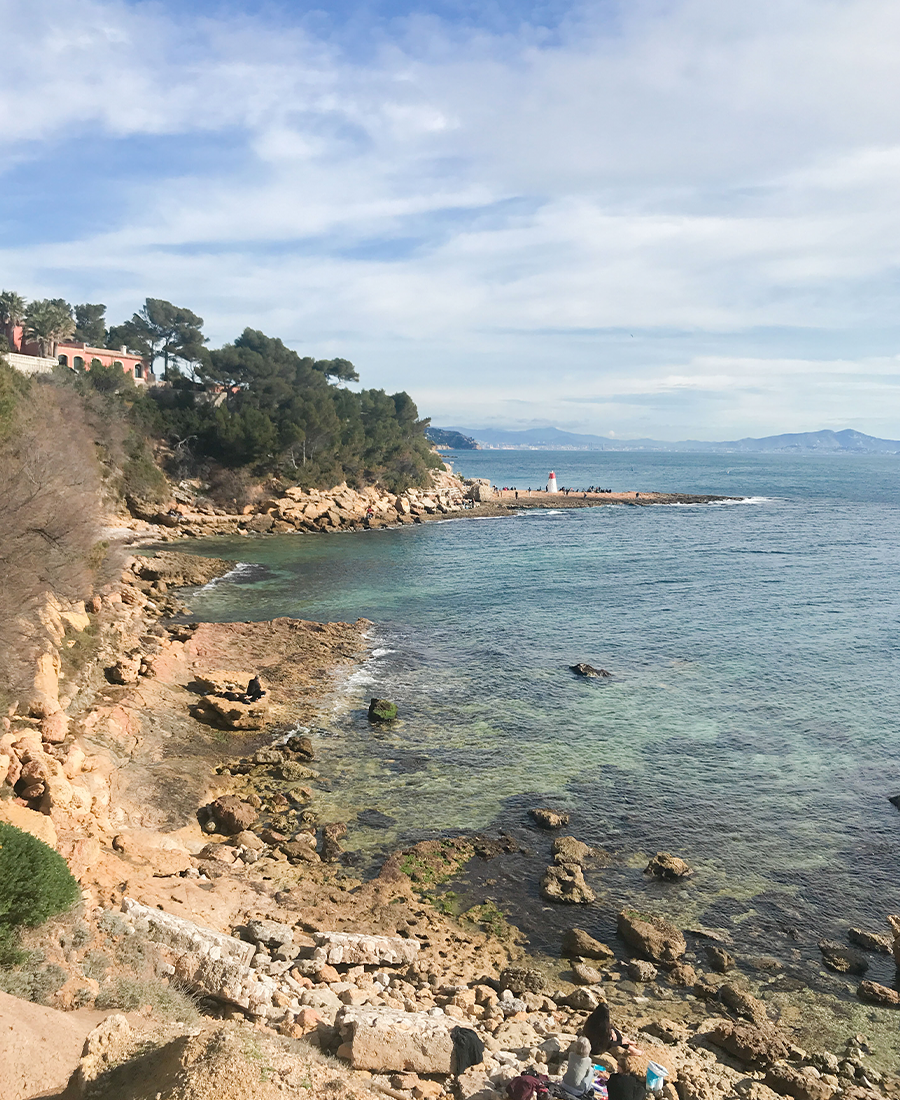
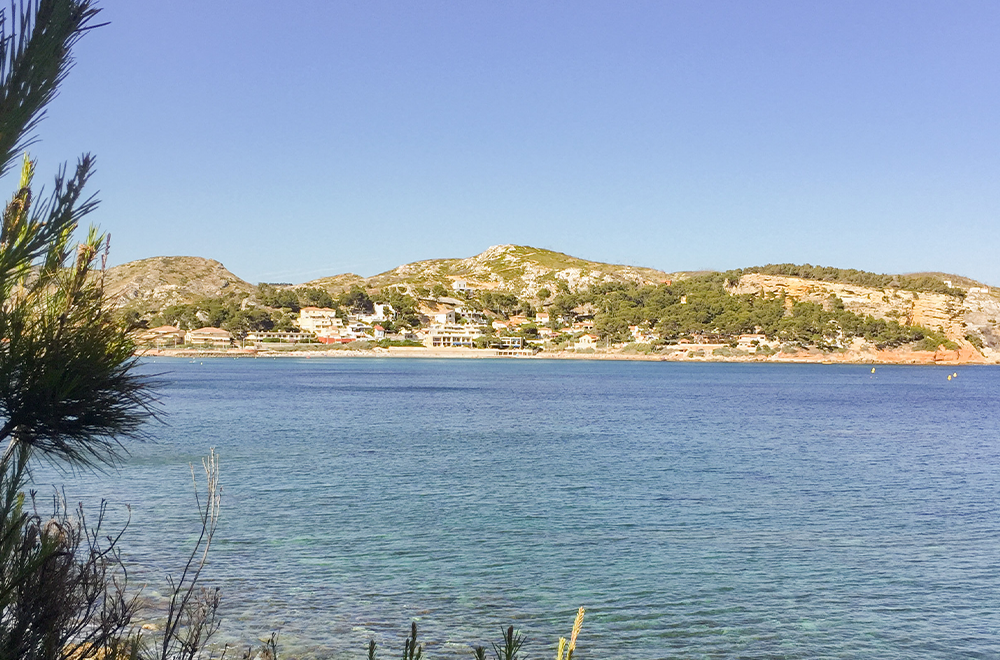
Nestled on the Côte Bleue, the charming district of Carry-le-Rouet is a true pearl of the Mediterranean. Renowned for its picturesque landscapes and authentic atmosphere, Carry-le-Rouet offers an idyllic setting for sea and nature lovers.

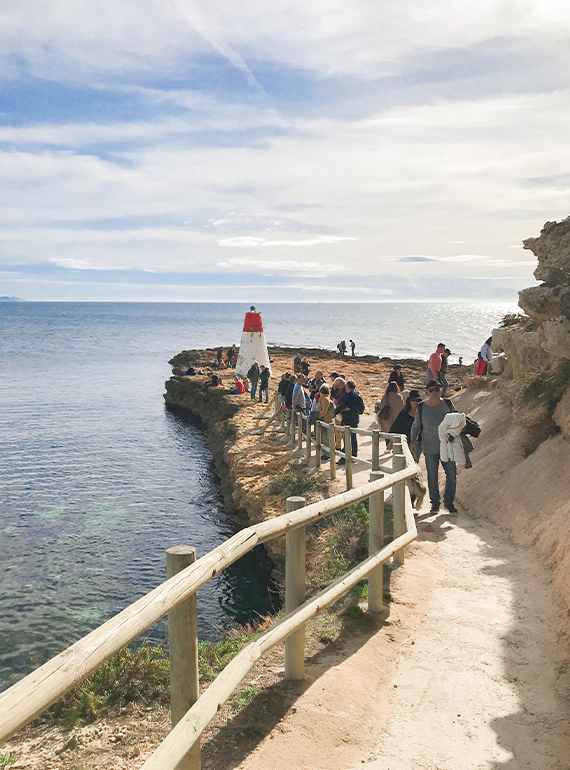
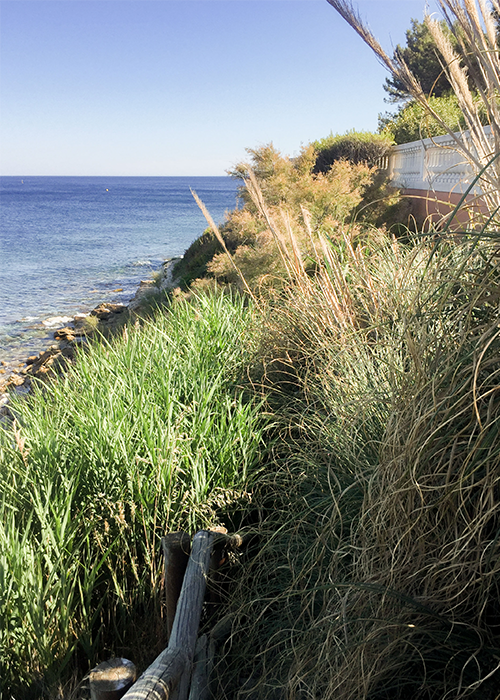
This coastal district is famous for its crystal-clear waters and wild coves. Diving enthusiasts will be delighted by the seabed’s rich biodiversity. Hiking trails also offer superb sea views, inviting walkers to explore the region’s unspoilt natural beauty.

Narrow streets lined with colorful houses and lively squares filled with cafés and restaurants are brimming with charm. The shaded terraces offer a breathtaking view of the picturesque port, where fishing boats and pleasure craft sway to the rhythm of the waves.

An enchanting Mediterranean atmosphere.

Allauch

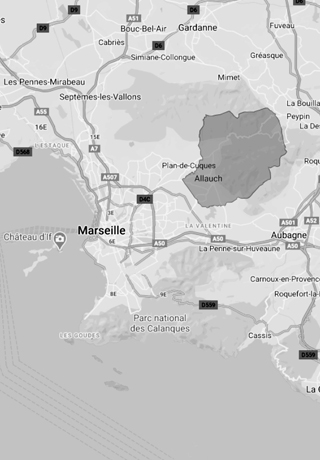
Situated between the sea and the hinterland of Provence, Allauch is a Provencal village full of history.

Just ten kilometers from Marseille, Allauch is the perfect place to enjoy both the sea and nature. A gateway to Marcel Pagnol’s hills, Allauch is particularly appealing thanks to its well-preserved Provencal traditions.

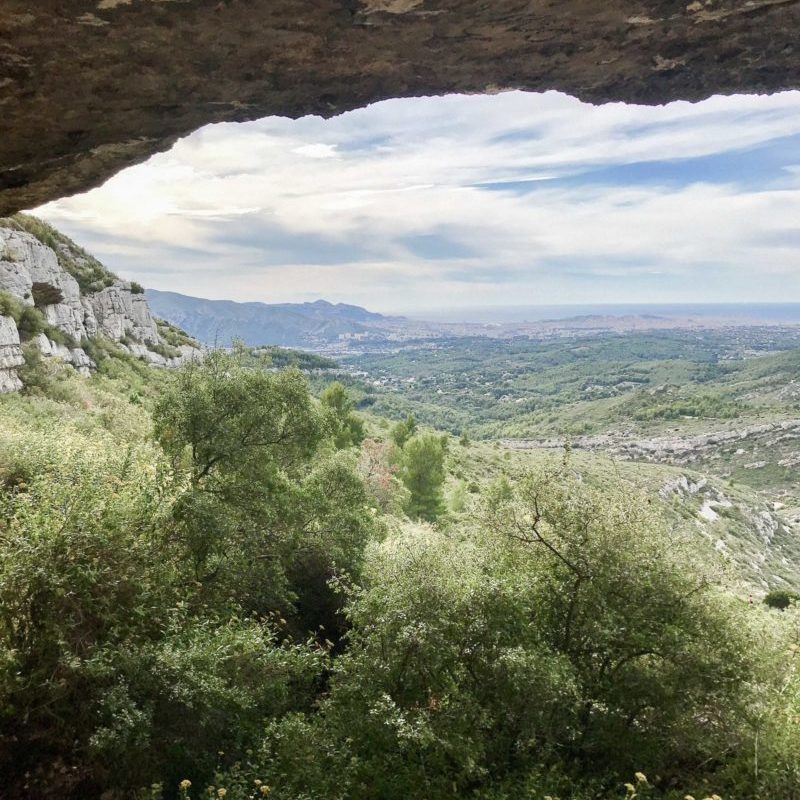
Home to the Bastide Neuve, the famous house where Marcel Pagnol used to spend his vacations, Allauch is also home to most of the remarkable peaks of the Pagnol hills, as well as a number of caves. Allauch is also home to the Parc Départemental de Pichauris, from which many of the hillside walks start.

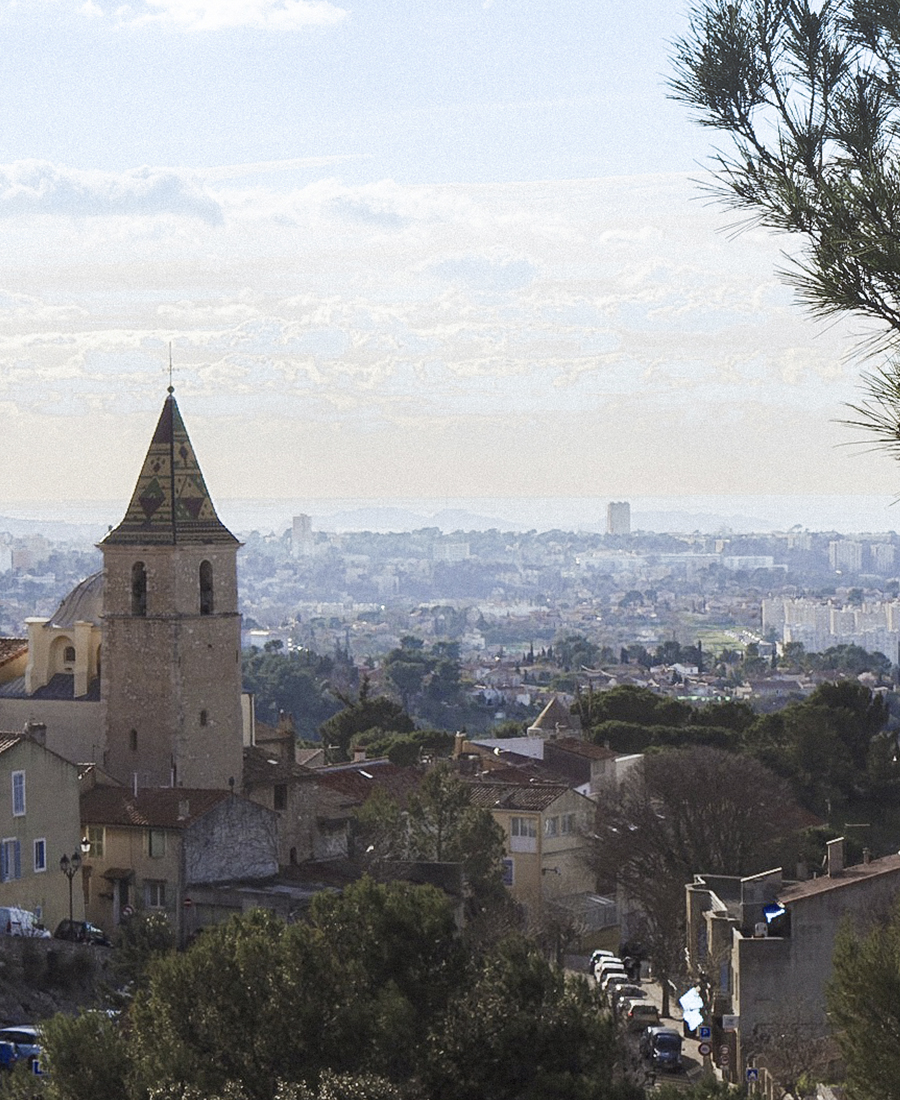
Above the village is the Notre-Dame du Château chapel, which can be reached on foot. Its forecourt offers a breathtaking view of Marseille, dominated by the famous “Bonne Mère” (Good Mother), in some ways considered its big sister.

Allauch is an ideal setting for families looking to recharge their batteries.