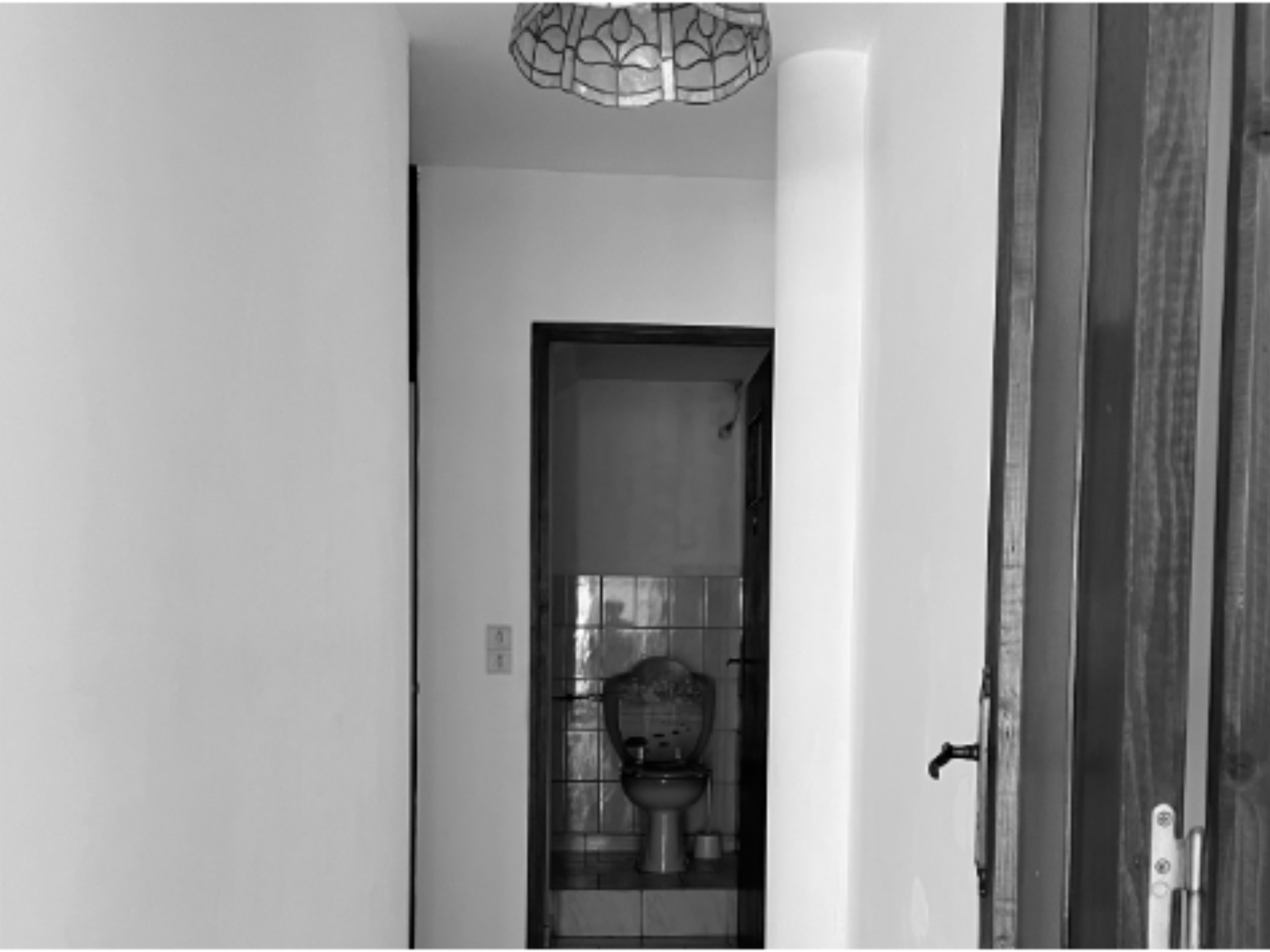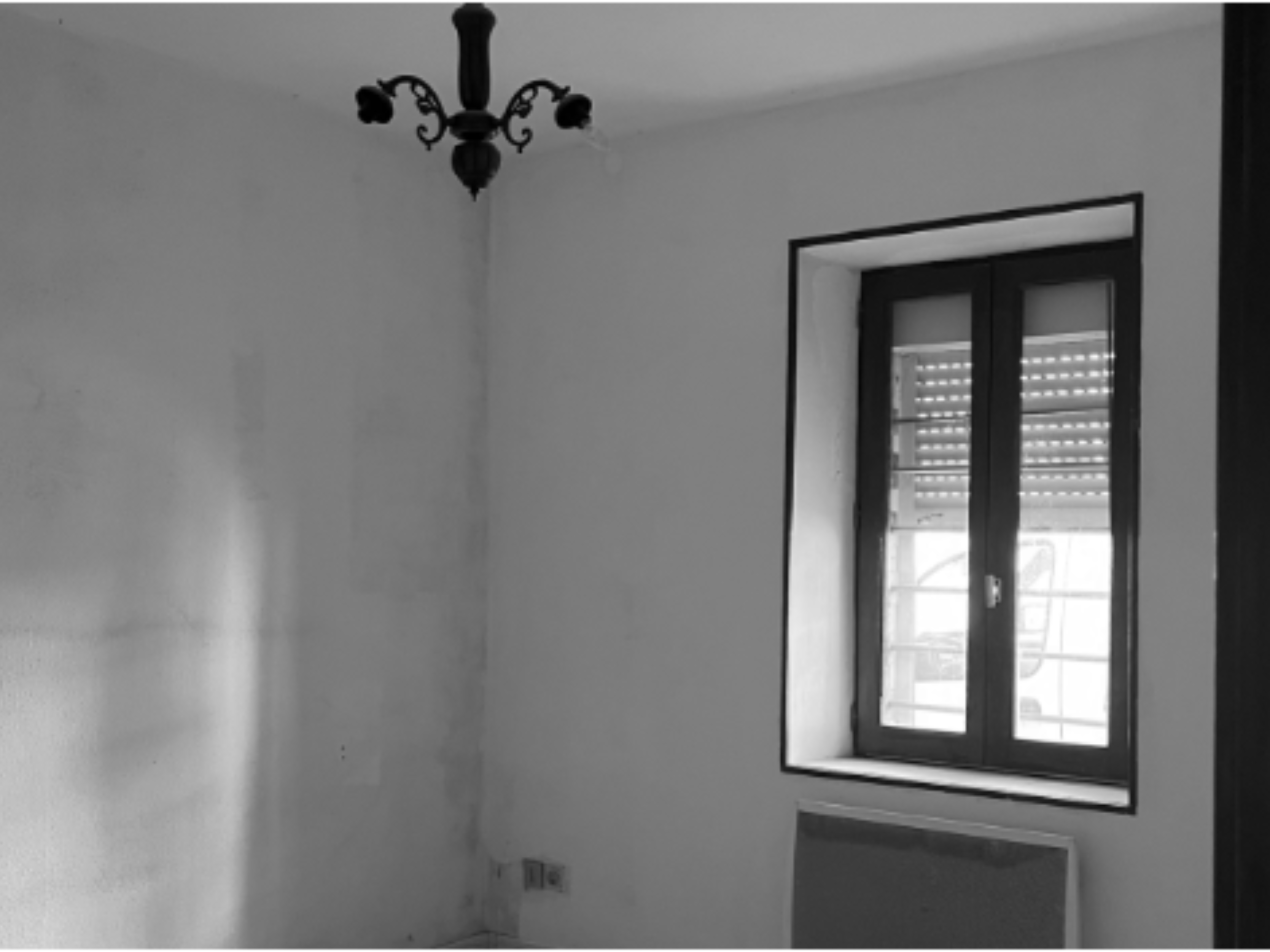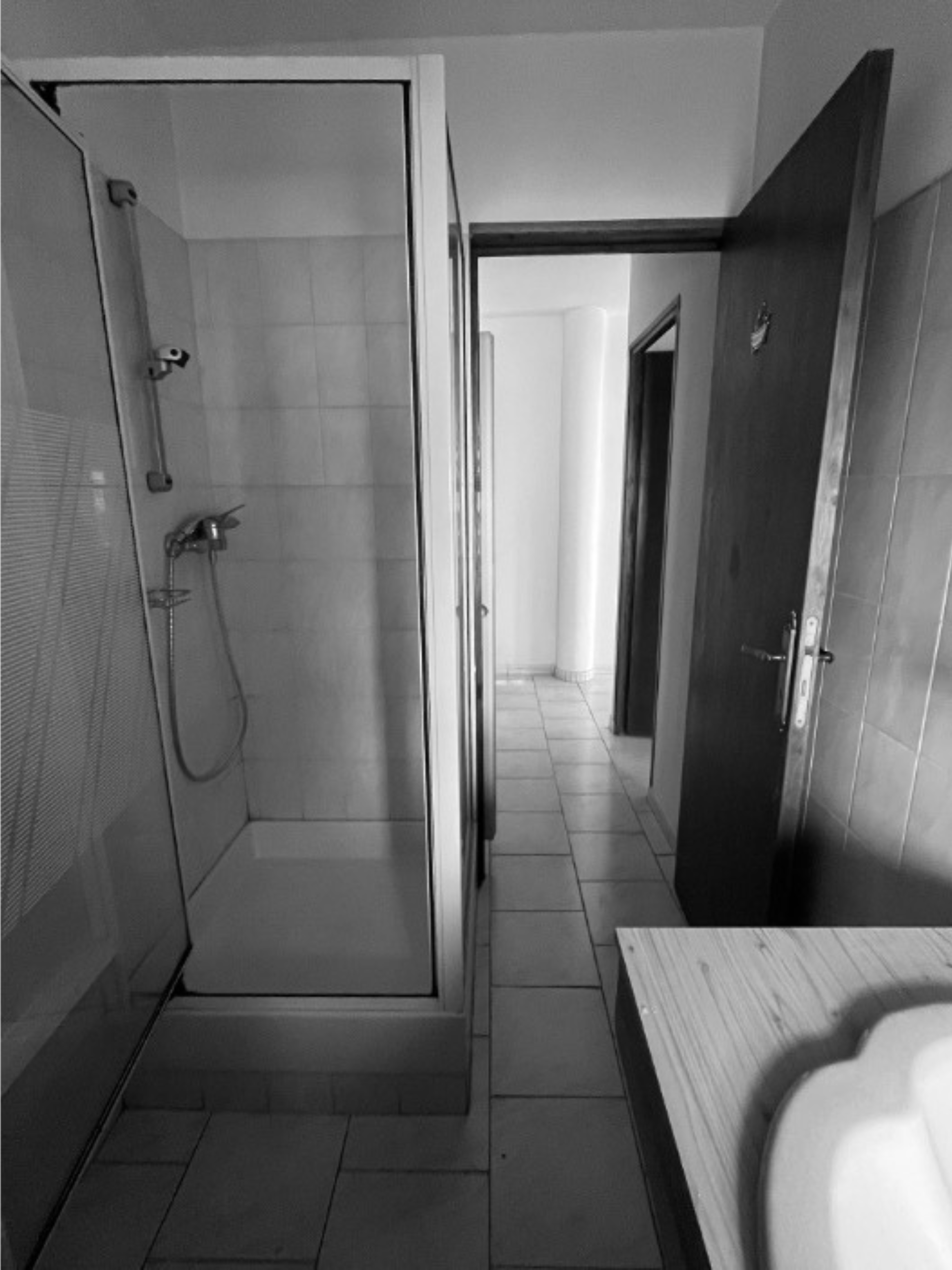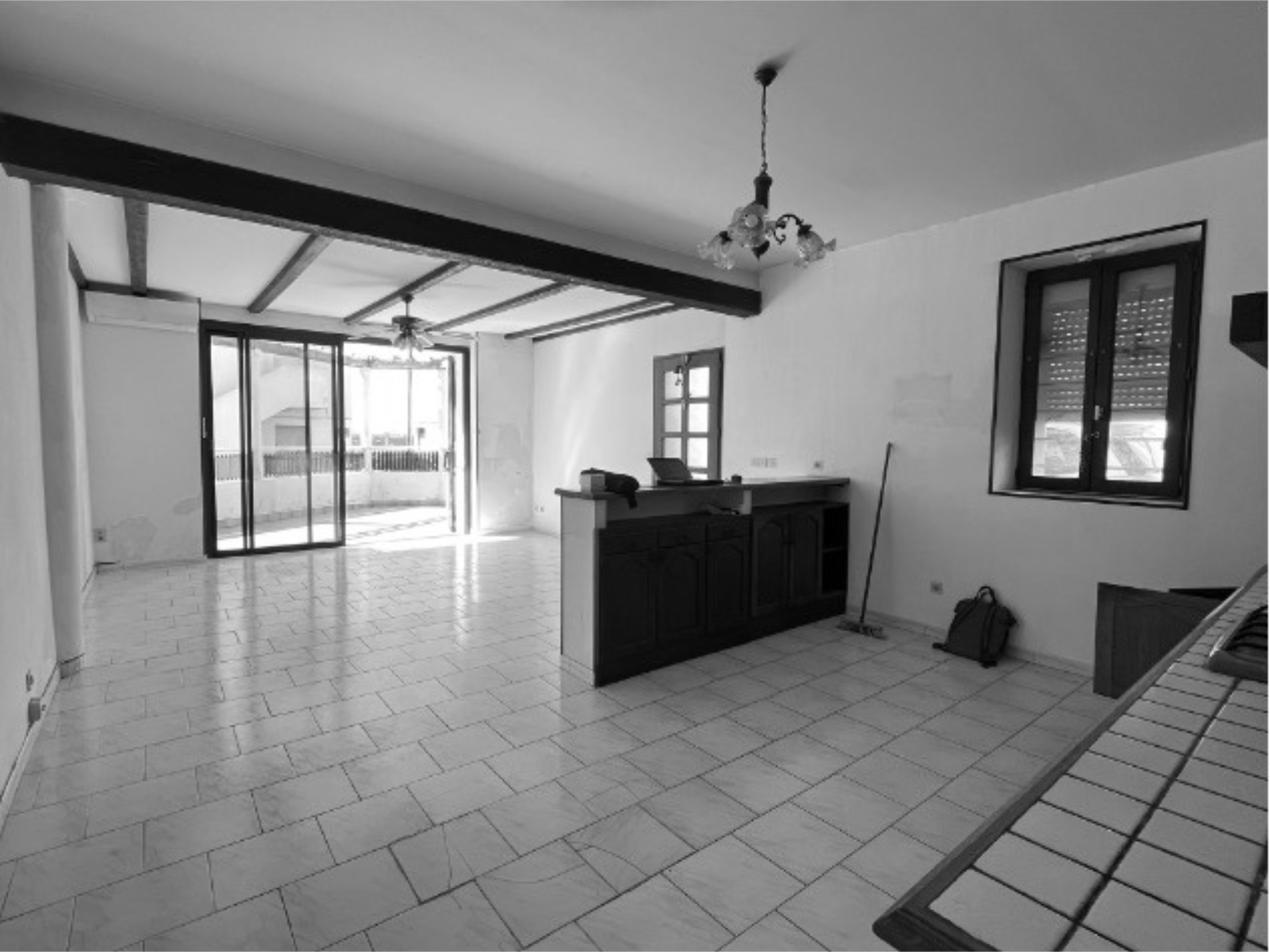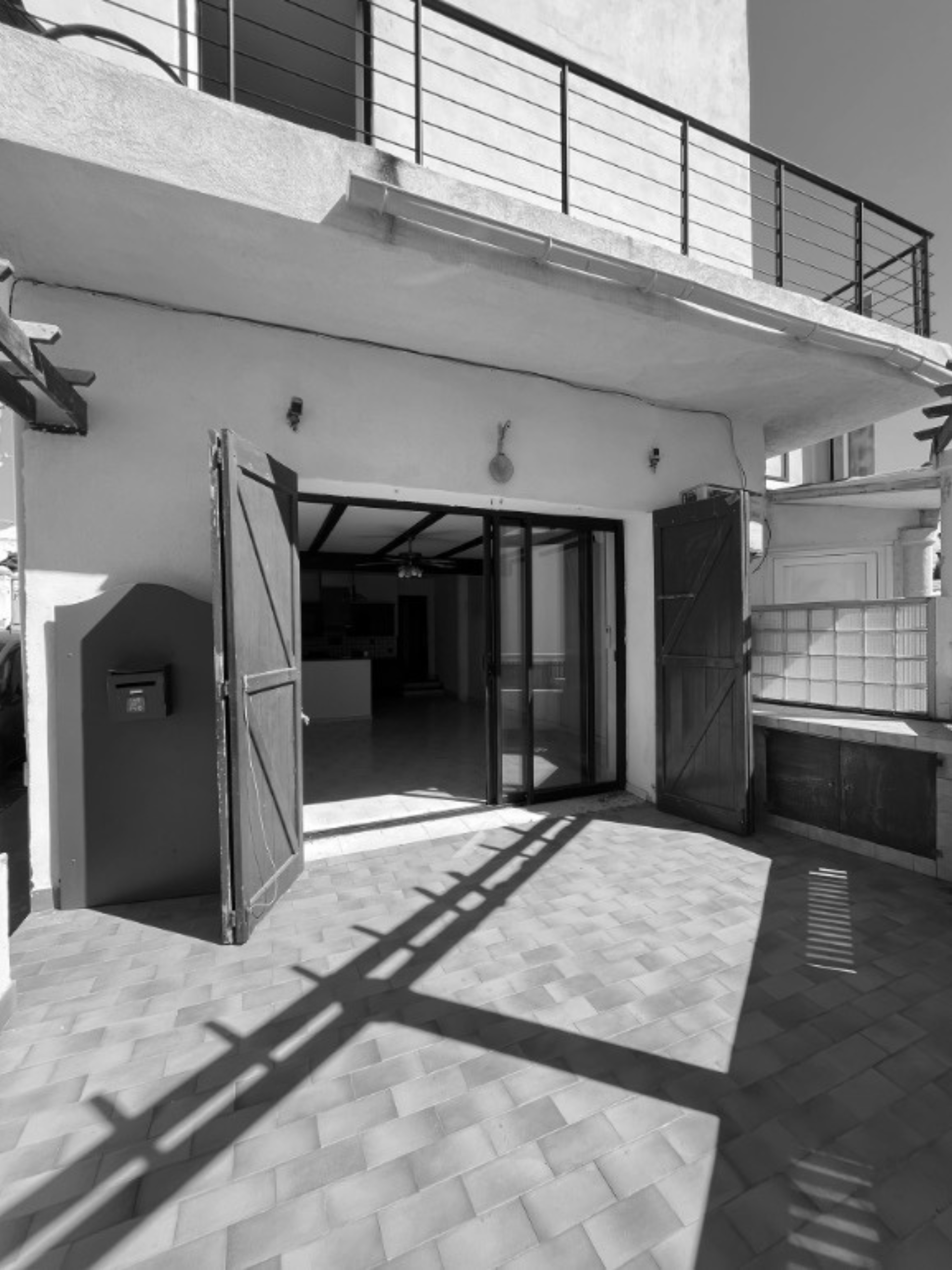
In this setting steeped in history, this former restaurant annex—resembling a small shed and seemingly frozen in time—became ARCHIK’s new playground, undergoing a transformation that remained true to its past and its roots.

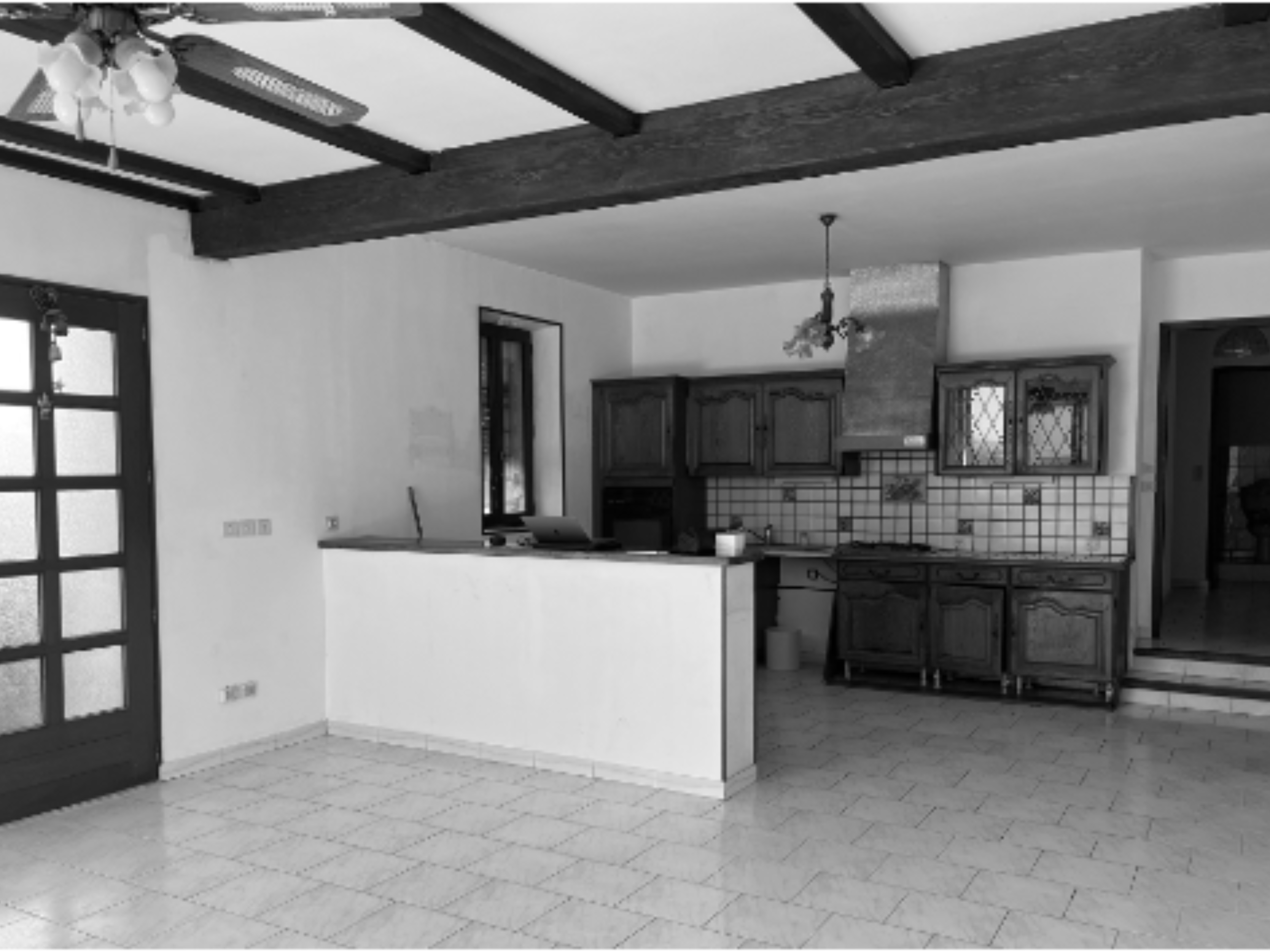
Before …
Objectif

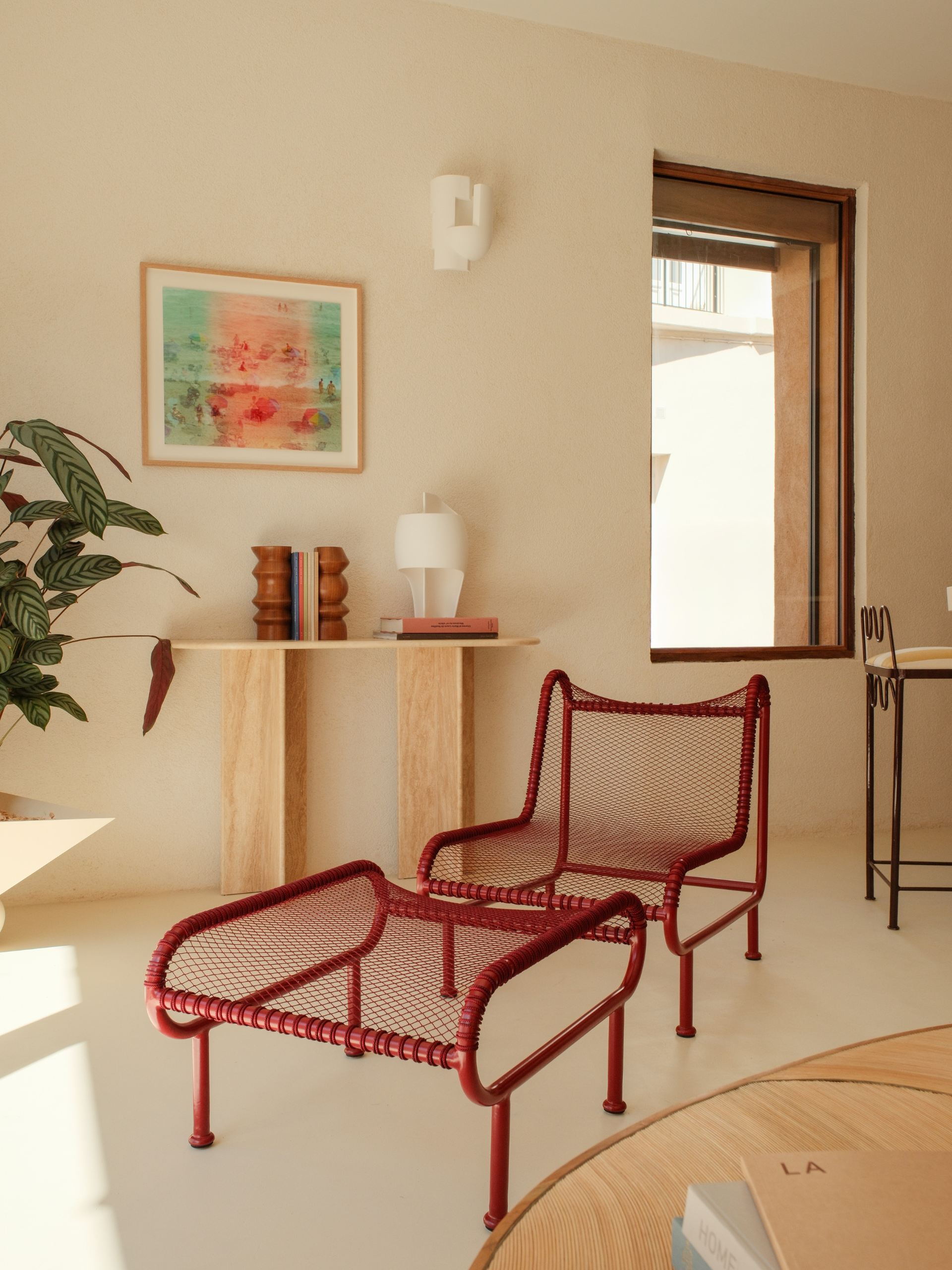
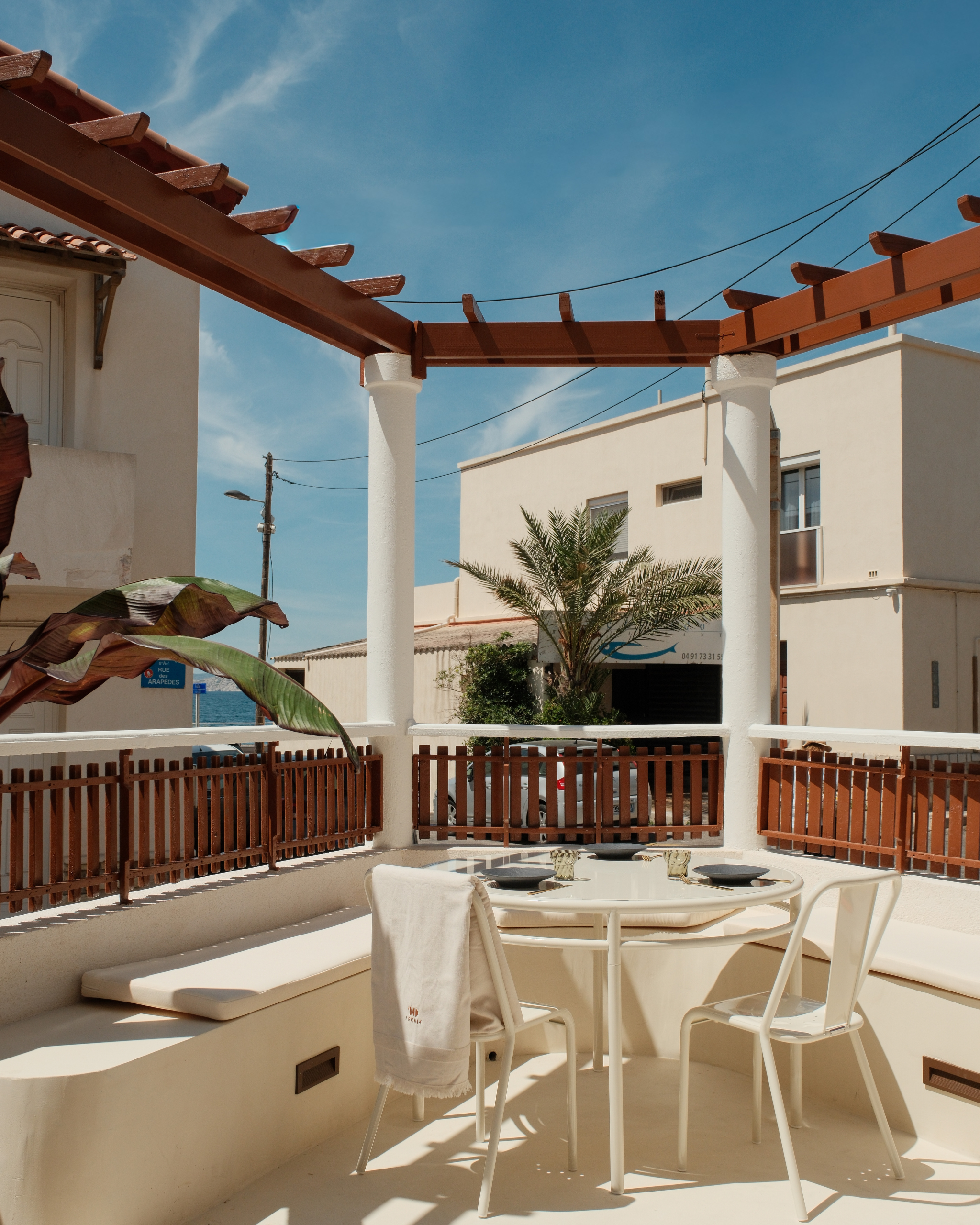
Conceived as a reinterpretation of a beach cottage with a more structured and assertive design, the renovation adds an extra bedroom to this apartment, making it ideal for a family vacation in the Mediterranean or as a second home. The character of the space has been preserved, both in its exterior volumes and in the design of its windows and doors, while offering a living environment better suited to contemporary lifestyles.
Guidelines

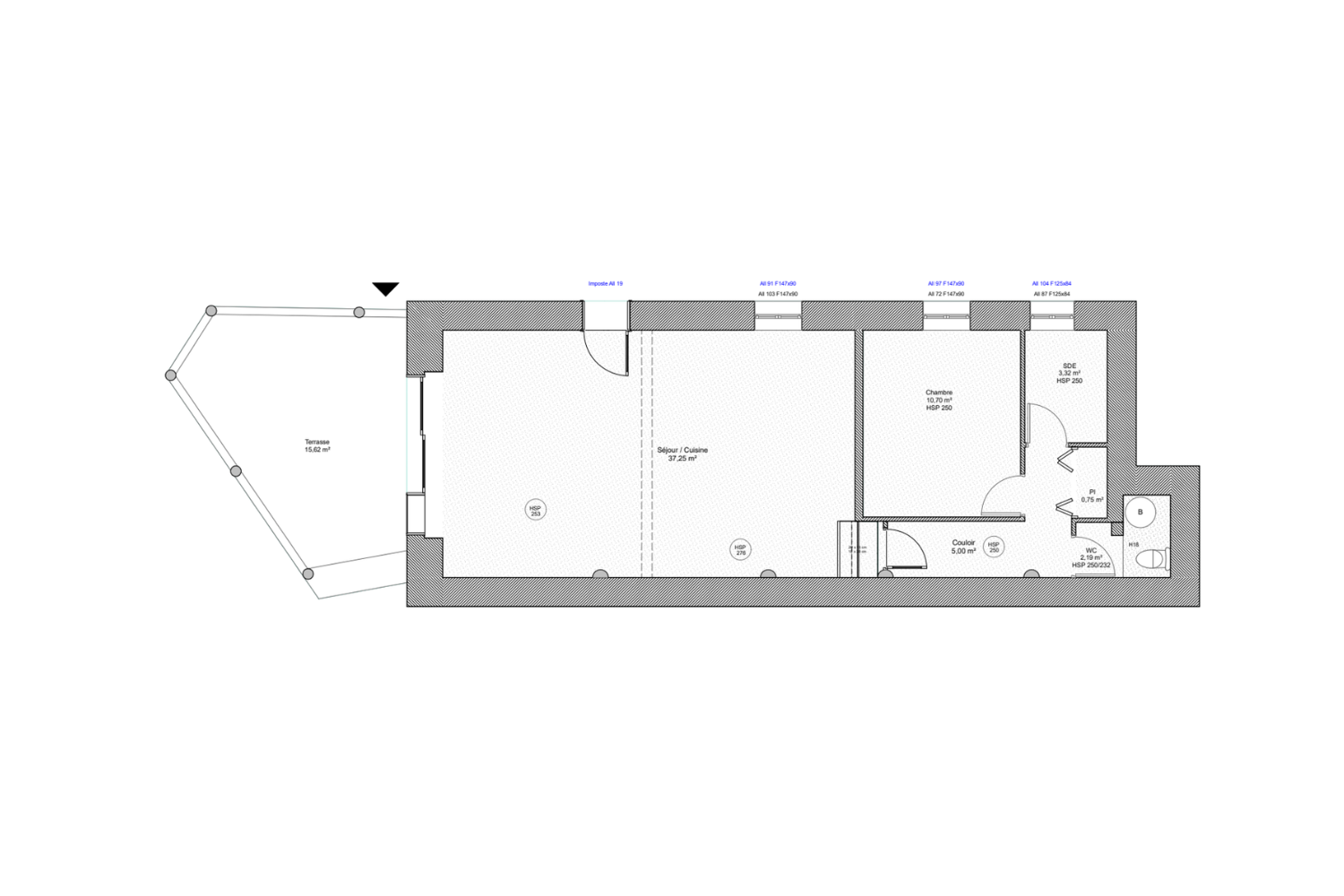
The exterior volumes and existing openings were preserved, while the interior spaces were completely redesigned. The kitchen was moved to the heart of the project to naturally extend the living area toward the terrace and free up the space needed to create an additional bedroom. Each design decision thus seeks to extend the history of the space without altering its character, striking a balance between authenticity, simplicity, and contemporary comfort.

Implementation

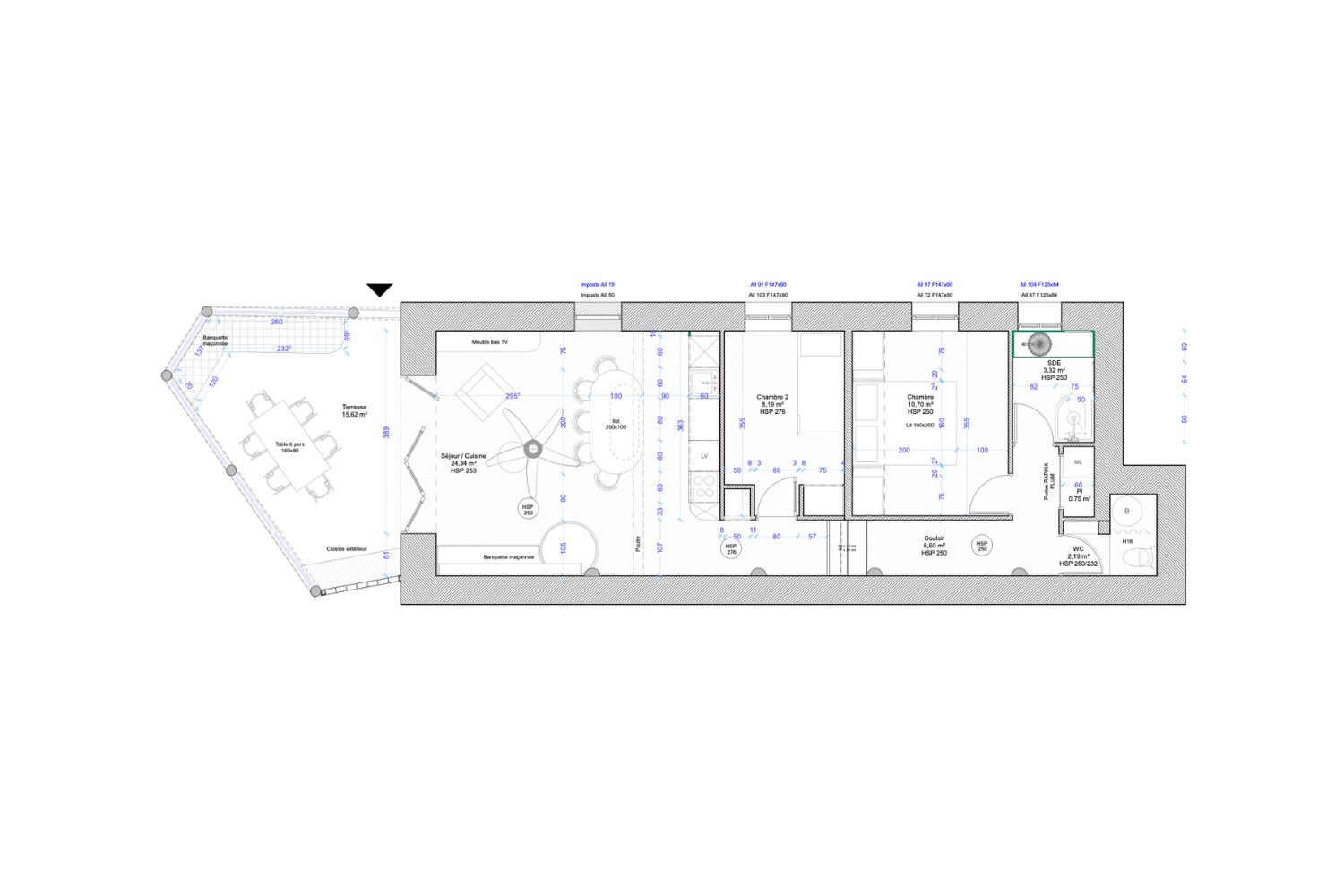
The project is organized around a spacious open-plan living area that extends from one side of the house to the other, creating a strong connection with the outdoors.

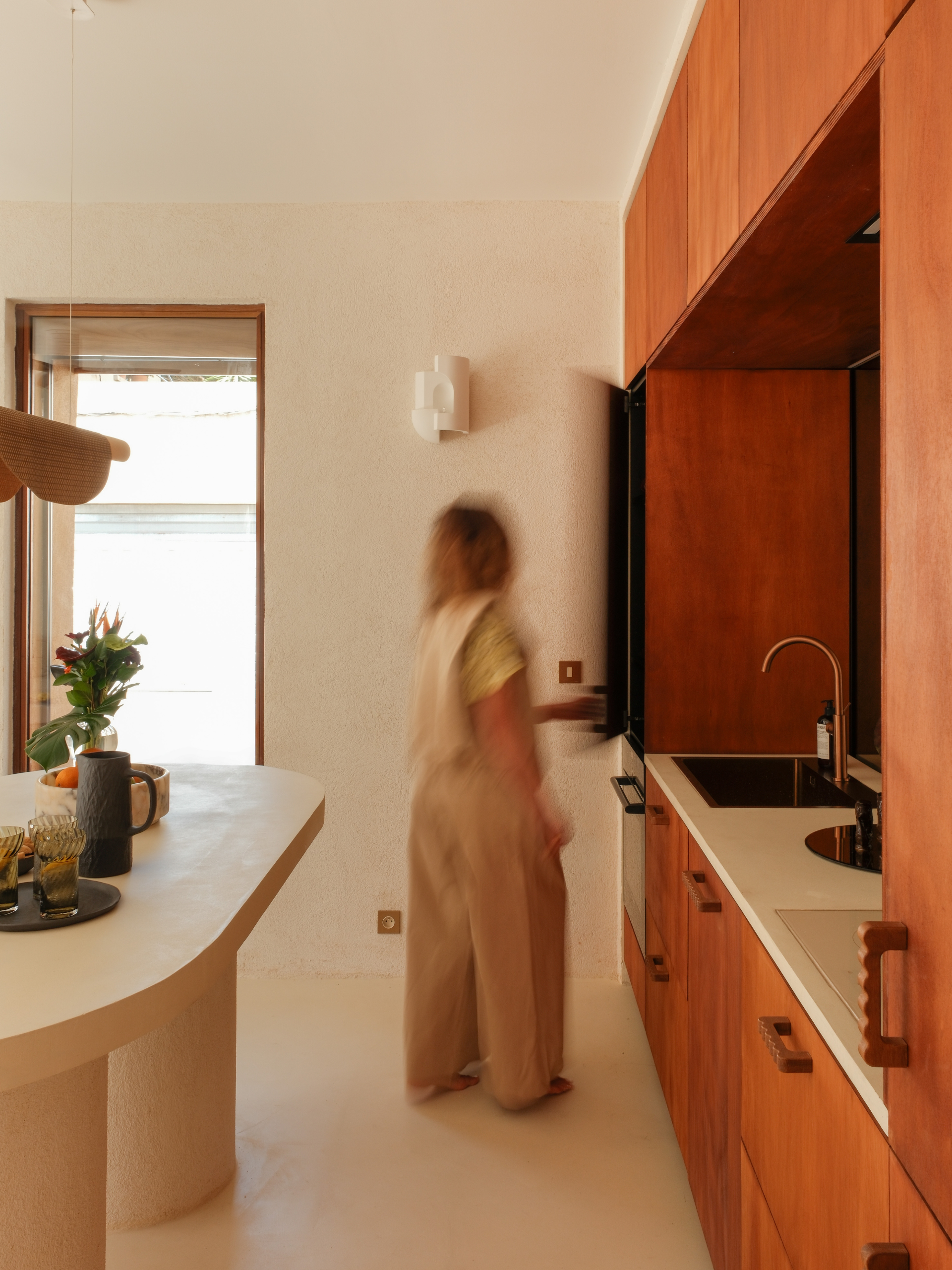
At the heart of the space, a custom-designed honey-toned wooden kitchen is centered around a generous island, which naturally becomes the gathering point of the home.

Materiality plays a key role in defining the identity of the project. A cream-colored textured plaster covers the main volumes, creating a bright and raw atmosphere. Wooden joinery, glazed terracotta tiles, and brushed copper fixtures come together to form a warm palette inspired by Mediterranean architecture.

The more private area of the cabanon accommodates the bedrooms, bathroom, and storage spaces.

Partner brands include :

13Desserts : Furniture
Amélie Baudin : Ceramics
Atlas Edition : Furniture
DCW Éditions : Lighting
Galerie Diego Escobar : Presenting artworks by Mathieu Lucas
Honoré : Furniture and décor
Joséphine Vallé Franceschi : Photographic works
La Serviette Paris : Bed and bath linens
Revol : Tableware
Saudade : Décor
Talka : Furniture and décor
Tolix : Outdoor furniture
Original plans & project
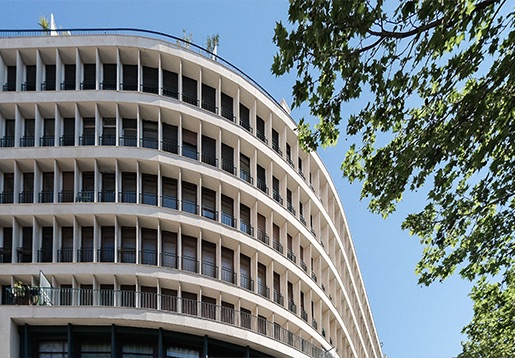
Œuvre conjointe des architectes Fernand Pouillon et René Egger dans le cadre de la reconstruction d’après-guerre, le Building Canebière est aujourd’hui labellisé Patrimoine du XXèmesiècle.

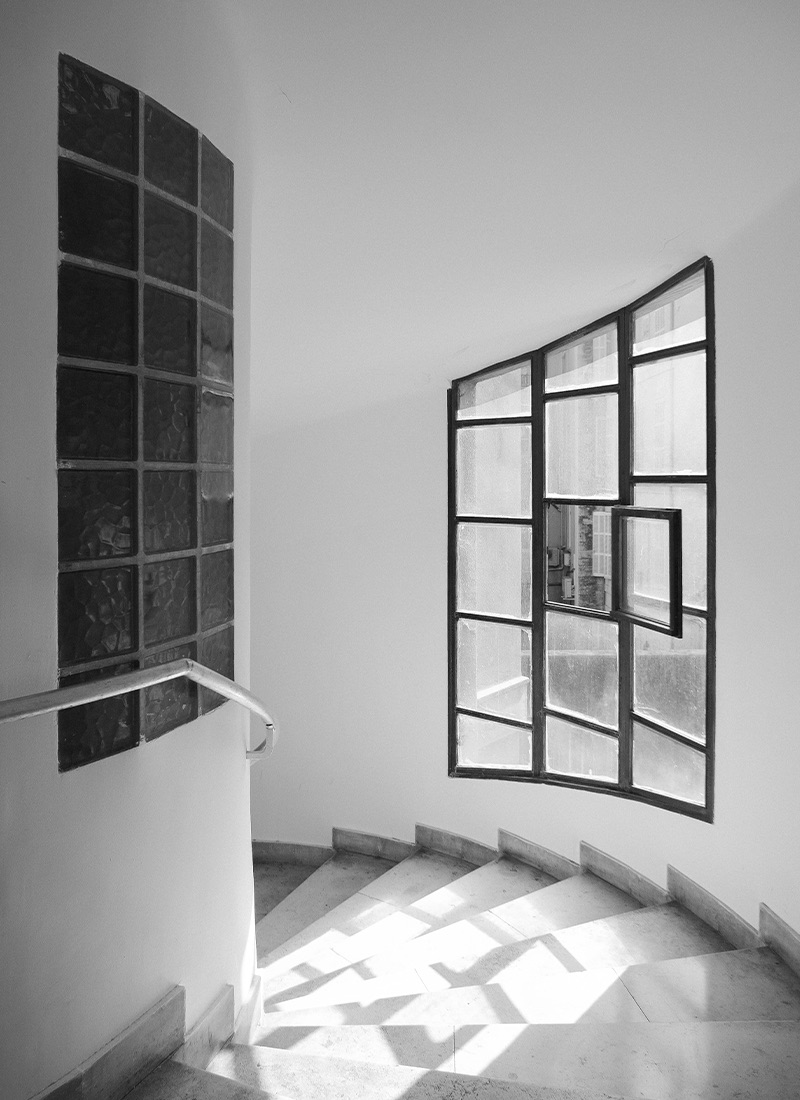
Édifié au cœur de ce qui fût dans toute la première moitié du siècle dernier l’avenue fastueuse de la ville, cet immeuble de dix étages, livré en 1952, contient toutes les qualités architecturales caractéristiques de Fernand Pouillon, tant sans ses recherches de lumières naturelles, de rentabilité d’espace et de qualité au service des usagers. Prévu pour accueillir logements, bureaux, galerie commerciale et parkings, il est construit en béton armé selon une trame horizontale régulière. Visuellement, la séparation est très nette entre le rez-de-chaussée en béton, l’entresol couvert de bardages métalliques rivetés, les étages rythmés par des brise-soleil verticaux et l’attique en gradins. Les mouvements verticaux s’articulent autour d’un noyau circulaire abritant l’ascenseur et les escaliers aux marches démesurées et éclairés naturellement par des parties de murs en brique de verre. Partiellement abandonné au début du millénaire, les rénovations de 2018 ont rendu splendeur à ce bâtiment prestigieux.

Fernand Pouillon

Architecte et urbaniste français, Fernand Pouillon (1912 – 1986), fut l’un des grands bâtisseurs de l’après-guerre. Précurseur du concept de développement durable, il prendra soin sur chacun de ses chantiers, de faire appel à l’artisanat local, il collabore avec des artistes sculpteurs, des céramistes et des paysagistes. Dans les années 1945, il participe à la reconstruction du Vieux-Port de Marseille et construit de nombreux immeubles du quai du Port de la Cité phocéenne dont un est classé Monument Historique.

René Egger

Architecte français, René Egger (1915 – 2016) est connu comme l’un des bâtisseurs de Marseille. Dans la période de la Reconstruction après-guerre, aux côtés de Fernand Pouillon, il fonde d’emblématiques édifices tels que l’hôpital Nord et la faculté de médecine de la Timone. Architecte discret sous l’aile de Gaston Defferre, son trait de crayon n’en a pas moins bouleversé la cité phocéenne. Héritier direct des modernistes, Egger fit du béton son matériau de prédilection et signa la plupart de ses ouvrages par des brises-soleil, venant tamiser le chaleureux soleil du Sud.

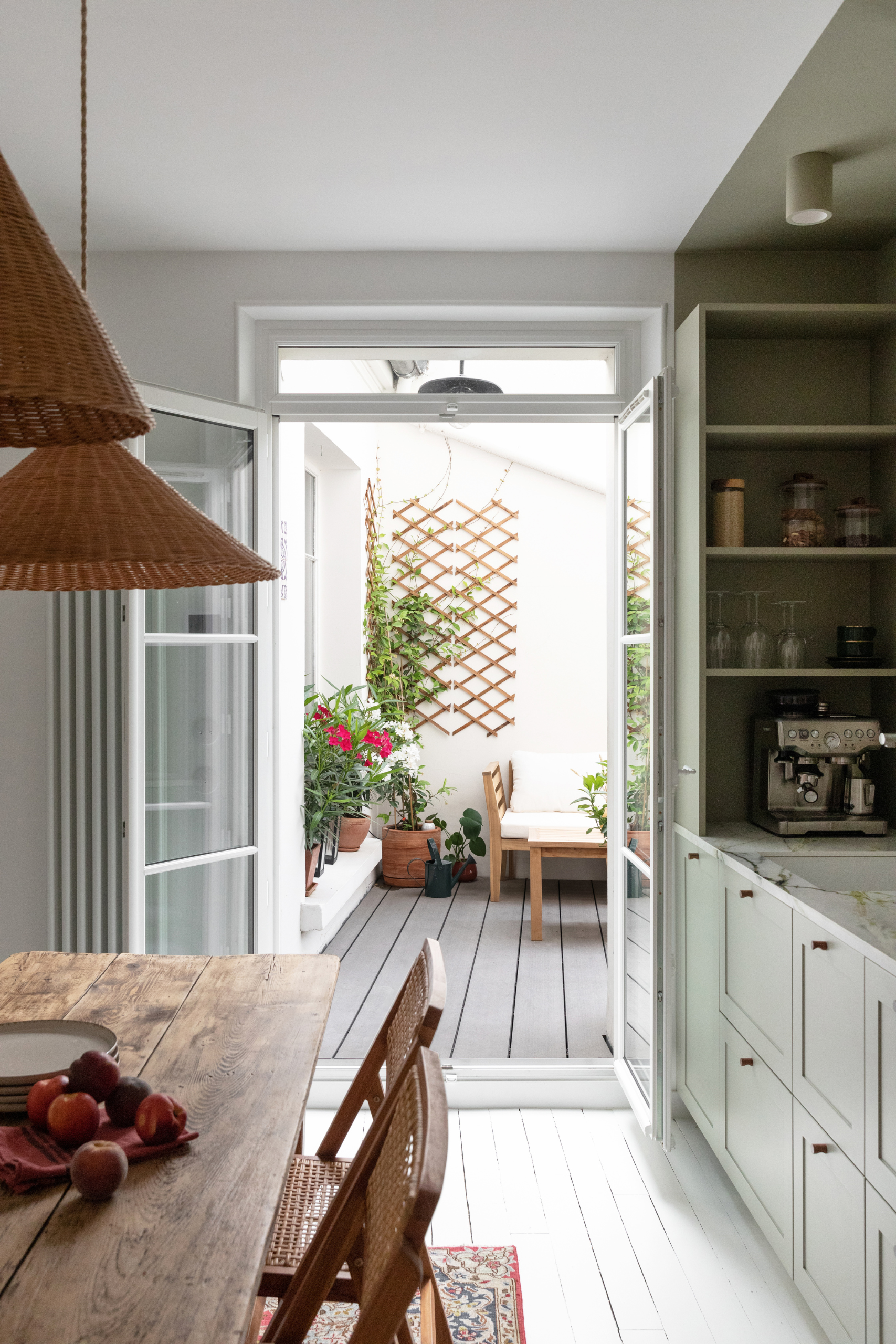
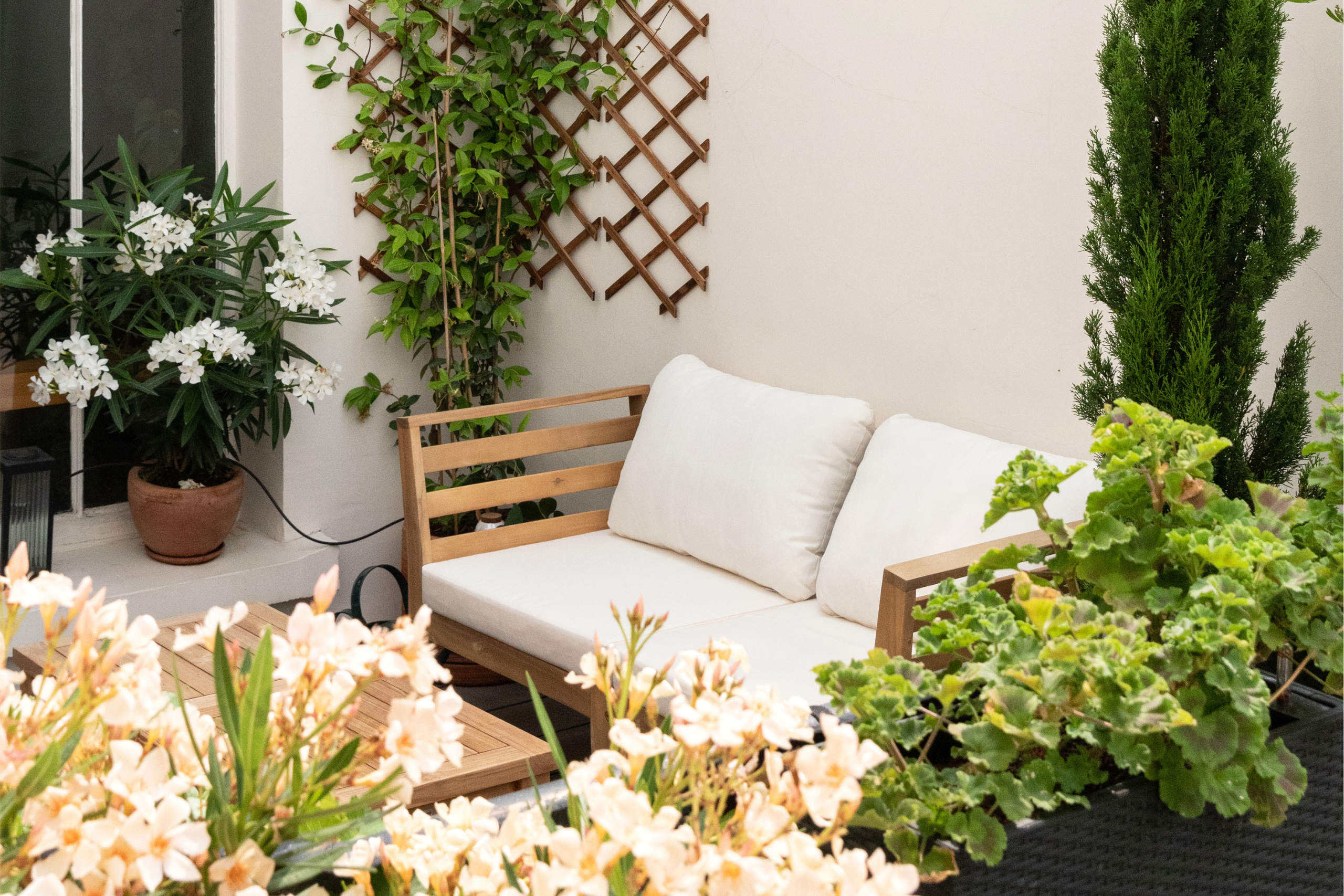
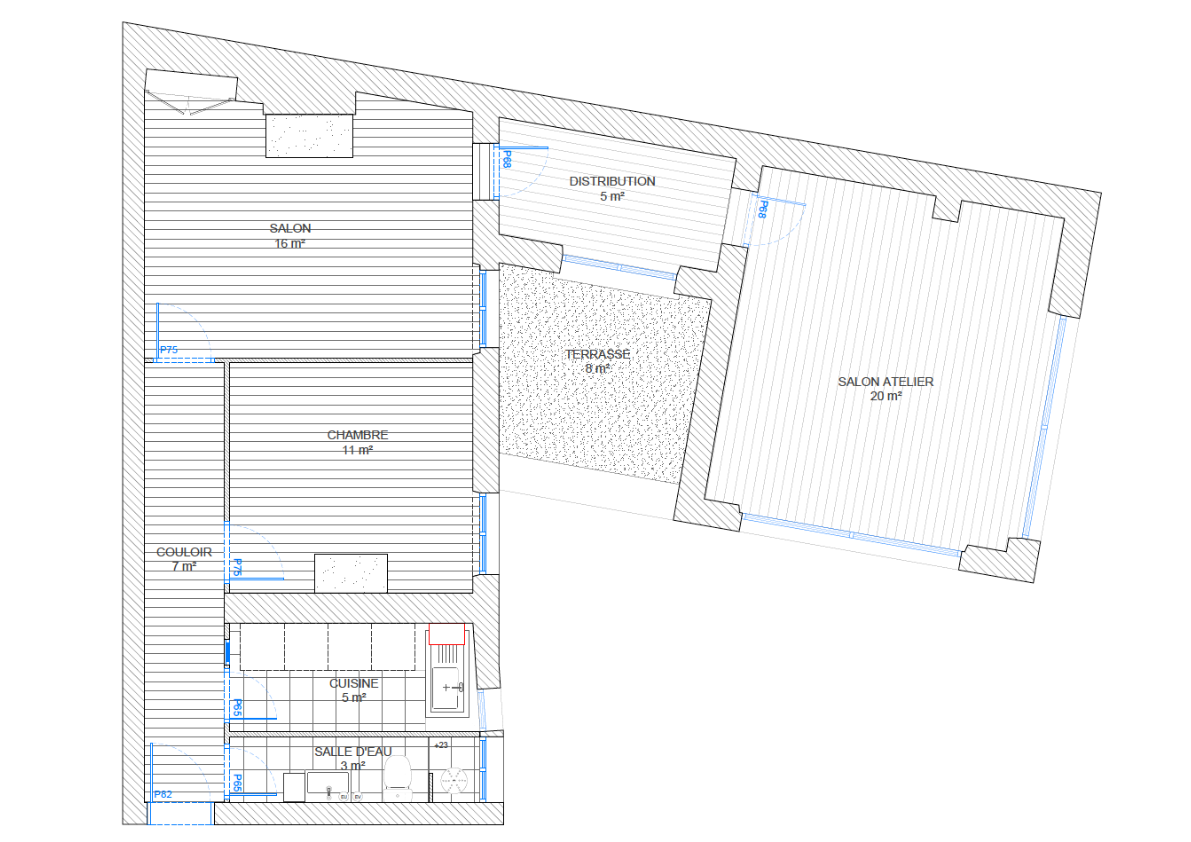
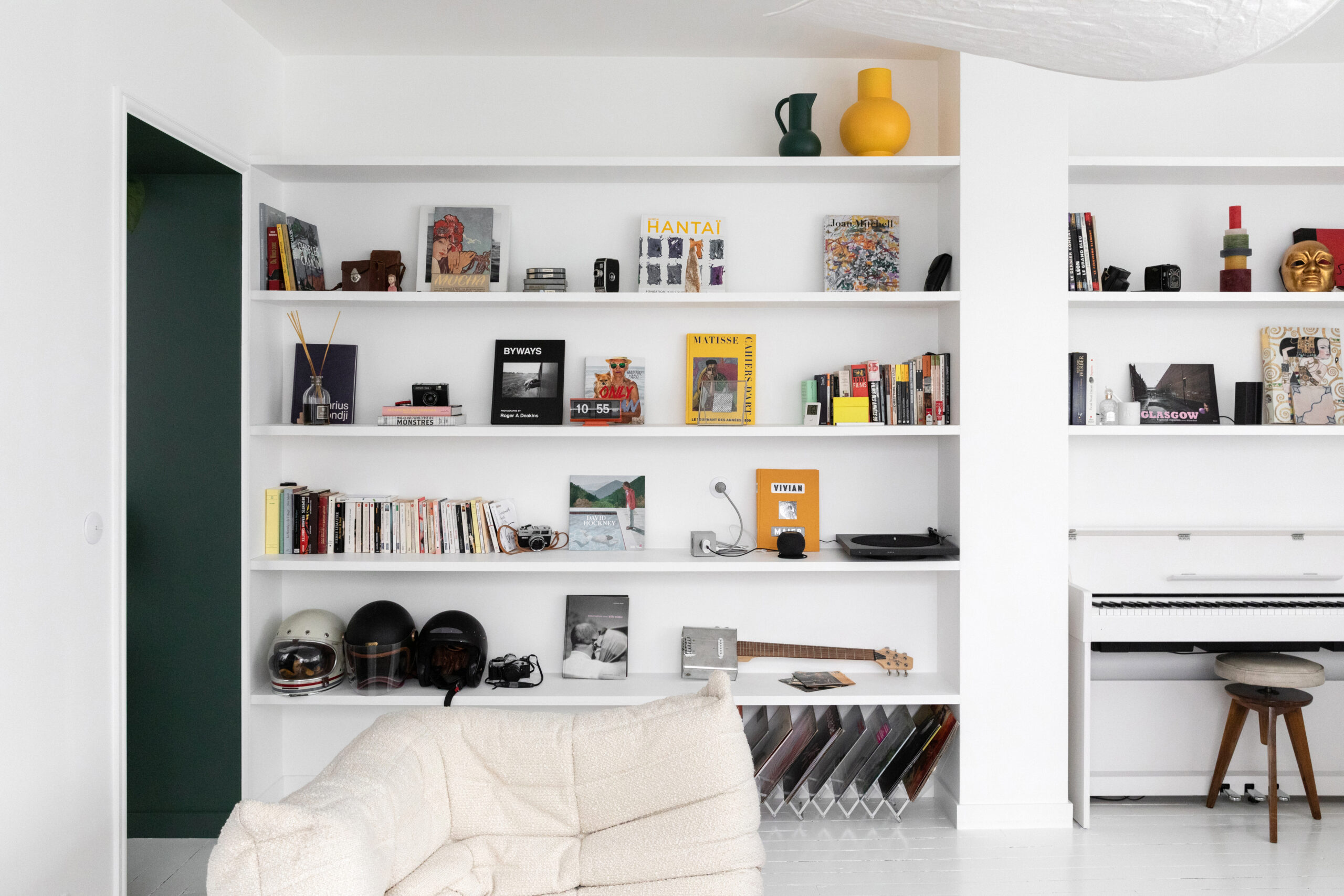
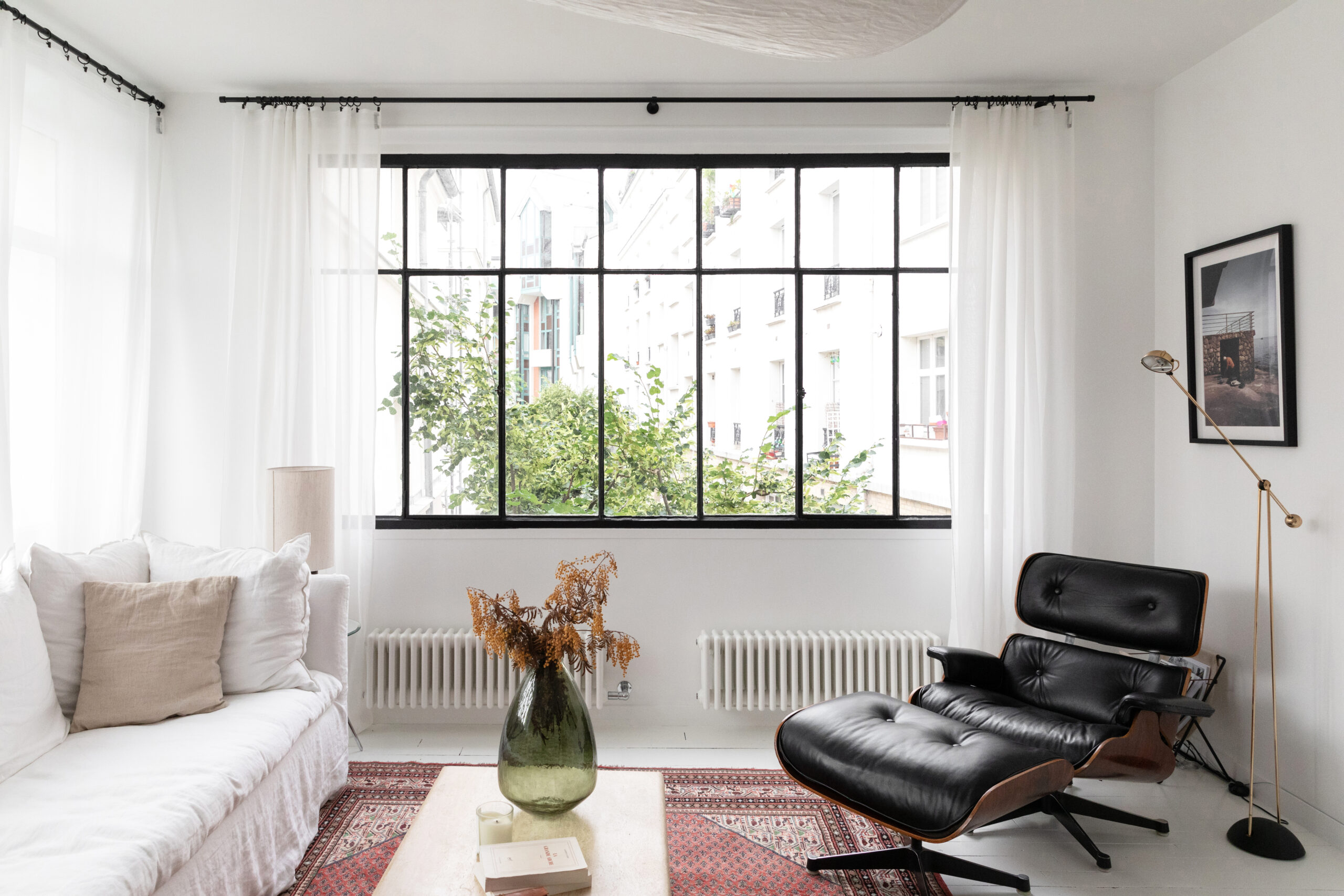
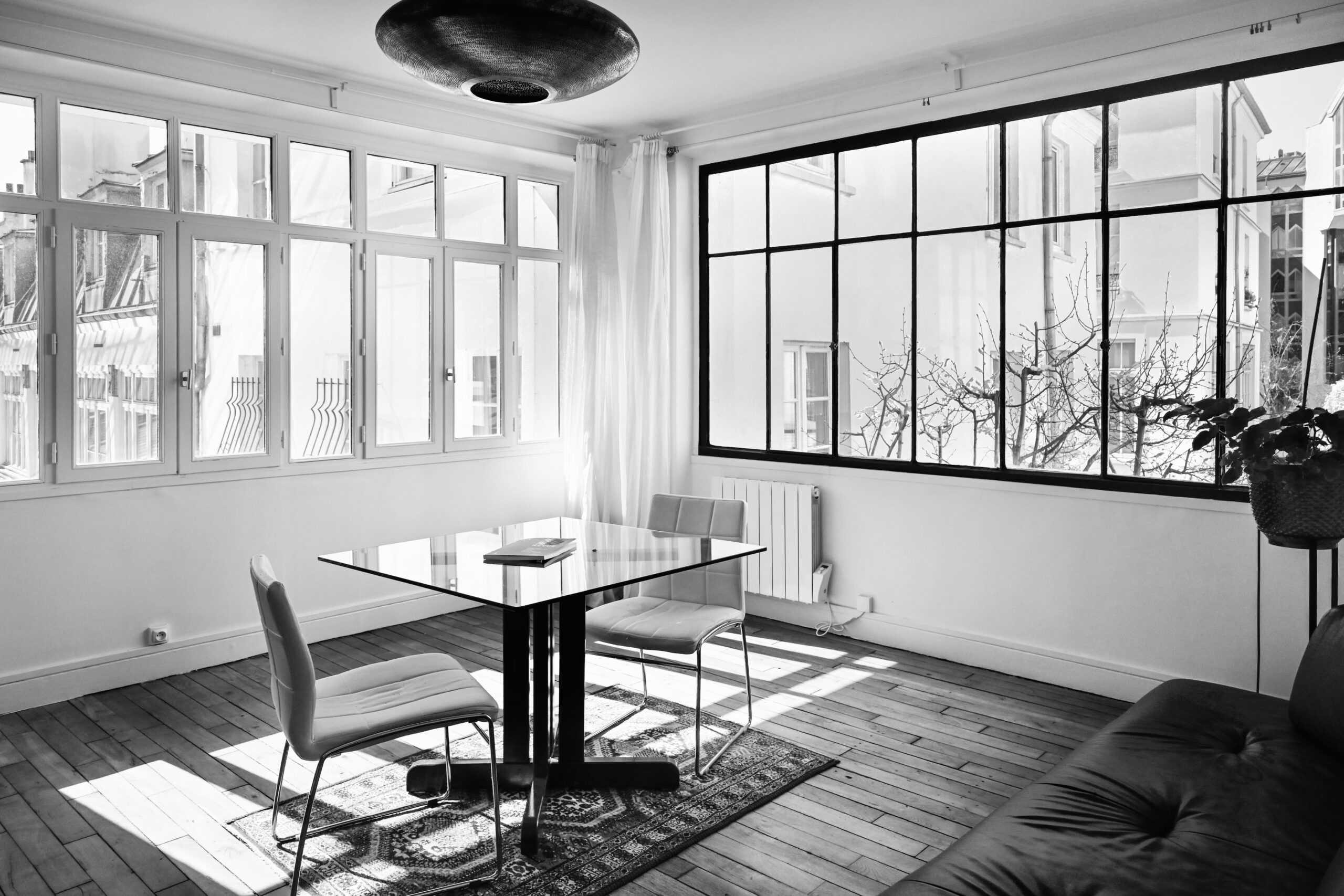
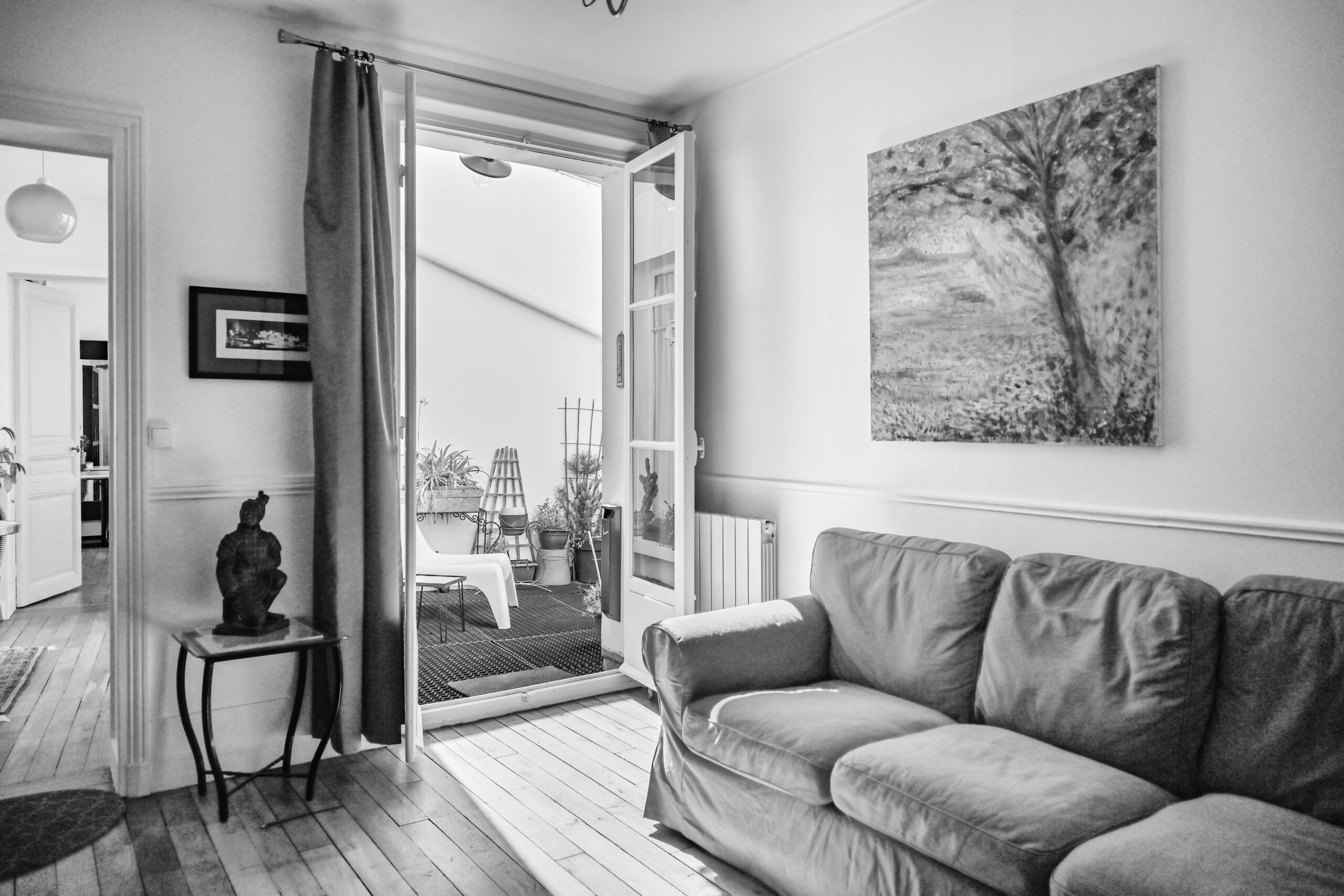
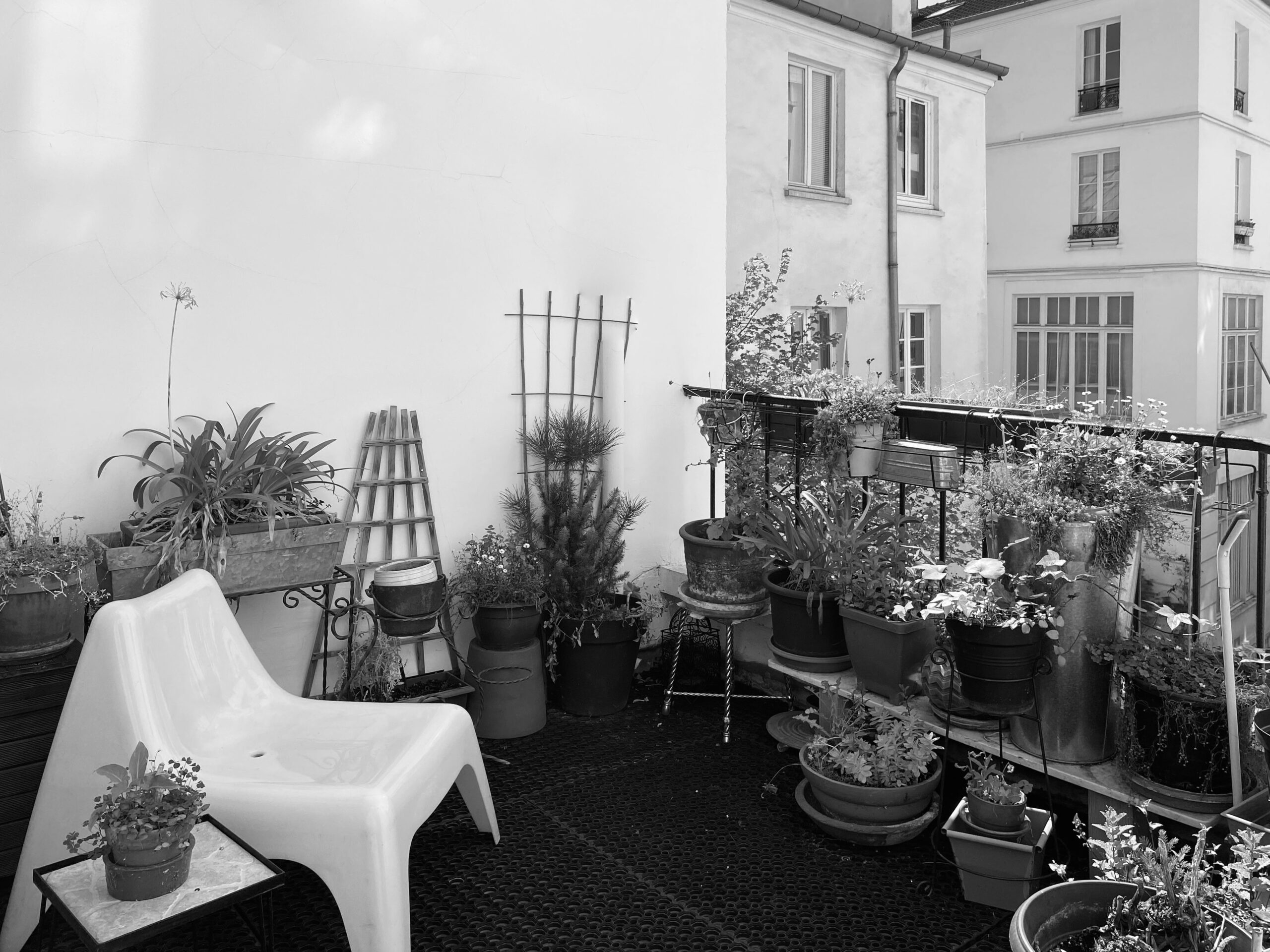
Located in a historic and highly sought-after condominium in the 10th arrondissement, this apartment with its industrial origins was in good condition, but its U-shaped floor plan deserved to be rethought. It is built around a 9 m2 terrace, whose charm was just waiting to be revealed.

Objective

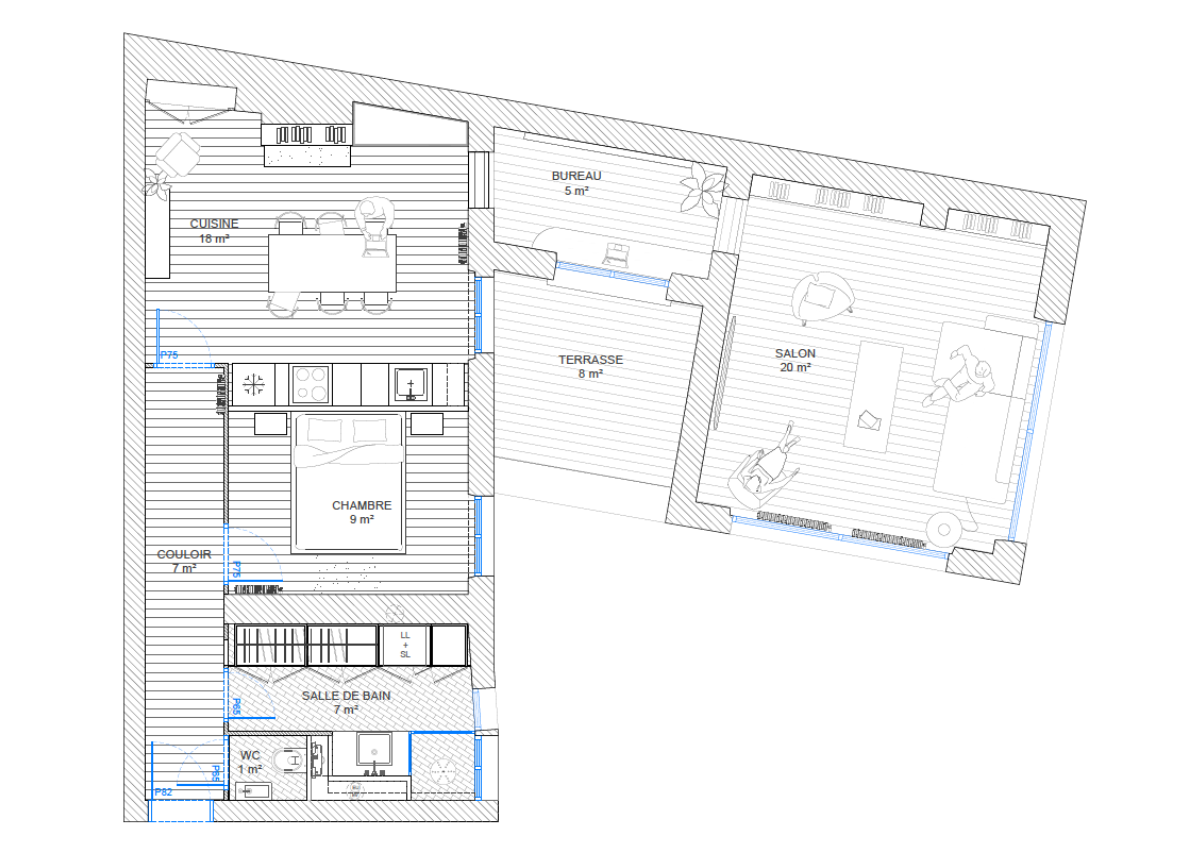
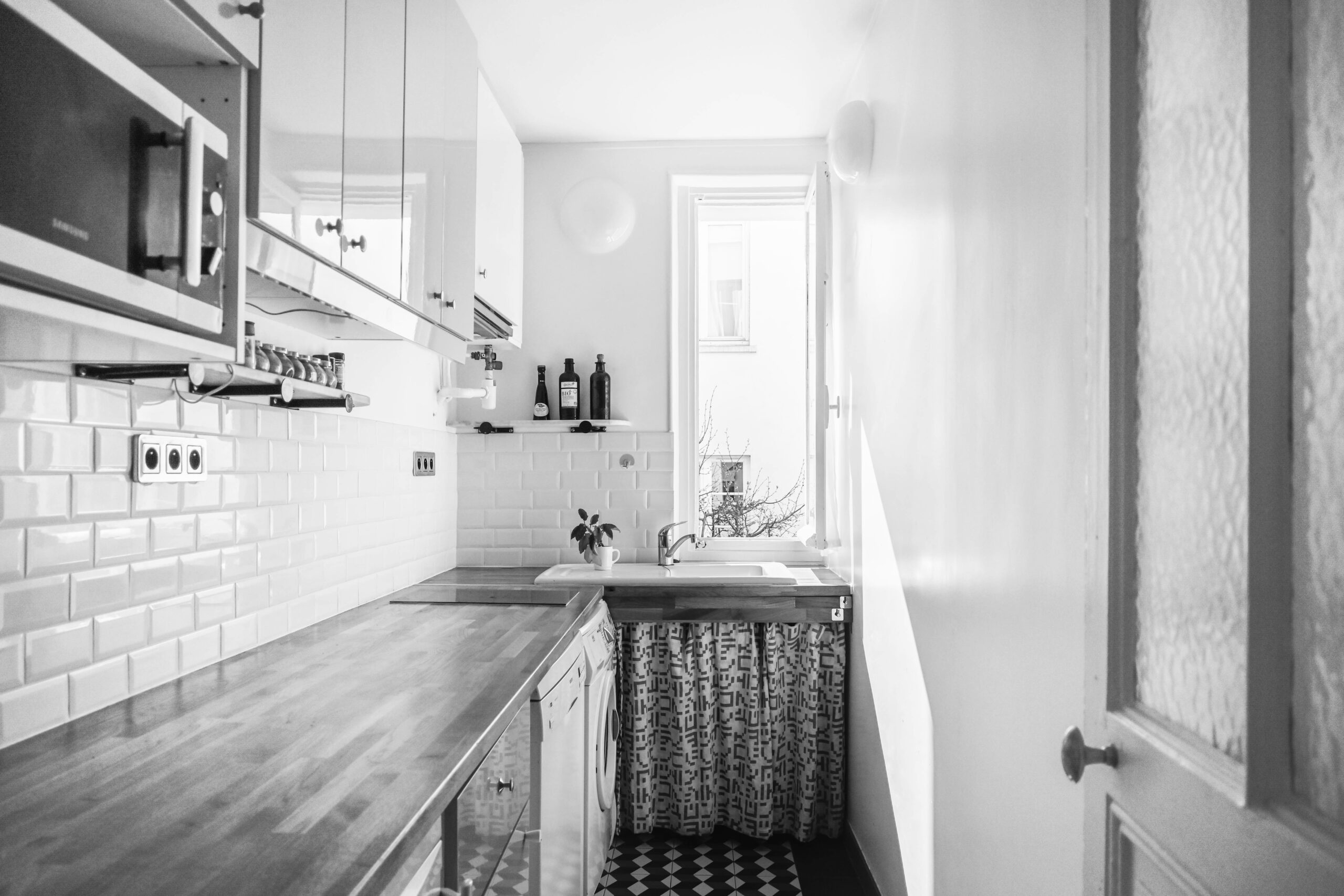
Rediscover a plan that’s easier to live in, with an open kitchen, larger shower room, separate WC and, of course, more storage space. Bring the terrace back to life as a real bonus room. More light in the kitchen.

Line of conduct

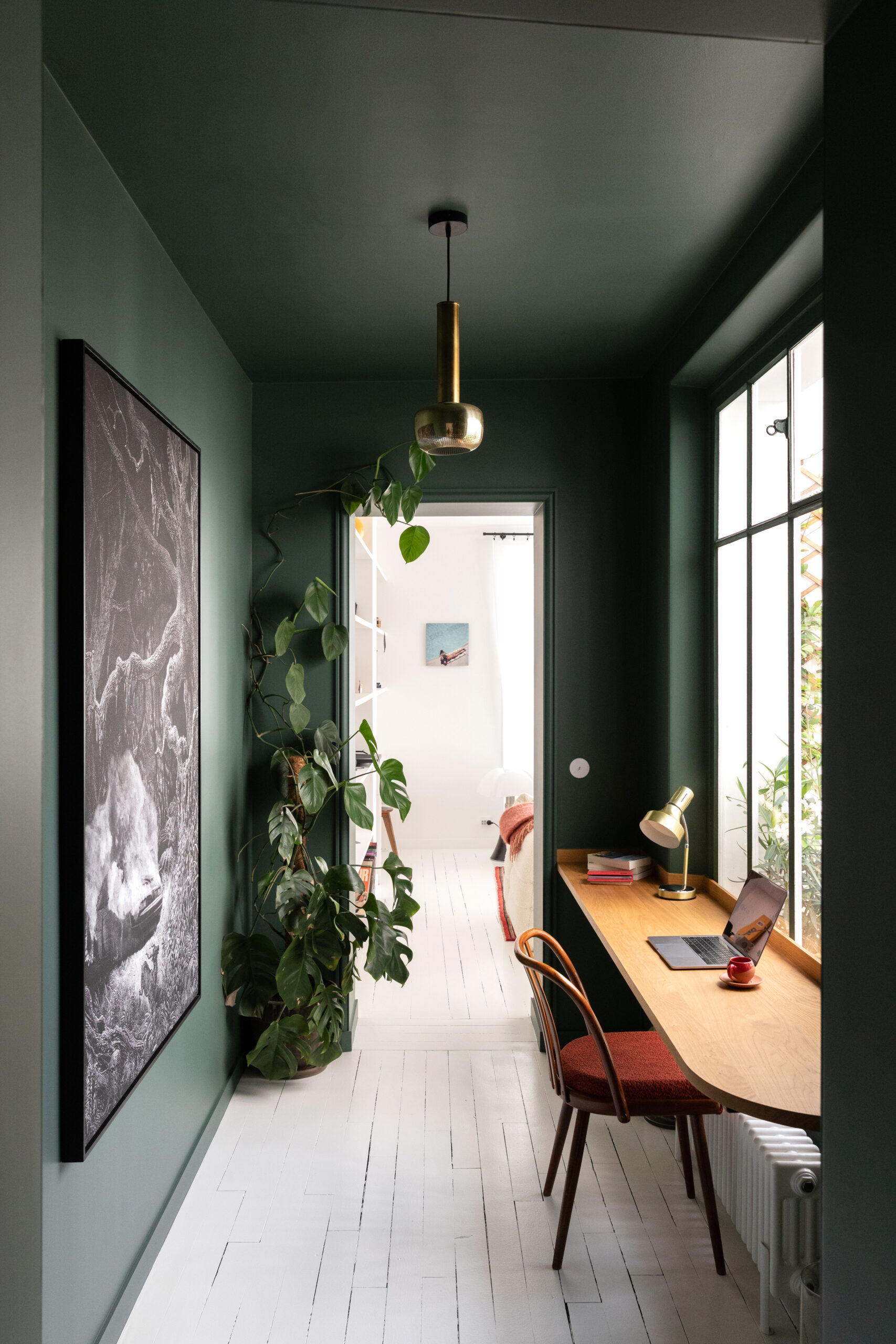
Preserve the atypical charm of the premises and the remarkable old features. Echo the greenery of the terrace by punctuating the apartment with flat expanses of green.

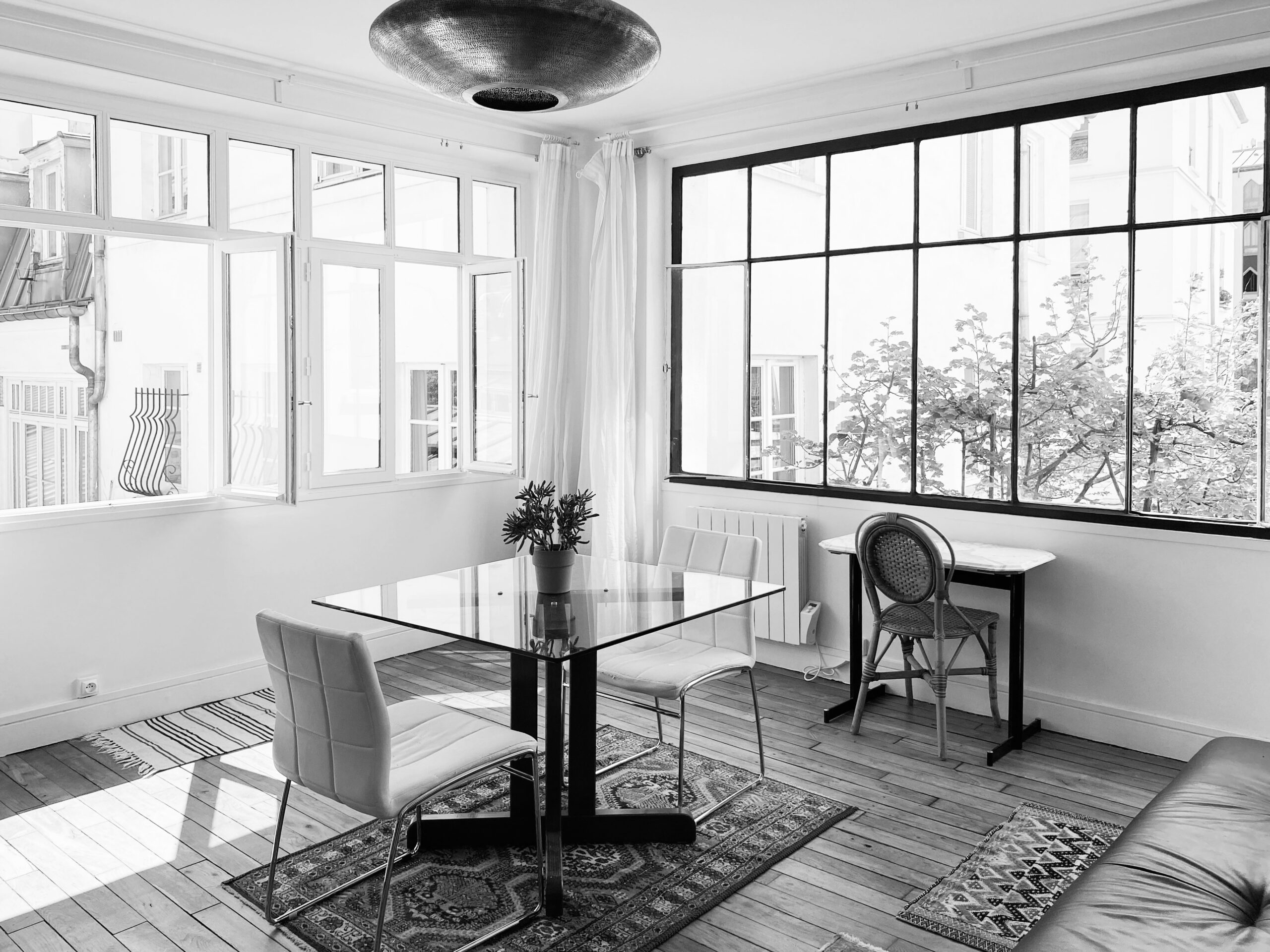
Assume the “countryside in Paris” ambience, which combines industrial codes (black metal skylights, antique doors, retro-style electric radiators), country-inspired antique furniture such as the farm table and framed kitchen fronts, and the Mediterranean softness embodied by the raw materials of the South of France: terracotta and waxed concrete.

Implementation

A complete renovation that places the kitchen next to the terrace, giving each a place at the heart of the apartment. A previously under-utilized space was upgraded with the creation of a custom-made office, entirely painted a deep green to become a real bonus room.

A parquet floor painted white to unify the whole and let the light circulate: a bold choice, but one that paid off.

An ultra-optimized bathroom in which waxed concrete-covered formwork conceals technical elements and creates hidden niches and storage.

Original plans & project
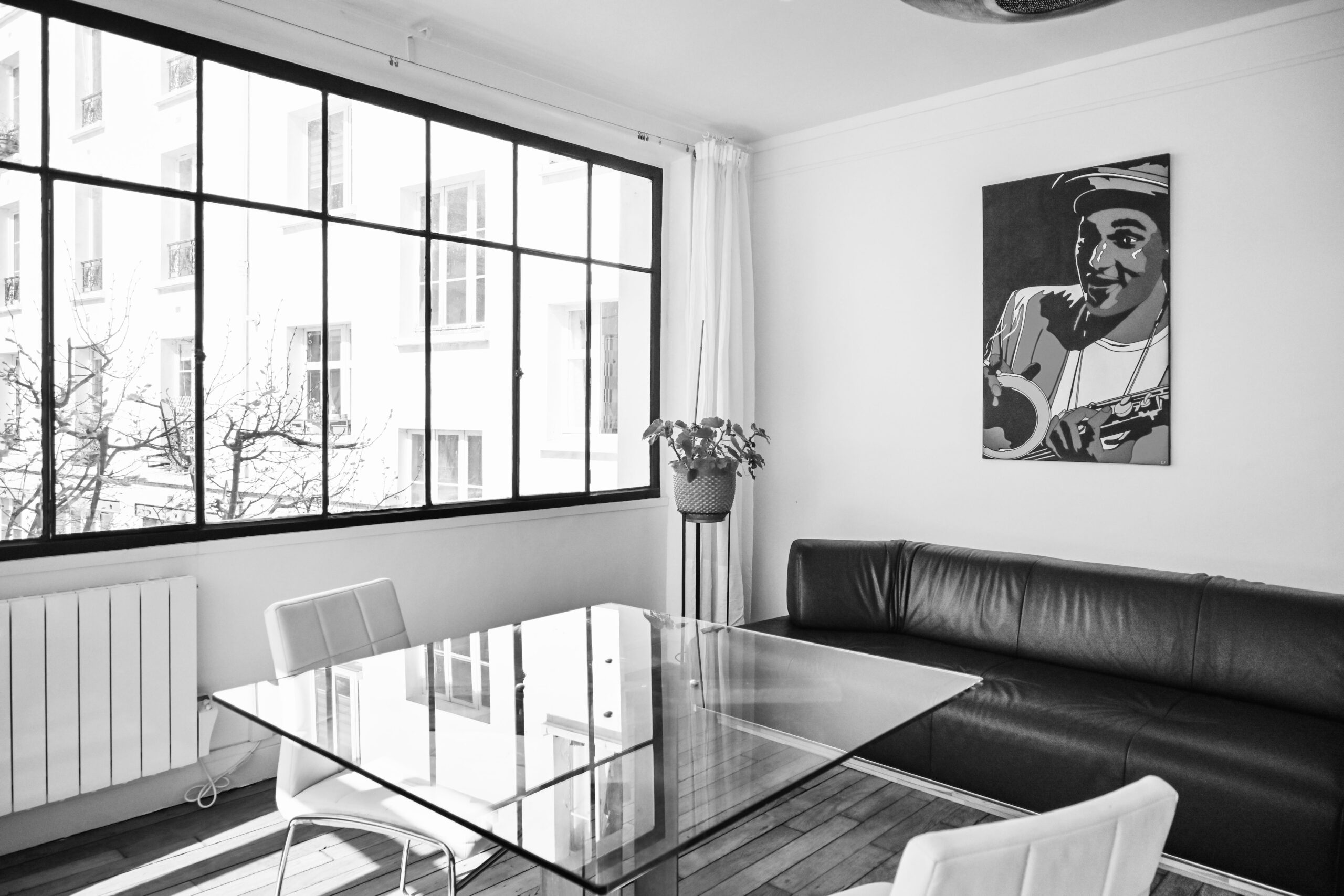
A haven of peace and light with simple beauty.

  • Crédits photosBertrand Fompeyrine BCDF
  • SHARE

The before …

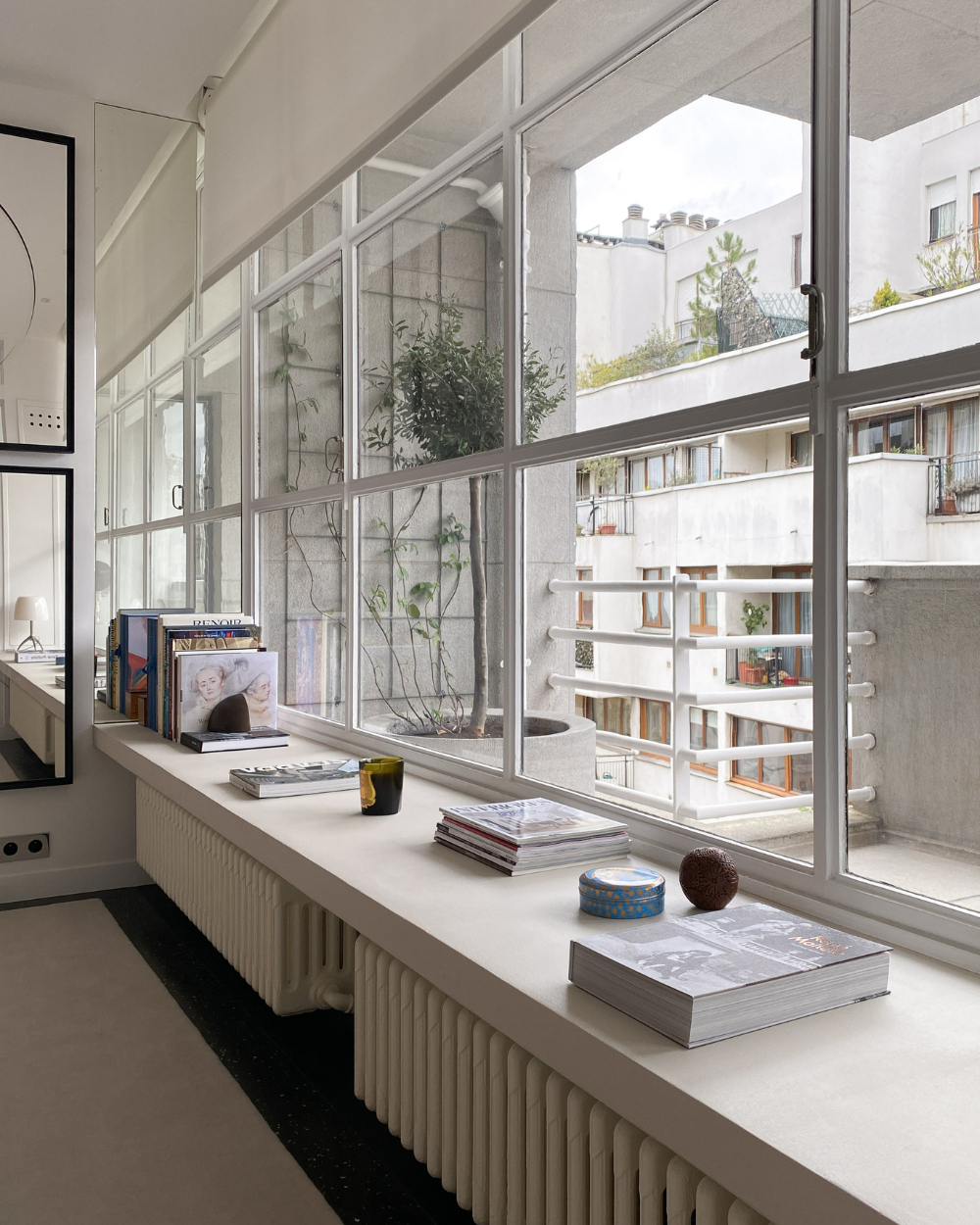
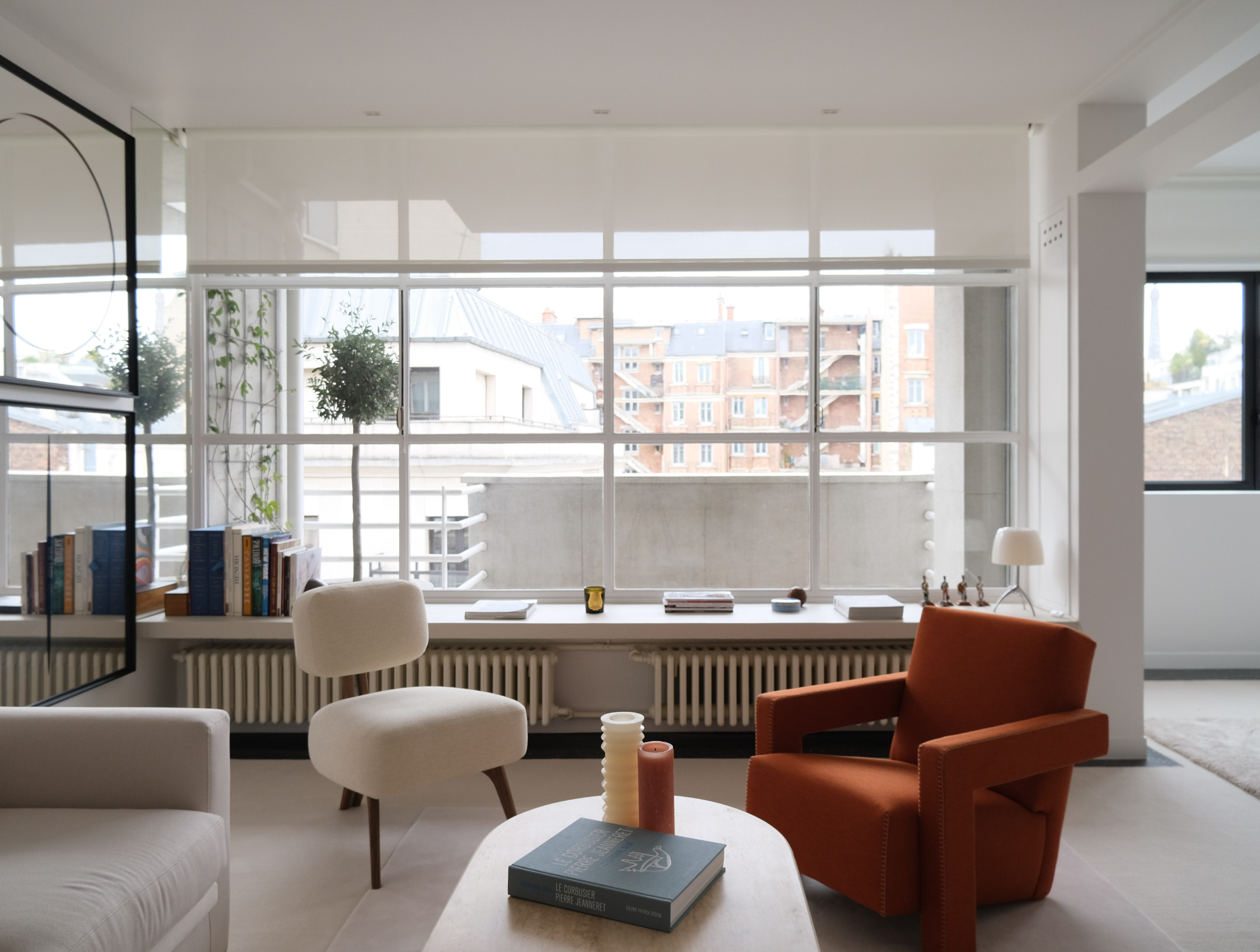
In a 1930 building designed by architects Jean Ginsberg and François Heep, this apartment needed to be optimized. Reinterpreted by architect Baptiste Legué, the space now boasts a modernist cachet.

Objective

Restore the radiance of a 1930s apartment by bringing in light and circulation.

Line of conduct

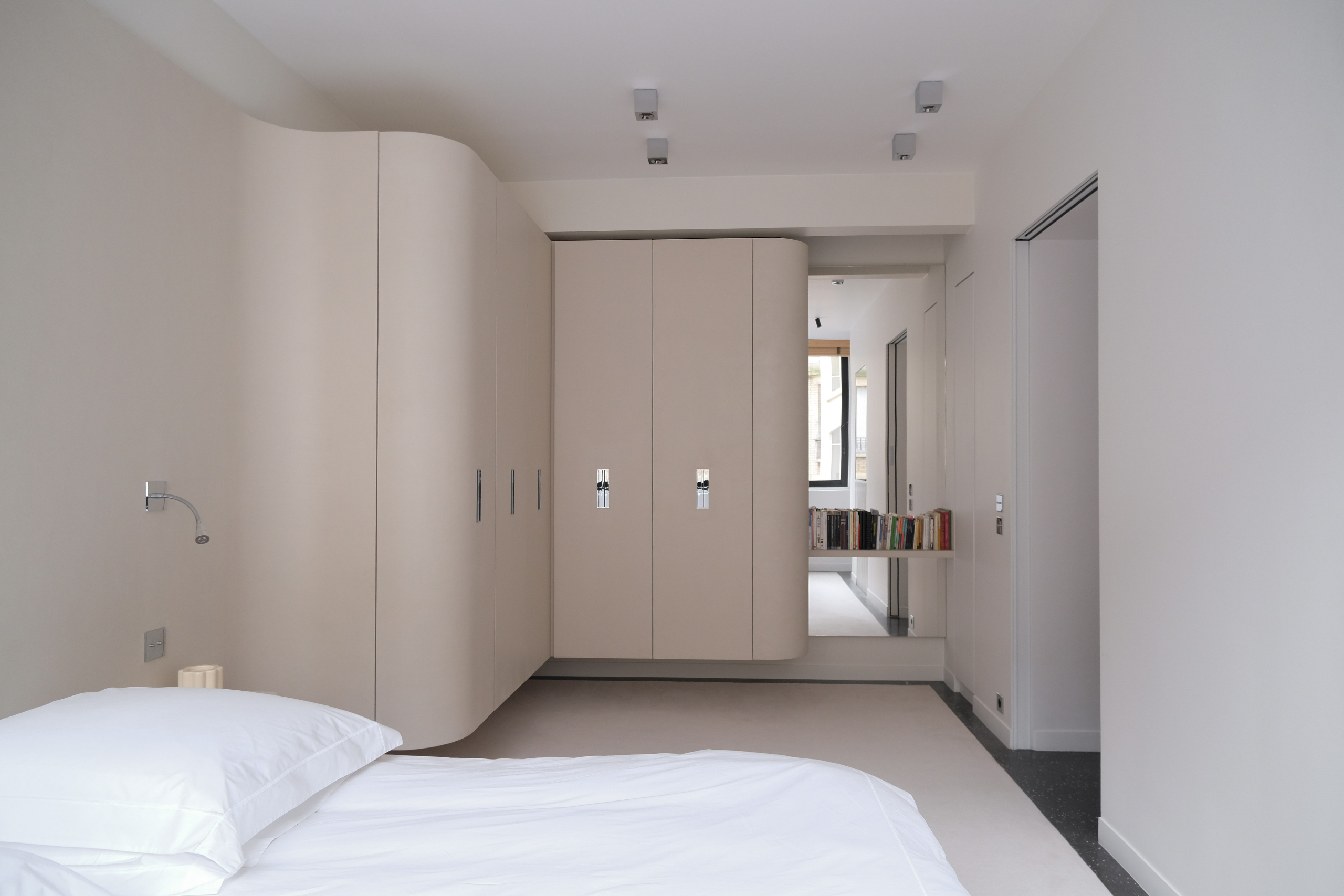
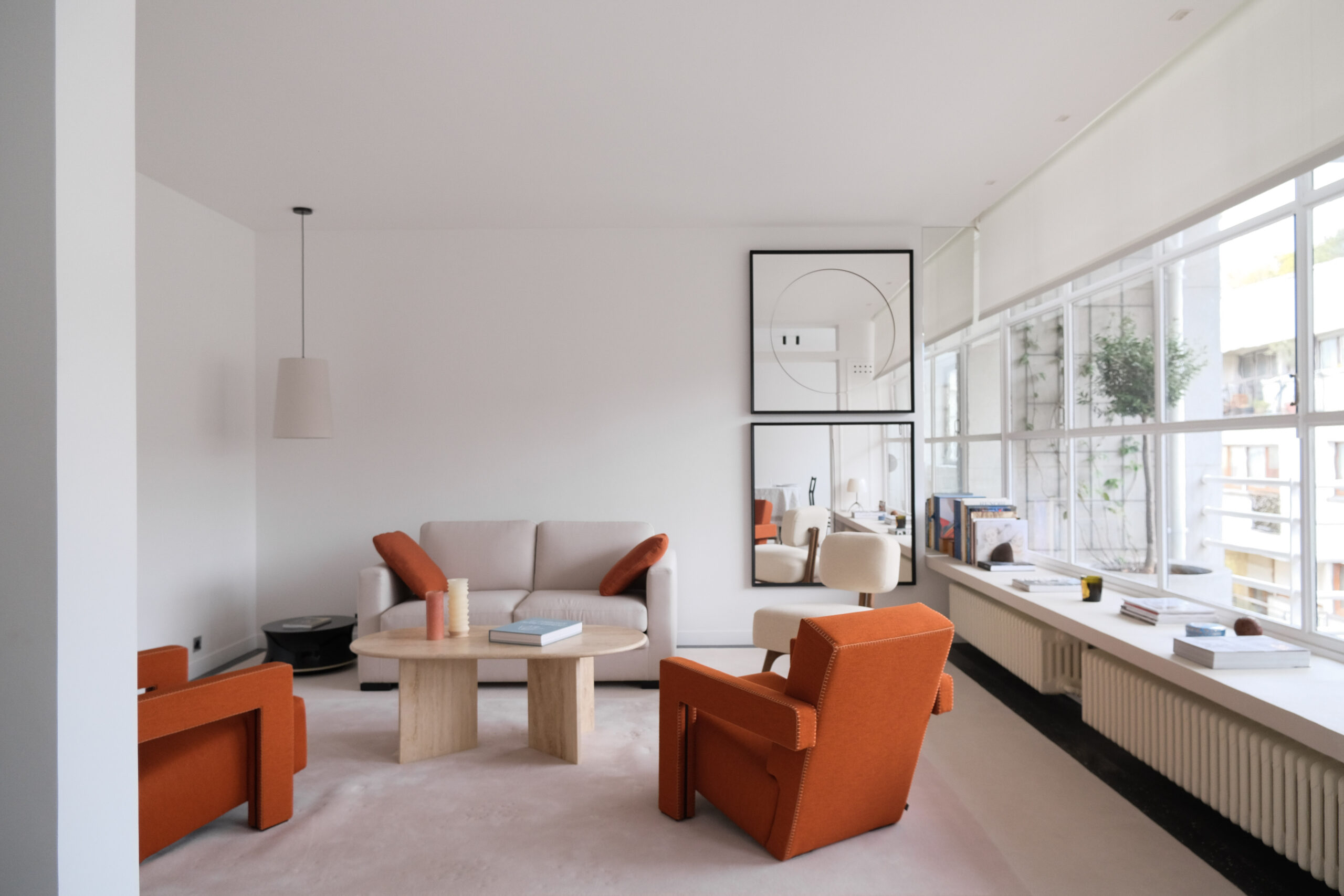
Creating a soft, luminous atmosphere was the common thread running through this renovation. Inviting light into every room to highlight mineral materials such as terrazzo and waxed concrete.

Implementation

The transformation of the apartment was radical: all partitions were removed, leaving only the structural elements in place. The floors underwent a complete overhaul to accommodate a mix of terrazzo and carpet. A set of furniture was carefully custom-designed and discreetly integrated into the existing environment. This approach re-established simple volumes and perfectly harmonized the apartment’s overall aesthetic.

Partner brands:

Travertine coffee table: Talka
Cream-colored bouclé armchair: Lacroix

A modernist setting that plays on contrasts.

  • SHARE