
Les Chalets

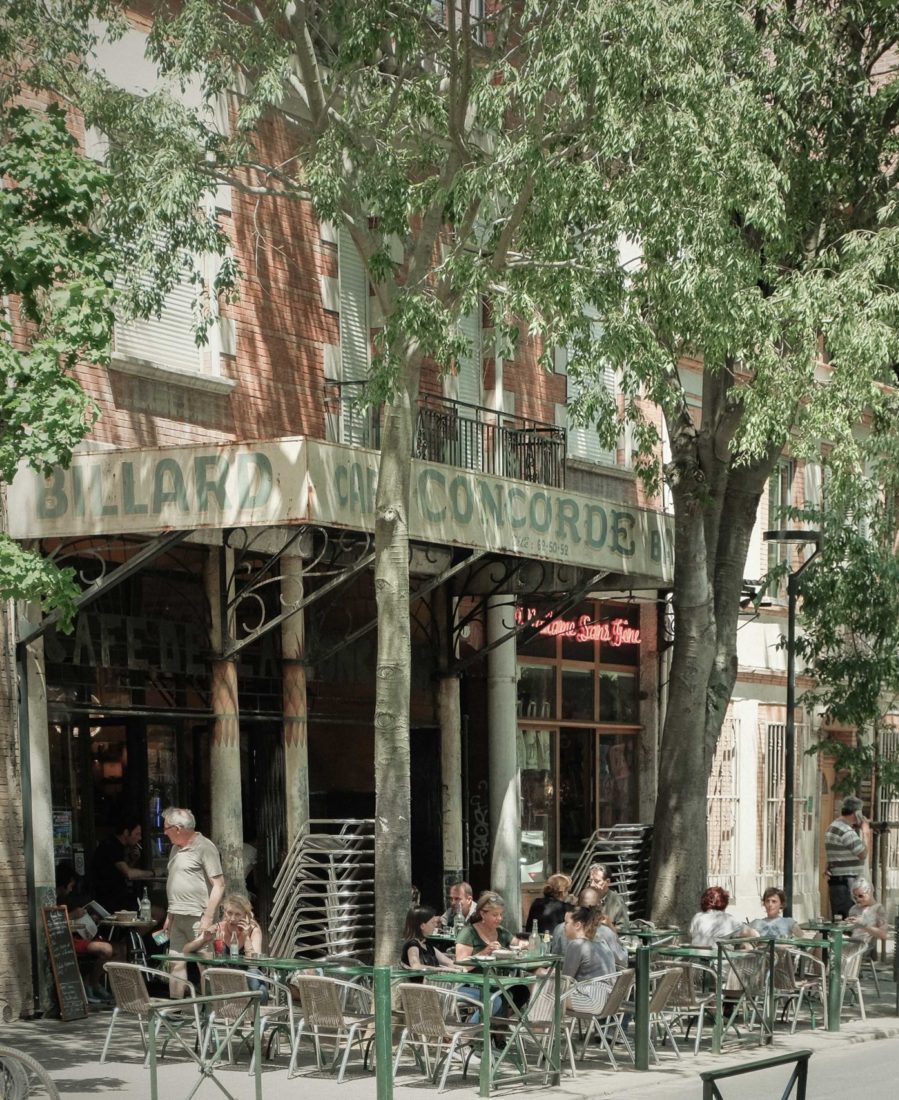
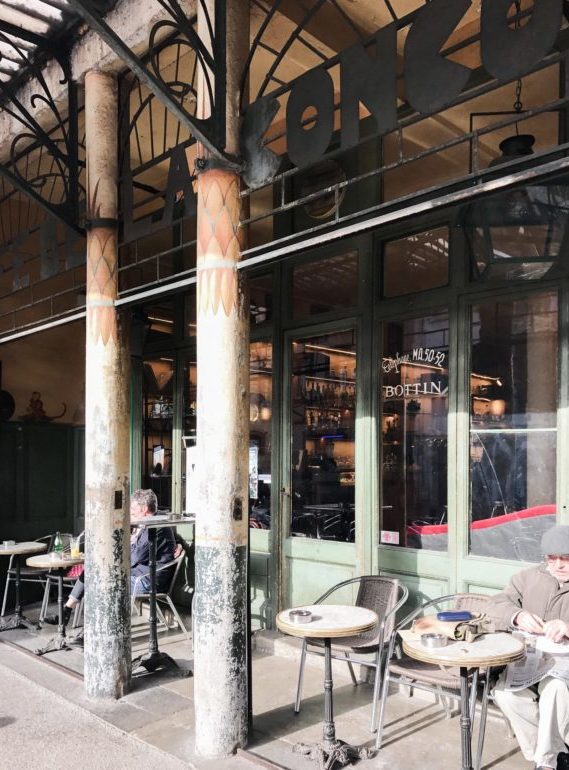
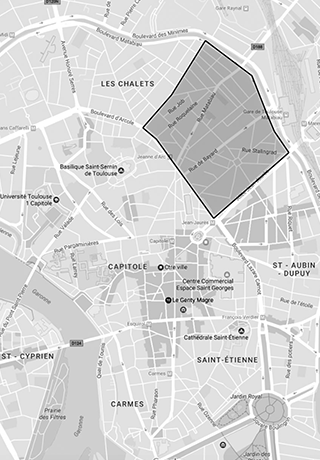
The Chalets or Chalets-Concorde district is a district of Toulouse, located in the immediate vicinity of the historic center.
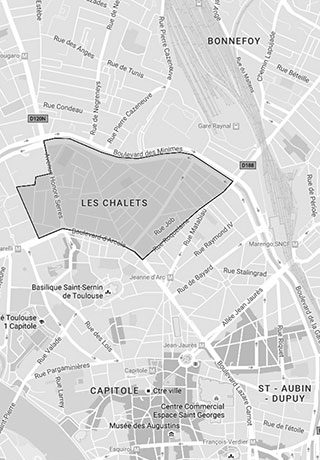
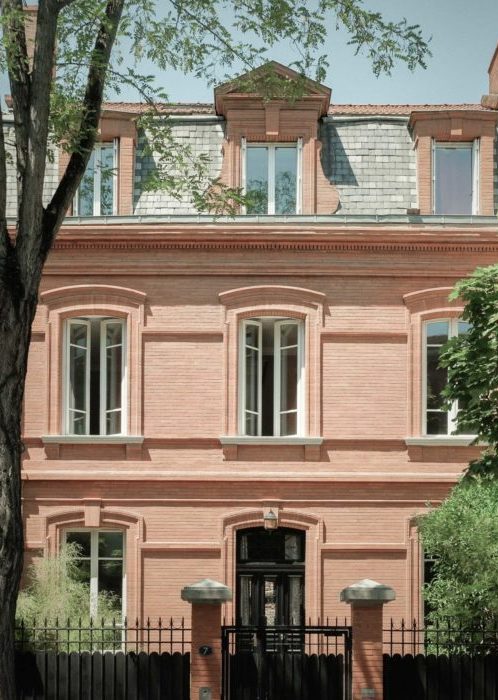
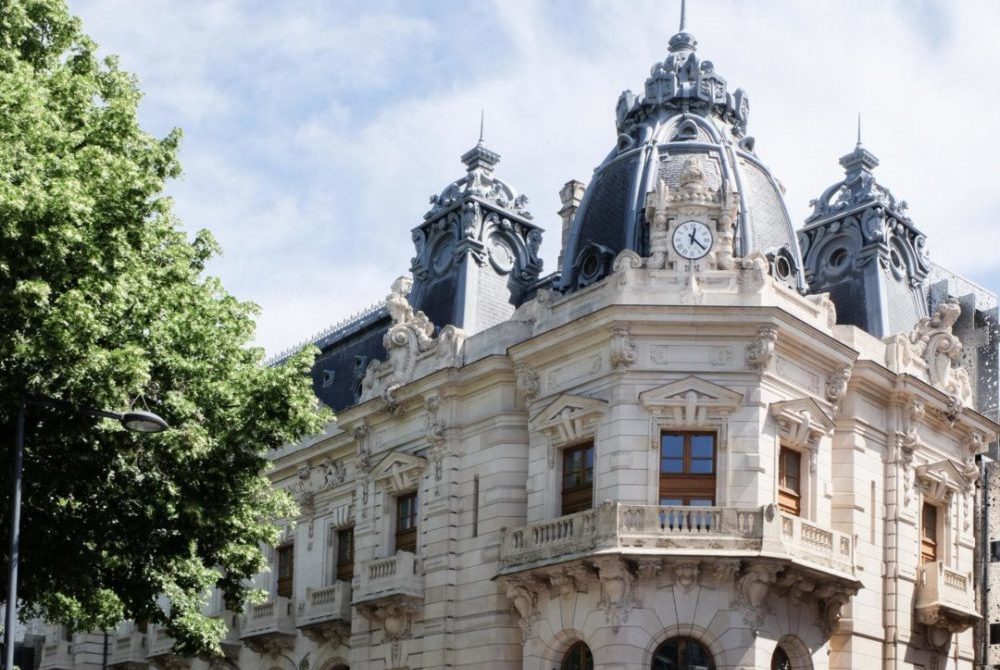
Large neo-Gothic mansions were built here (notably the Job family mansions, the house known as the Verrier or Castel-Gesta); they are located next to more dense and popular housing blocks, low houses known as toulousaines, characteristic of the city’s suburbs, and bourgeois residences with gardens, of which the eponymous rue des Chalets offers some characteristic examples.

The district is very lively with many restaurants, cafés and shops.
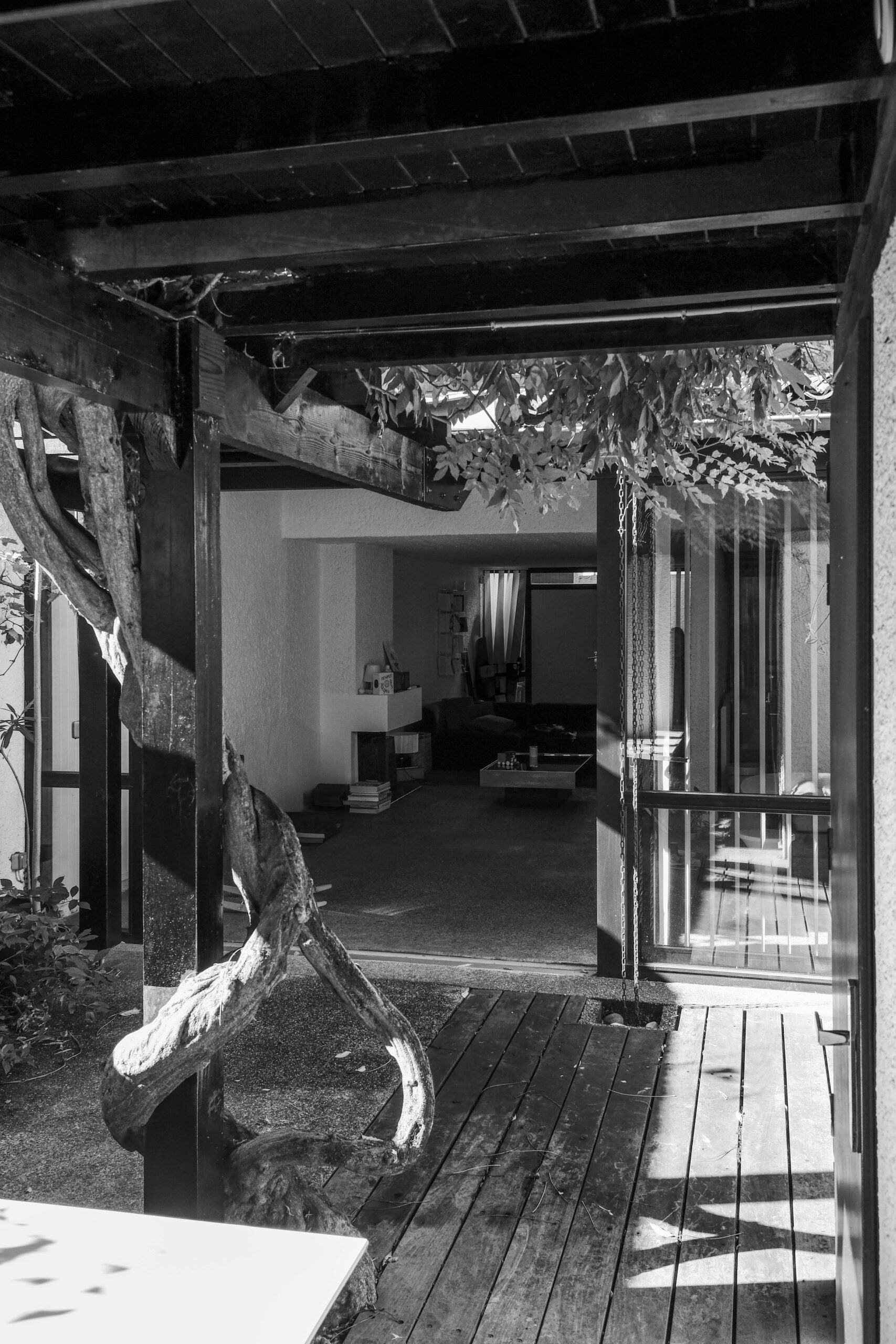
En complément de la maison principale, deux dépendances de forme cubique aux toitures plates complètent l’ensemble, implantées en juxtaposition sur le terrain, articulées autour de patios le tout entouré de végétation luxuriante aux allures japonisantes.

La première avec son angle entièrement vitré héberge un bureau / chambre d’amis avec une salle d’eau privative, reliée à la maison principale par un chemin surmonté d’une pergola.

Toujours dans les mêmes codes seventies, la seconde en fond de parcelle s’articule en L autour d’un patio planté d’un érable du Japon. Elle comprend une buanderie lumineuse et une suite permettant d’installer un bureau ou une deuxième chambre d’amis.

En complément de l’architecture d’origine, cet espace aux mêmes codes à été sublimé par un ensemble de parois menuisés en contre-plaqué lasuré qui masque des linéaires de rangements ainsi que la salle d’eau, tout en ajoutant un coté chaleureux.

Patrick Maxwell

Architecte bordelais actif dès la fin des années 60, Patrick Maxwell s’inscrit dans la lignée du mouvement moderniste régional, marqué par une approche sobre, fonctionnelle et profondément ancrée dans le contexte local. Son travail explore la réinterprétation des formes urbaines bordelaises, notamment l’échoppe, qu’il revisite dans un langage architectural épuré et contemporain.

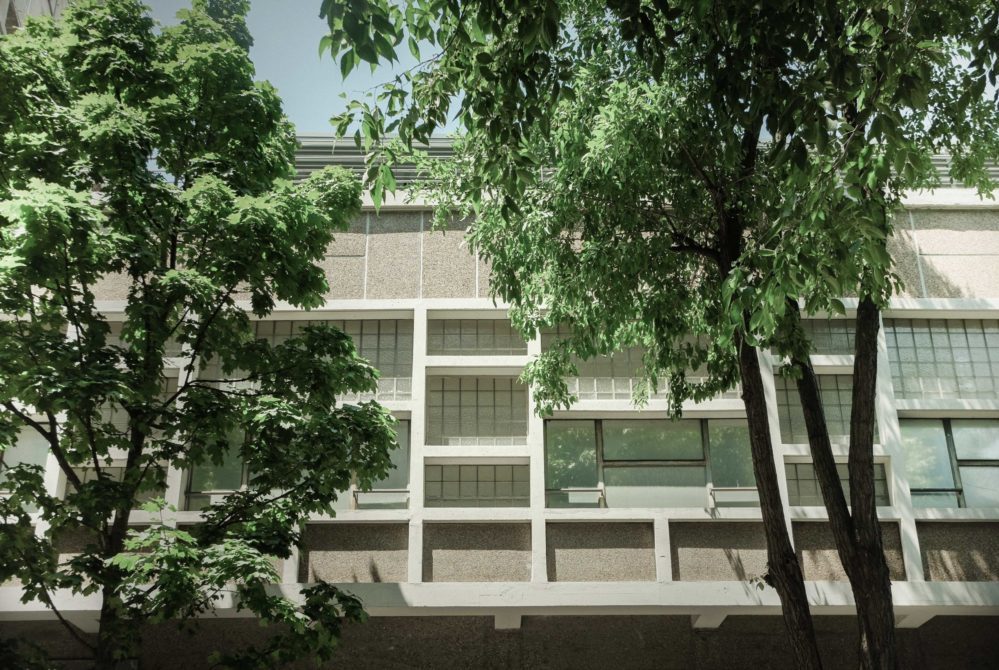
Ses réalisations se distinguent par l’emploi de matériaux bruts – béton poncé, enduits blancs, menuiseries bois – et une recherche de lumière naturelle à travers de larges ouvertures et des jeux de transparence. L’articulation entre intérieur et extérieur est axe important de son travail : patios, jardins intégrés et circulations fluides traduisent une conception où la nature prolonge l’espace habité.

Sans ostentation, l’architecture de Patrick Maxwell exprime une rigueur géométrique, une clarté des volumes et une simplicité maîtrisée, témoignant d’un modernisme humaniste et parfaitement adapté à l’art de vivre bordelais.

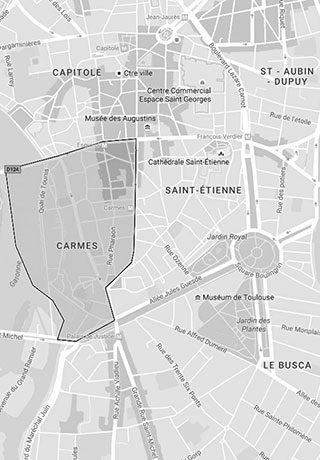
Les Carmes

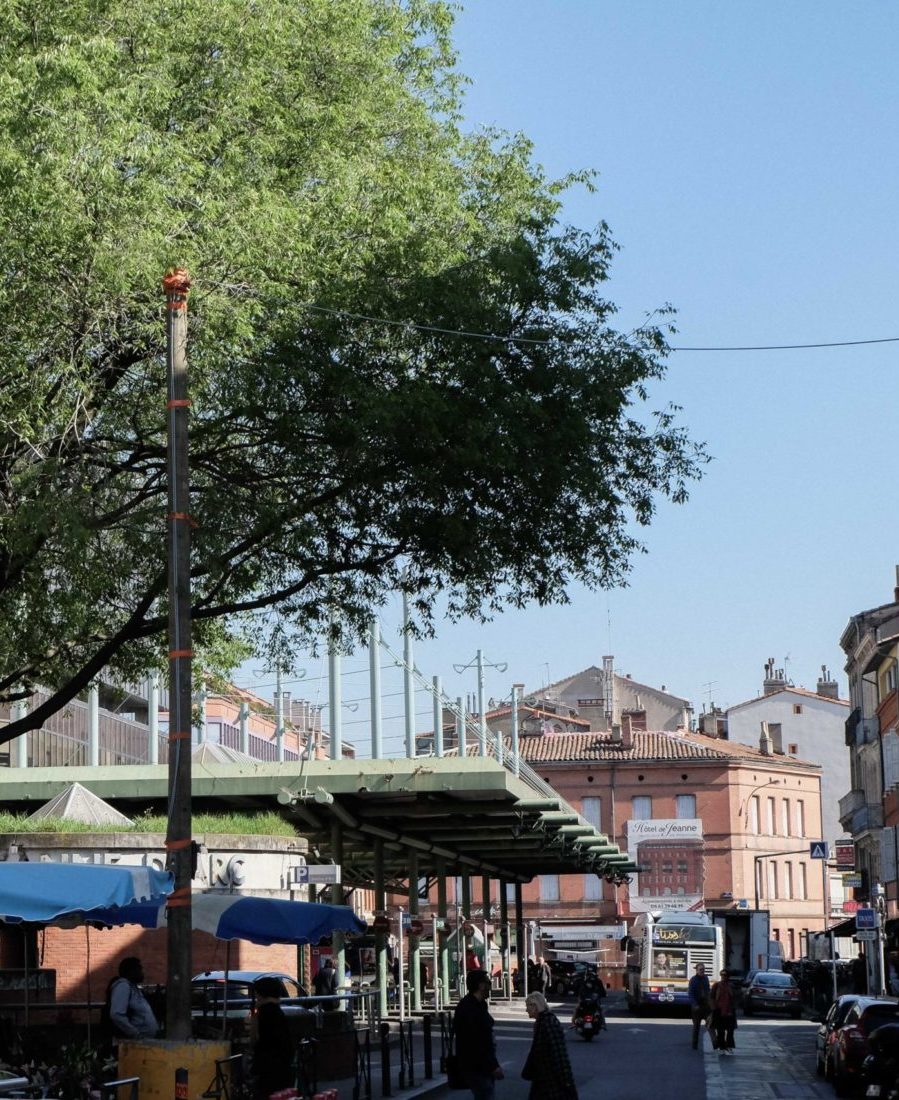
A small village in the heart of the big city, the Carmes district is organized around a very lively and colorful market, the most important in Toulouse.

It is located between the Place du Salin and the Place d’Esquirol, and is one of the most popular districts in Toulouse.

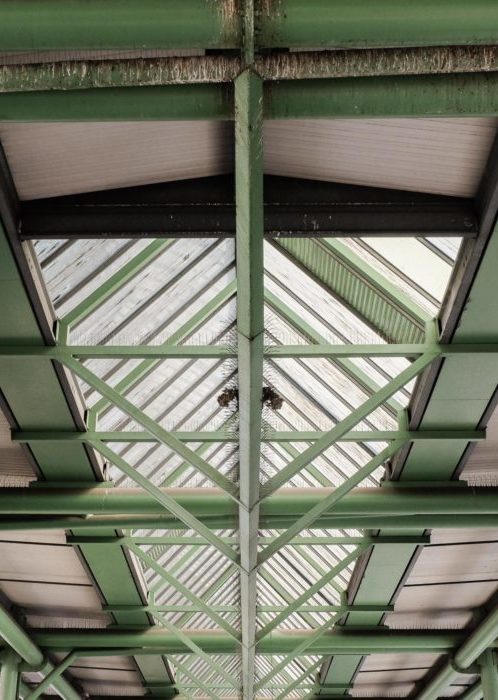
This district takes its name from the convent of the Grands Carmes which is composed of the Carmes church, a chapel, a cloister and a garden. Inaugurated in 1892, the metal market of Carmes, former halls was built according to the plans of Charles Cavé, it was demolished in 1964 and replaced by the market-park of Carmes signed by the architects Georges Candilis, Shadrach Woods, Alexis Josic, Jean-Marie Lefèvre.

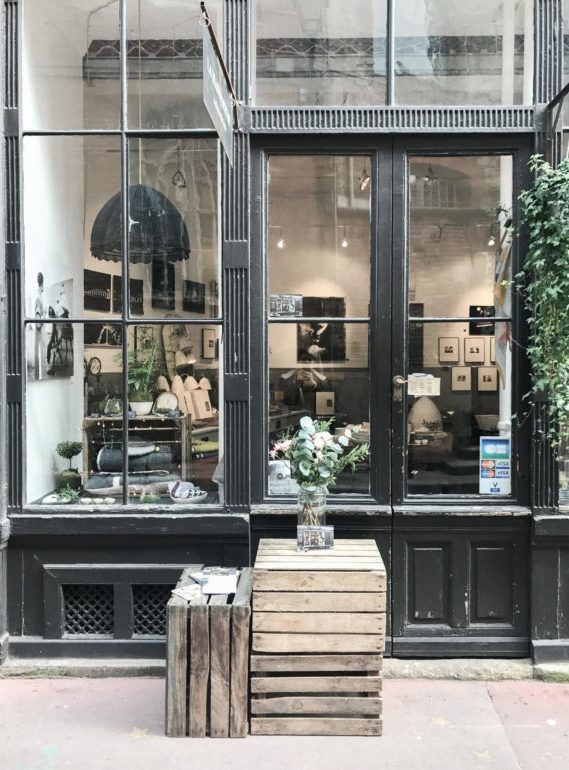
Rue des Filatiers and rue Bouquières are the most important streets in the district. Pedestrian, they are lined with small stores with flowered fronts and pretty animated cafés. You can admire the facades of houses in corundage, Renaissance style windows such as the house of the goldsmith Hélie Guéraud or the Lamothe house.

Les Amidonniers

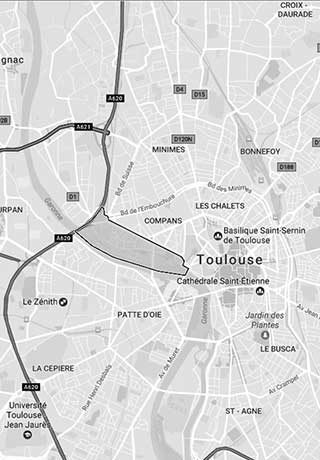
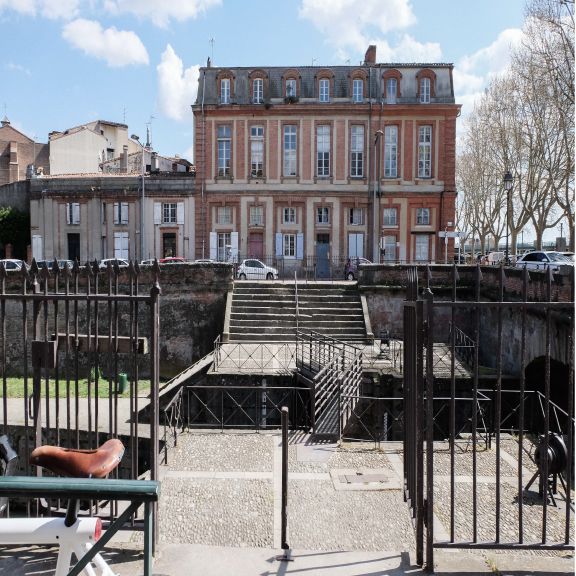
Nestled between the Garonne River and the Brienne Canal, Les Amidonniers is a neighborhood in the northwest of the city. Formerly a working-class neighborhood, it has now become a residential area with a young, family-oriented population, in a wooded area that is very pleasant to live in.

The district is composed of both Toulousaines, old renovated farmhouses, and more recent buildings such as the Espace EDF Bazacle, which is one of Toulouse’s most important cultural sites. Well served, it is linked to the city by numerous bus lines that run frequently every day, as well as by the VélôToulouse network.

Education is at the heart of the district’s concerns, which is oriented towards youth and its development, with several day care centers, an elementary school and several schools of higher education. Various sports facilities and green spaces punctuate its landscape, allowing it to combine both sports and leisure. The green corridor that crosses the entire district is probably one of the most beautiful walks in Toulouse. The landscaped dyke is also very popular with families and runners who can go from the city center to Blagnac on a beautiful route along the Garonne.

There are also many restaurants, cafés and bars that allow for meetings with friends or family throughout the year. This district offers many friendly places and beautiful walks and is ideal for those who like calm and “good living” close to the city center.

Jeanne d’Arc

The historic district of Jeanne d'Arc is located in the north-east of the city centre of Toulouse.

Just a stone’s throw from the Place du Capitole, it is served by numerous public transport links and is close to the train station.

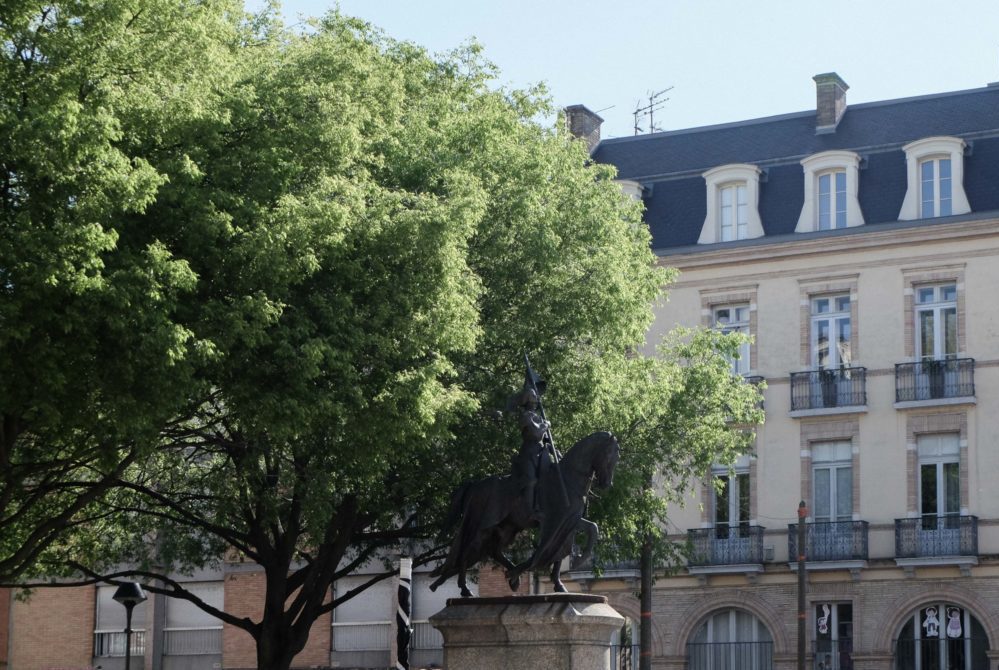
It is a lively district with friendly markets on Boulevard de Strasbourg, but also with the Place Jeanne d’Arc with its cafés and restaurants. On this square stands the equestrian statue of Jeanne d’Arc in bronze by Antonin Mercié installed in 1922.

Further south, the Jean Jaurès alleys, laid out like ramblas, are a privileged access to enter the hyper-centre of the Pink City from the boulevards and the Canal du Midi. Large esplanades dedicated to walks and games, as well as spaces allocated to the activity of terraces, should see the light of day in the next few years.

Esquirol

Esquirol is a district of the hypercenter of the city. It is organized around the Esquirol square, and connects the street of Metz to the Pont Neuf, while passing by the place of the Stock Exchange, and the place of the Trinity.

The square was named “Esquirol” in 1893, in homage to the alienist doctor Jean-Etienne Esquirol, whose birthplace was located nearby.

It is a very lively district, where small stores and monuments line the streets. It is mainly composed of buildings. The architecture is very rich, between Haussmannian buildings, facades in corondage and pedestrian lanes.

The district is well connected to the Toulouse public transport network, especially thanks to the Esquirol square: it hosts a metro station, an important stop for many bus lines, as well as several Vélô stations. The square also houses an underground parking lot.

Croix de Pierre

Located in the south of Toulouse, the Croix de Pierre district takes its name from a stone cross formerly located at the crossroads of the avenue de Muret and the boulevard Déodat-de-Séverac.

The Croix de Pierre is now embedded in the wall of a house at the corner of rue Lafage.

Thanks to the many activities, events, and festivities organized by its inhabitants, it is a lively and very animated district: there are many small shops useful for daily life, and a market is held there twice a week.

Geographically, it is also well located: a stone’s throw from the banks of the Garonne, the Ernest Wallon Stadium, the art deco Nakache swimming pool, designed by the architect Jean Montariol, as well as many other cultural venues such as the Théâtre de la Digue. A large public transportation network links it to the city center: streetcar, bus, VélÔ Toulouse.

Croix de Pierre is a neighborhood in constant evolution, where many urban projects are expected in the coming years. It is therefore a very popular neighborhood for families, quiet and dynamic, where life is good.